



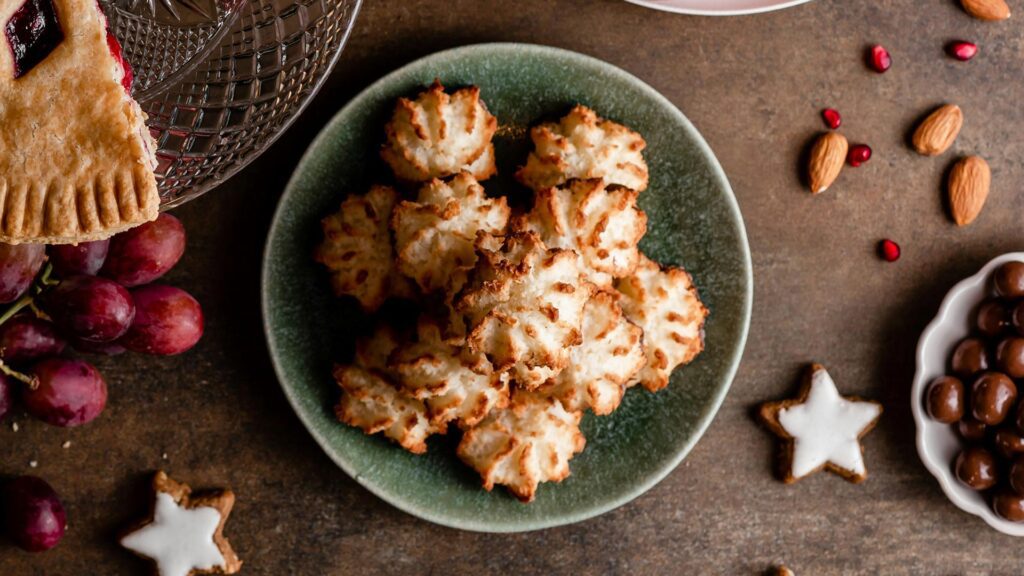
Eating at Easter looks very different depending on where you are. In Greece, lamb is the star, while in Italy bakers make sweet breads shaped like doves. In Mexico, dried cod and spiced desserts mark the end of Lent, while hot cross buns are a British and Aussie favorite.
Easter food differs across cultures, but always marks the meeting point of faith, season, local habits and celebration. Let’s look at Easter tables around the world to see what dishes and treats define the holiday across the globe.
1. Why is food so important to Easter celebrations?
Easter marks a turning point. In many Christian traditions, the Easter weekend follows weeks of fasting or restraint (known as Lent), so the meal carries a sense of release and return to normalcy. Some ingredients are chosen for their meaning as much as taste. For example, eggs represent new life, lamb is sacrifice and bread is continuity and community. But beyond symbolism, Easter food is often practical and local, reflecting what’s in season and dishes you can share with family or community after the winter.
2. How do Easter food traditions differ by country?
Easter food traditions differ widely, shaped by religion, climate and ingredients available locally. In Southern Europe, lamb is the most common Easter meat, while Northern Europe and the UK favor ham. Latin America has its own sweets, while the Middle East and Africa have dishes like maamoul and spiced stews that reflect the season.
3. What foods are traditionally eaten at Easter around the world?
Let’s take a look at popular Easter dishes and food that you’ll find on the table around the globe.
Hot cross buns
Easter food in: United Kingdom, Australia, New Zealand
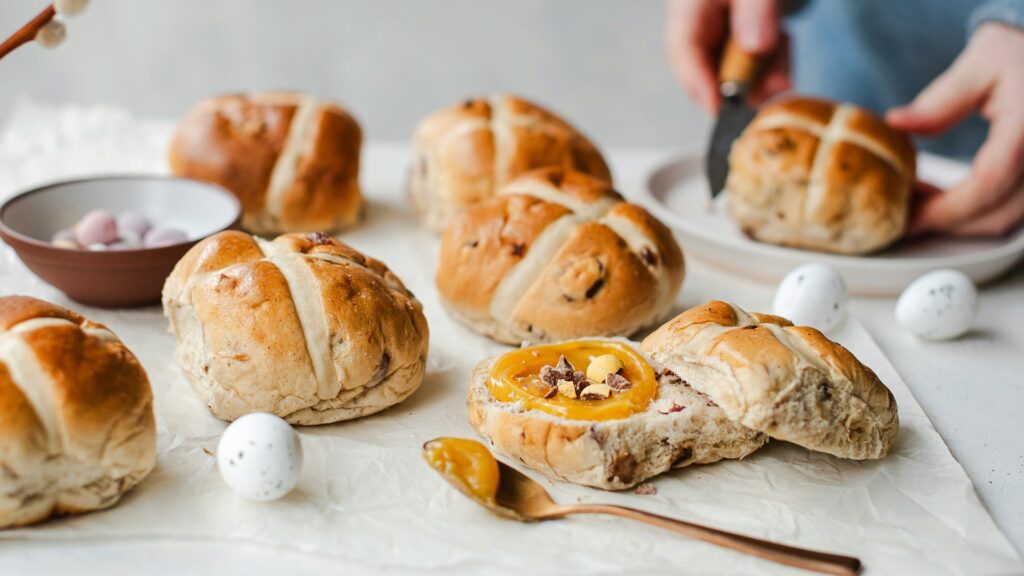
Hot cross buns are soft, lightly spiced buns marked with a cross and studded with dried fruit. The cross marking references the crucifixion, while the warm spices hint at older trade routes and medieval baking traditions. Traditionally they’re eaten on Good Friday, but they appear in supermarkets as early as January 1!
READ NEXT: Why Easter is traditionally the perfect time to travel Europe
Roast lamb
Easter food in: Greece, Italy, France, United Kingdom
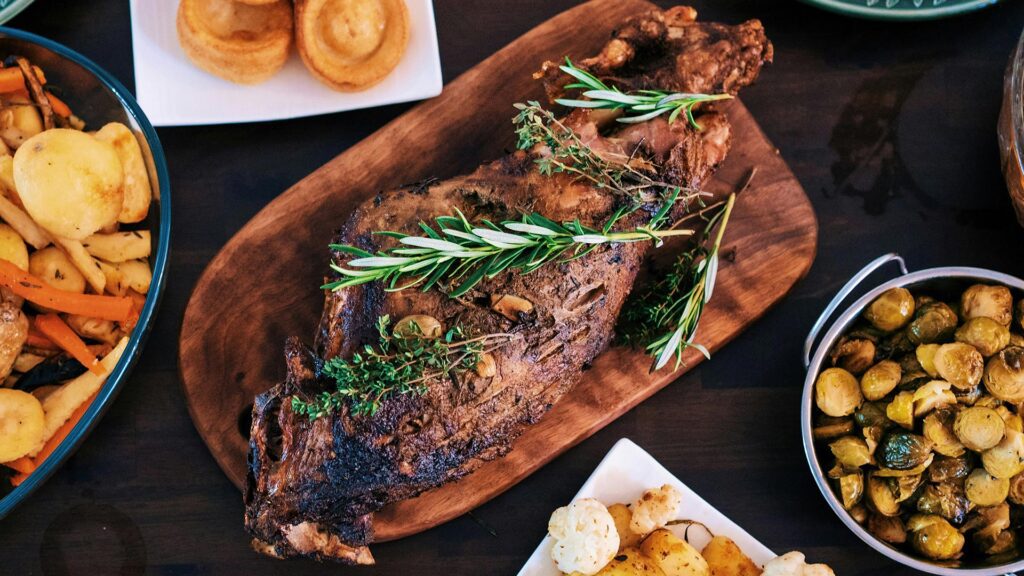
Lamb has long been associated with Easter, rooted in both Christian symbolism and seasonal farming cycles. While the Greeks will often roast it over a spit outdoors, elsewhere in Europe you might find it baked with herbs then served with early spring vegetables.
Bacalao (Salt Cod)
Easter food in: Mexico, Brazil, Portugal, Spain
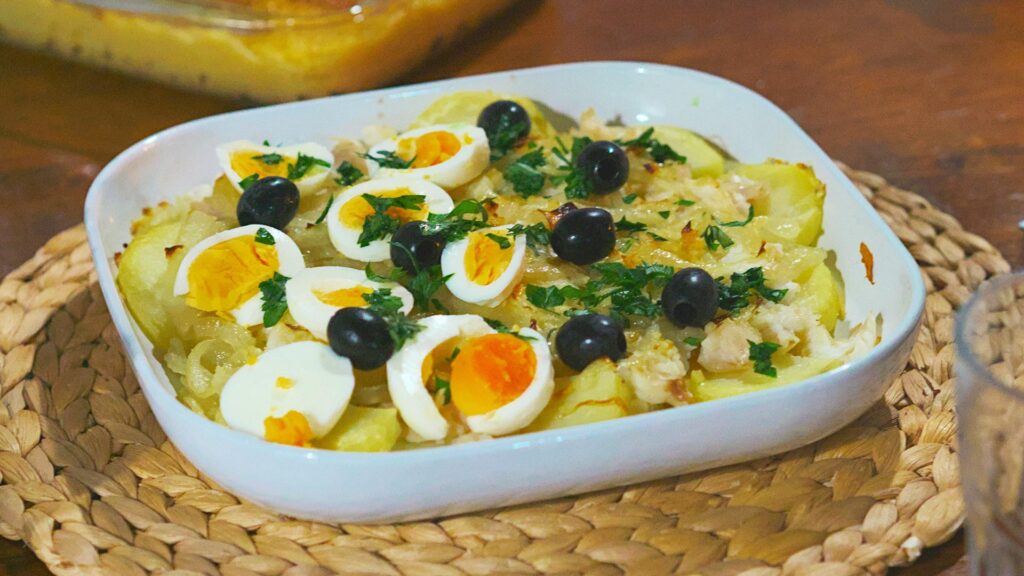
Bacalao is practical food, shaped by trade, religion and necessity rather than luxury. The Spanish and Portuguese loaded the dried fish onto their ships in the 1500s, and since then it has become cultural.
Salt cod appears on Easter tables as fits fasting rules observed during Holy Week. In Mexico it’s cooked with tomatoes, olives and chilies, while in Portugal find it served in dozens of ways.
Tsoureki
Easter food in: Greece, Cyprus
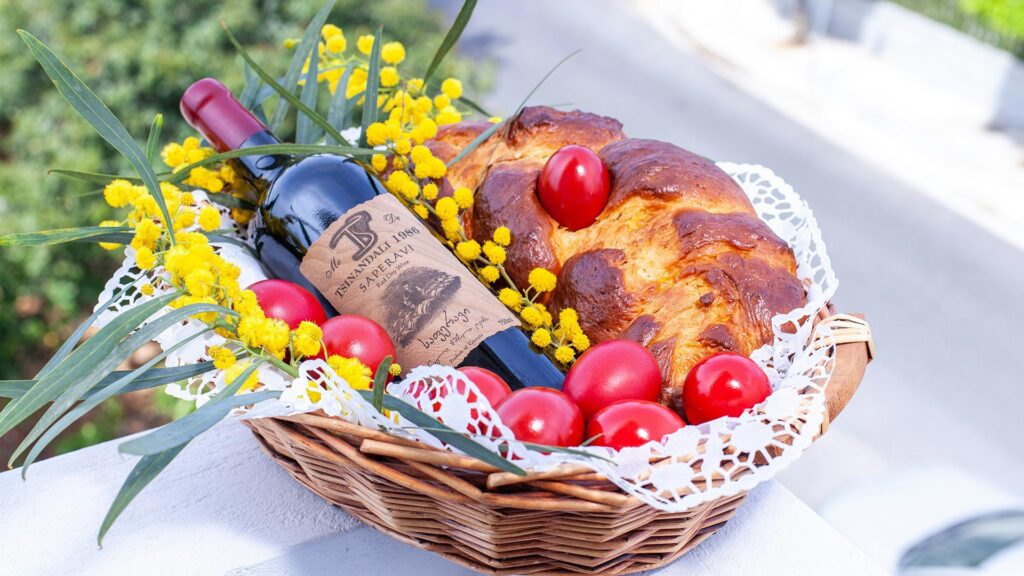
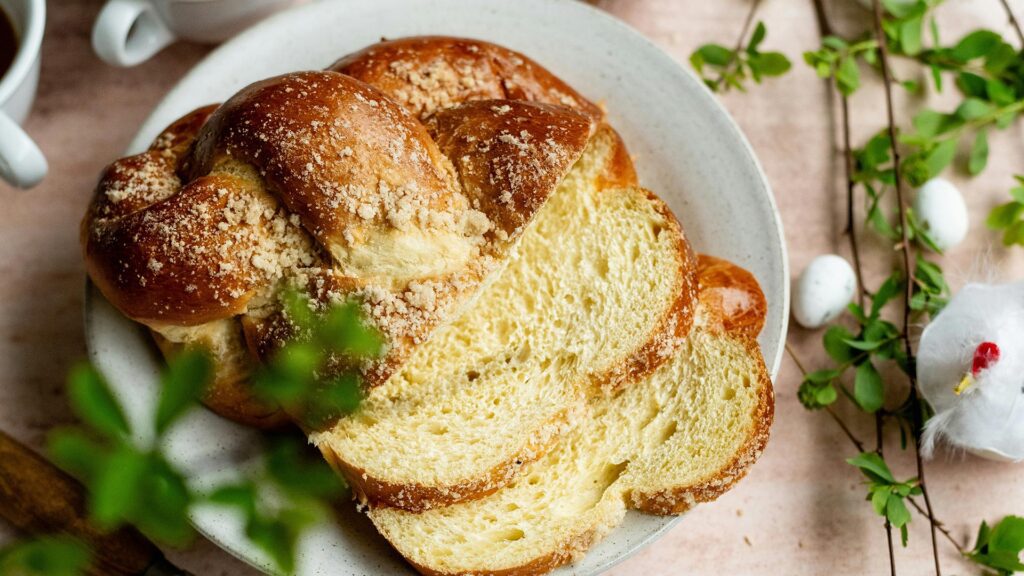
Tsoureki is a glossy, braided bread flavoured with mahleb and mastic. These spices give it a distinctly Easter scent. The bread is often baked with red-dyed eggs pressed into the dough, adding symbolism. To eat, the bread is torn and shared, usually after midnight church services when Easter officially begins.
Colomba di Pasqua
Easter food in: Italy
Colomba di Pasqua is Italy’s main Easter cake. The dough is rich and airy, closer to panettone than sponge, and shaped symbolically like a dove. It’s topped with pearl sugar and almonds.
Paska
Easter food in: Ukraine, Poland, Slovakia
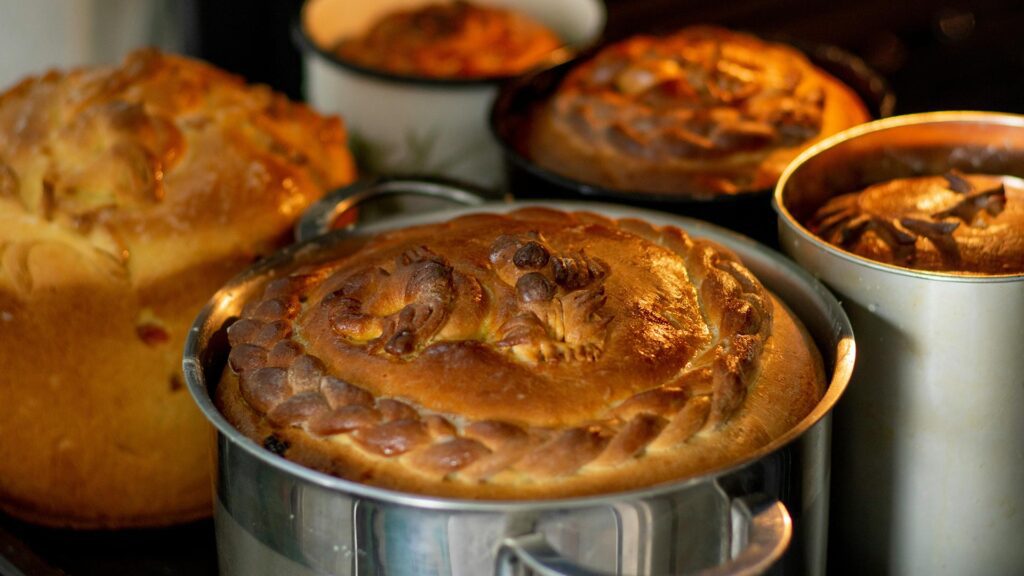
Paska is a tall, cylindrical bread, often decorated with braids, crosses or wheat motifs made from dough. Paska was traditionally baked at home and taken to church to be blessed then shared with the Easter meal at the end of Lent.
READ NEXT: Easter Holidays for the Whole Family
Kulich
Easter food in: Russia, Ukraine
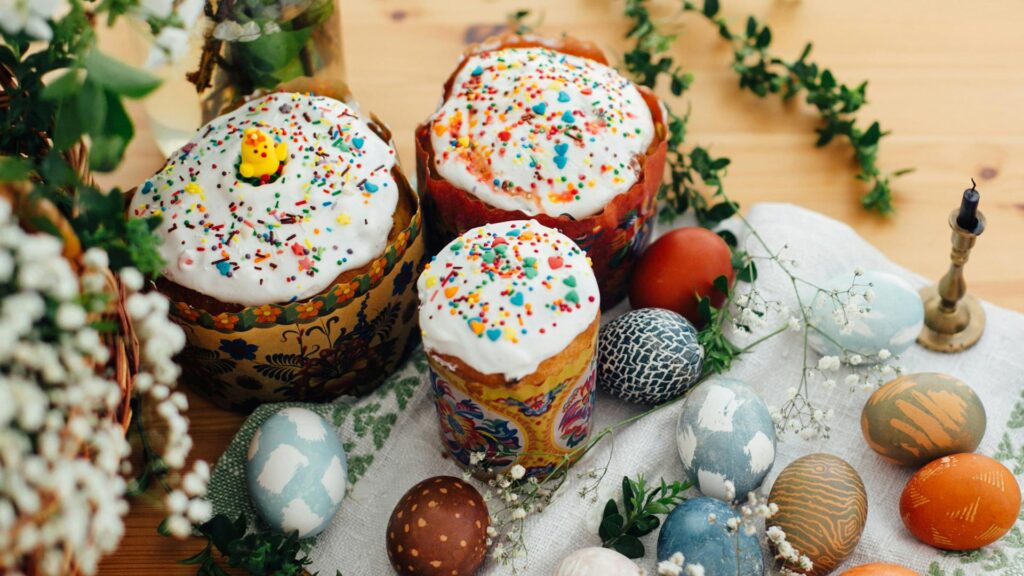
It’s similar in shape to paska but sweeter, richer and flavored with dried fruit and sometimes soaked with syrup or glaze. It’s closely tied to Orthodox Easter, where it’s eaten after midnight services and paired with cheese-based desserts.
Folar de Páscoa
Easter food in: Portugal
Folar de Páscoa varies by region in Portugal, but often appears as a round bread baked with whole eggs set into the crust. Historically it was given as a gift between godparents and godchildren.
Simnel cake
Easter food in: United Kingdom, Ireland
Simnel cake is a dense fruit cake layered and topped with marzipan and traditionally decorated with eleven marzipan balls representing the apostles. Long associated with Mothering Sunday and Easter, it’s a rich cake built to last many days.
Easter ham
Easter food in: United States, Germany, Sweden
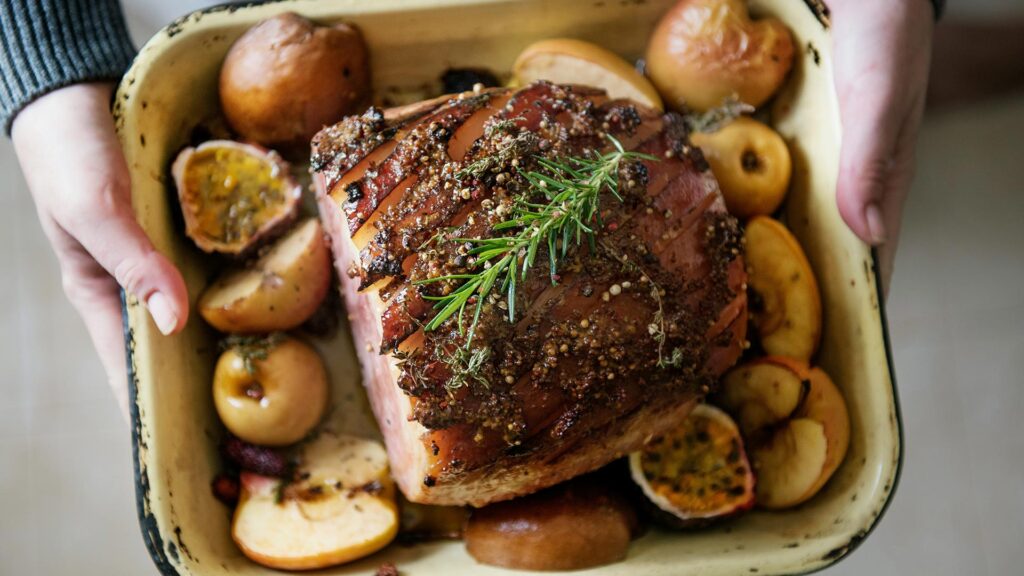
Ham is a classic Easter centerpiece in many Western countries, often glazed with honey, mustard or cloves. Ham reflects both the end of winter preservation cycles and the return of fresh spring meat. Expect it to be served alongside potatoes, vegetables or sweet sauces.
Deviled Eggs
Easter food in: United States, Germany, Poland
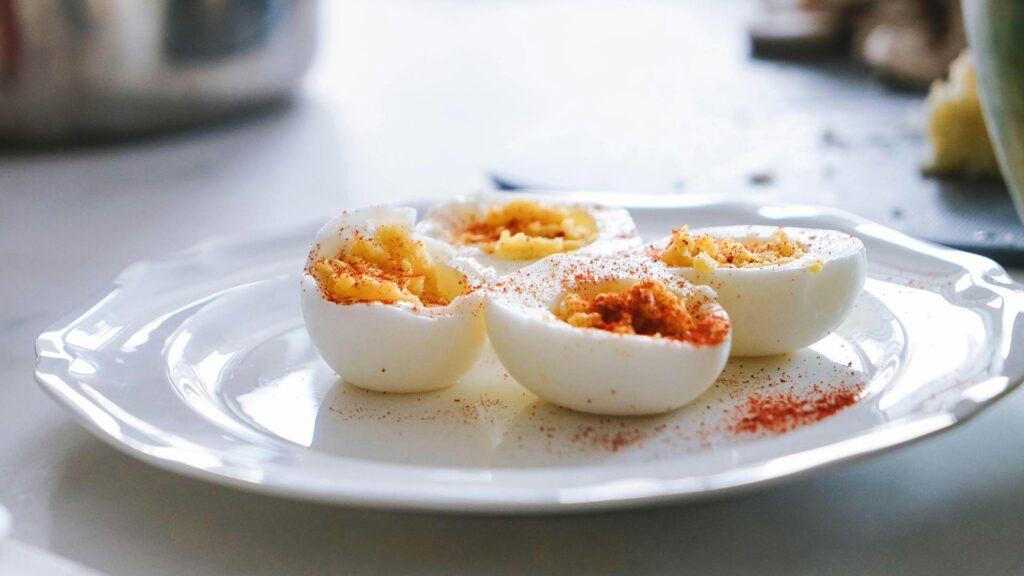
Deviled eggs are hard-boiled eggs halved and filled with a seasoned yolk mixture. They make an easy, colorful addition to Easter tables and echo the season’s universal symbol of new life. In some places, paprika or fresh herbs are added.
Capirotada
Easter food in: Mexico
Capirotada is a layered bread pudding, made from stale bread, piloncillo syrup, nuts, cheese and dried fruit. Its ingredients are deeply symbolic with the bread representing Christ’s body and the syrup his blood. It’s usually served warm or at room temperature.
Maamoul
Easter food in: Lebanon, Syria, Jordan
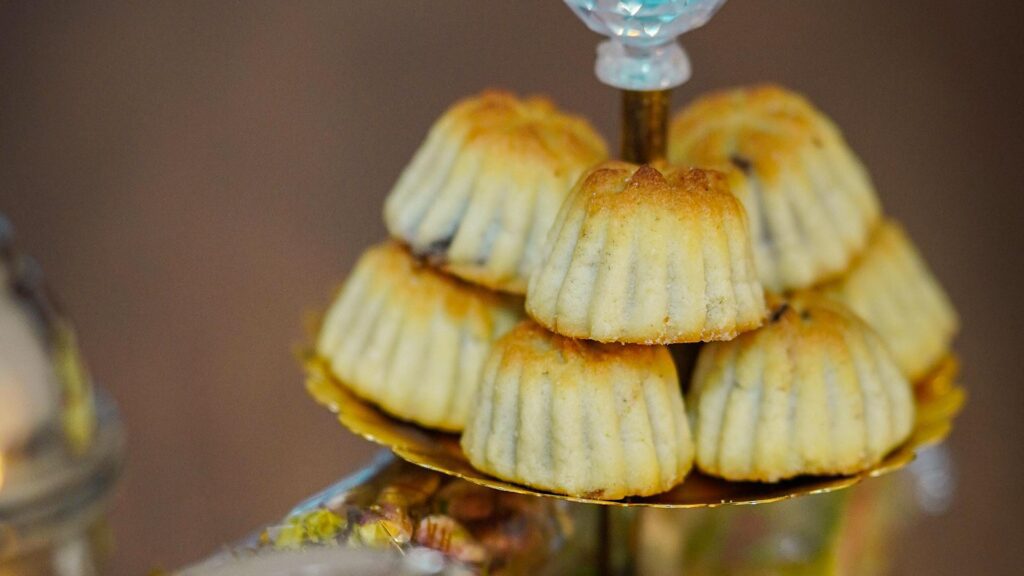
Maamoul are shortbread-like cookies filled with dates, nuts or figs, often pressed into decorative molds. Though commonly eaten year-round for religious holidays, they appear at Easter among Christian communities in the Middle East. The filled cookie symbolizes hidden treasures.
Empanadas de Vigilia
Easter food in: Mexico, Spain, Argentina
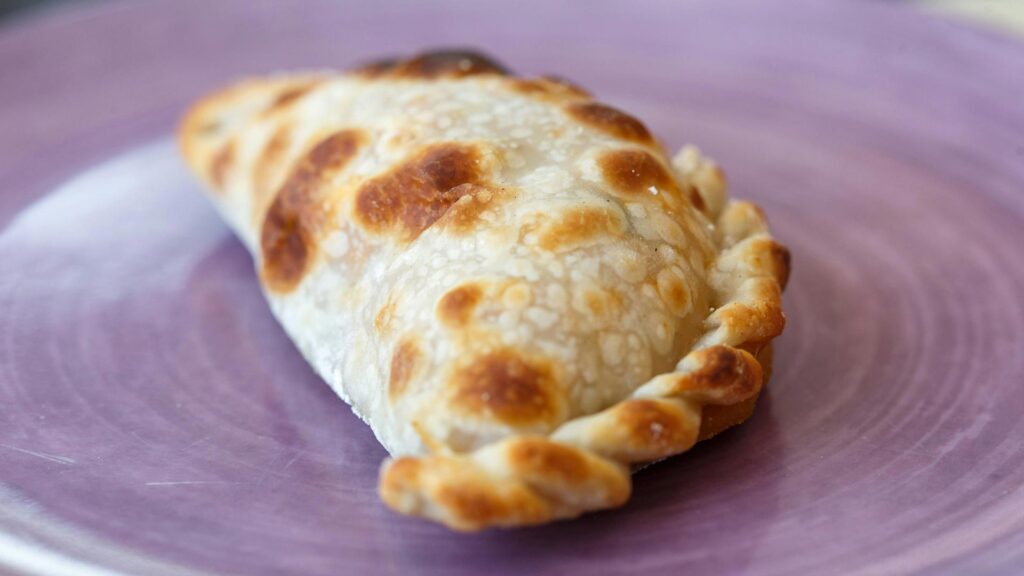
Empanadas de Vigilia are pastries filled with fish, cheese or vegetables that are eaten during Lent and Holy Week. These crispy pastry pockets allow families to enjoy hearty, flavorful food while respecting fasting traditions.
READ NEXT: 7 Impressive Easter Traditions around the World
Easter cheese (Hrúdka)
Easter food in: Slovakia, Czech Republic
Hrúdka is a sweet, fresh cheese often molded into decorative shapes for Easter tables. It’s lightly sweetened and sometimes flavored with vanilla or citrus. It’s served cold, often alongside breads and meats.
Cocadas
Easter food in: Brazil, Mexico, Colombia
Cocadas are chewy coconut sweets, sometimes baked into bars or shaped into balls. Popular during Easter in South America, they use local ingredients like coconut and sugar and offer a simple, lighter contrast to heavy breads and meats on the holiday table.
Chocolate Easter eggs (and rabbits)
Easter food in: United Kingdom, France, Germany, Australia
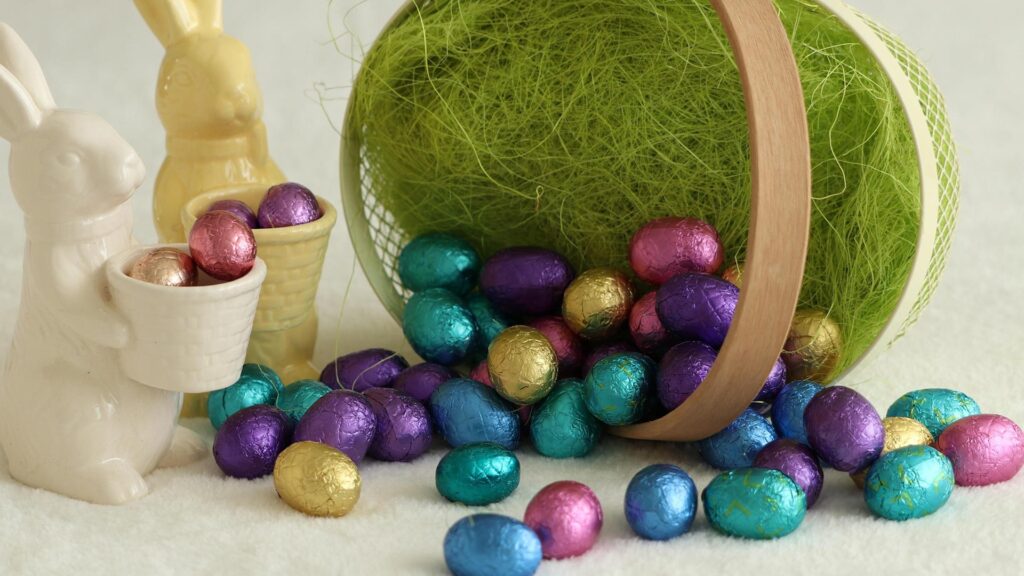
Chocolate eggs are now ubiquitous, sold in every supermarket and chocolate shop during Easter. Their popularity combines the symbolic egg of rebirth with indulgent modern chocolate-making – the idea was a 20th-century post-war invention! You can buy small, solid chocolate eggs, ones filled with nuts, creams or marzipan, or large, hollow eggs. You can also find chocolate bunnies or rabbits, bells, fish and so much more.
Ethiopian Easter stews
Easter food in: Ethiopia
In Ethiopia, Easter stews like Doro Wat (spicy chicken stew) are central to the holiday table. It’s rich, hearty and often served with injera, a sour, fermented flatbread commonly eaten in used in Ethiopian and Eritrean cuisine. This dish is easy to share, bringing families together for long, communal meals.
How do you celebrate Easter? Tell us what Easter food is on the table at your home in the comments…