



Sucheta Rawal is an Atlanta-based food and travel writer who has visited 130+ countries across all seven continents. She is the founder of Go Eat Give, a nonprofit focused on sustainable travel and cultural connection, and author of ‘Beato Goes To’ children’s books. Her work has appeared in TIME, National Geographic, Travel+Leisure, CNN Travel, and she’s a three-time TEDx speaker.
In pouring rain, I made my way up the steep, mud-slick trails of Kumo-ga-take, aka Cloud Mountain — one of many wooded peaks of Japan’s beautiful and remote Kunisaki Peninsula. The incline felt far steeper than anything I had trained for, and at every step, my boots sank further into the earth. I stretched for twigs and roots to steady myself, my baseball cap drenched, water streaming down my face and into my eyes. There was no one in sight — no voices, no signal, no reassurance that I was even going the right way.
By the time I caught up with my hiking companions — my English-speaking guide and an Australian couple who had already completed this particular hike seventeen times — I was exhausted and, judging by their looks, holding them up.
To make matters worse, it was only day one of a ten-day walking tour on Kyushu, the southwesternmost of Japan’s main islands, which promised an absorbing journey through remote villages, ancient Buddhist temples, and serene scenery. I had been looking forward to warm soaks in the onsens, meals of fresh sushi and sake, and scenic walks through the countryside. Instead, I found myself dragging my 125-pound body up chains bolted into rock, wobbling across narrow wooden bridges, and slipping and sliding my way along dense, rain-soaked trails.
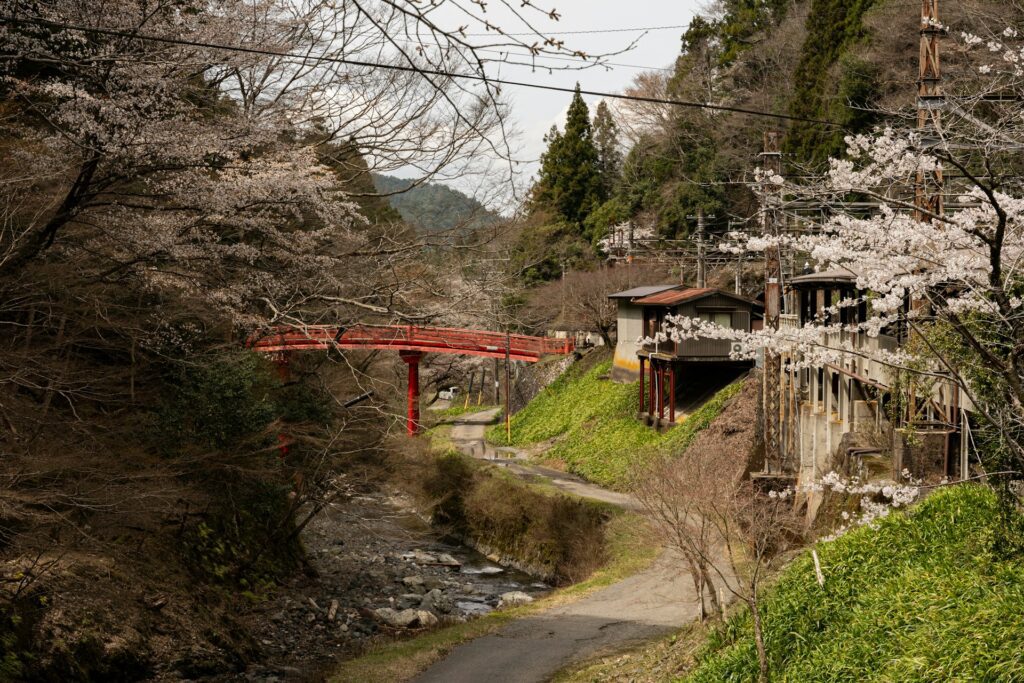
The next day, over breakfast of grilled fish and steamed rice at the ryokan where we stayed, my guide softly suggested that I sit out the more strenuous hikes and spend time visiting the surrounding towns on my own. Under normal circumstances, I would have welcomed that freedom. But this was not a place designed for independent wandering. The towns here were not built for tourism in the way Kyoto or Tokyo are; they were mostly residential, home to retired Japanese, who often didn’t speak English. There were sleepy streets, family-run inns, small shrines tucked into hillsides, and little else in the way of signage or structure for outsiders.
And I spoke fewer than ten words in Japanese.
Still, I had come all this way, and staying inside my tatami-floored room seemed less interesting than stepping out into unfamiliar territory.
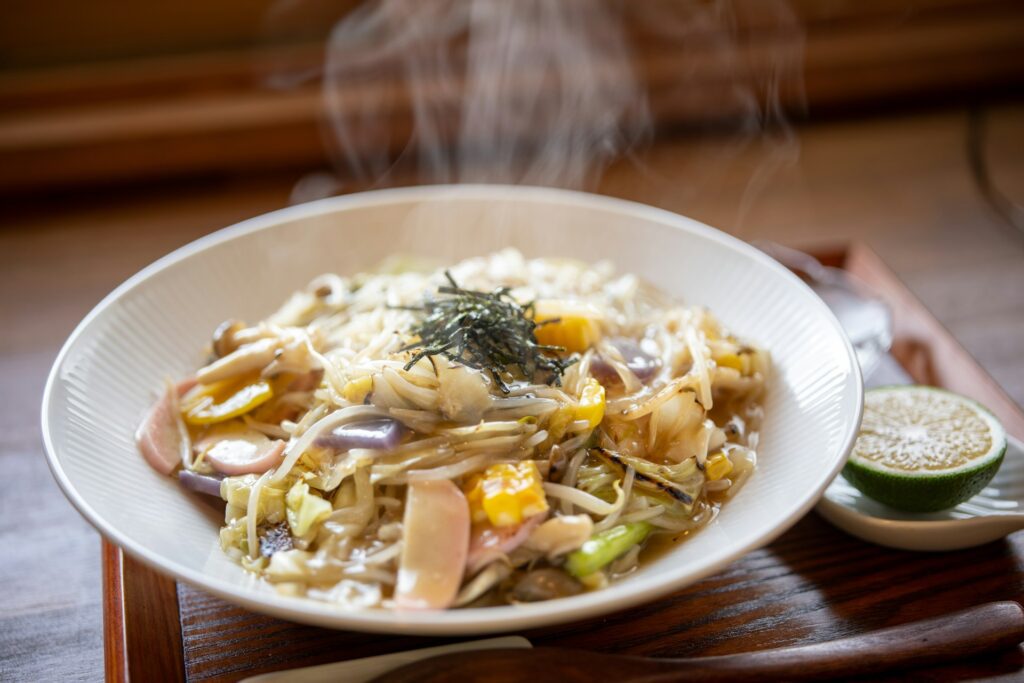
In the afternoon, I began with the simplest of tasks—ordering lunch. I walked into the dining room and stood facing a menu I couldn’t read. I smiled, bowed, and repeated “sumimasen,” hoping someone would understand my needs. A waiter approached, and with a combination of hopeful guessing and one key word — “yasai,” meaning vegetables — I managed to communicate that I didn’t eat meat. A few minutes later, a bowl of earthy steaming soba noodles arrived. It seemed like a small but meaningful victory. “Arigatō,” I said, this time with more confidence.
While dining solo, I browsed my phone for things to do nearby when I came across a photo of a wisteria garden in full bloom. I showed the waiter the image of long cascades of purple flowers hanging from a canopy and asked if he knew where it was. He studied it carefully, uncertain though intrigued, and eventually nodded. He offered to take me there after his lunch shift finished. I figured since he worked at the boutique hotel, I could trust him.
We met in the parking lot, and in his compact white car, we drove through the countryside — past neatly lined rice fields, cedar-covered hills, and narrow roads that appeared to wind endlessly through the landscape. Thirty minutes later, we arrived at a garden. Not the one I had seen in the photo, but a garden nonetheless — dry in places, understated, but still serene in its own way.
He noticed my disappointment and, without much explanation, offered a tour through small farming communities and roadside shrines, eventually to a 7-Eleven. It was nothing like the American convenience store. We passed neatly packed bento boxes, fresh sandwiches, and pastries, as he bought me a cup of iced coffee. Between sips, we texted using a language translator tool. I inquired about his hopes of traveling beyond Japan, and he told me how lonely it was to live in rural Japan. The conversation was imperfect, slow, and occasionally lost in translation, yet memorable to this day. When we parted ways, I thanked him again — “dōmoarigatō” — aware that the event had given me far more than directions to a garden.
The following day, on the island of Himeshima, I ventured out again on my own while my fellow travelers climbed yet another mountain. I walked aimlessly through quiet residential streets, admiring front yards with perfectly arranged rock water features and manicured trees.
On the beach, I saw no one but a group of four elderly women walking together, fully covered to shield themselves from the sun. I greeted them with a polite “konnichiwa,” unsure if they wanted to communicate with a random stranger. But they responded with friendliness and interest. We went back and forth speaking into the translator and had a lengthy conversation about where I was from, why I was there, and so on.
We all giggled as they suggested, with warm humor, that I might be a lost Bollywood actress. I laughed a lot, too, understanding only the cheerful sentiments of our fragmented conversation. We took many selfies and watched the orange-hued sunset over the Seto Inland Sea, a moment that wouldn’t have been the same standing alone.
Later in the trip, on my way back from Tokyo, I rented a kimono and walked through the streets of Asakusa in wooden sandals, still unfamiliar but a bit more confident. I looked like a Japanese geisha, the shopkeeper remarked. On my way to Sensō-ji Temple, I noticed a busload of tourists with their cameras pointed at me. For a brief moment, I had turned into part of someone else’s version of Japan — an unexpected character in a scene I hadn’t planned.
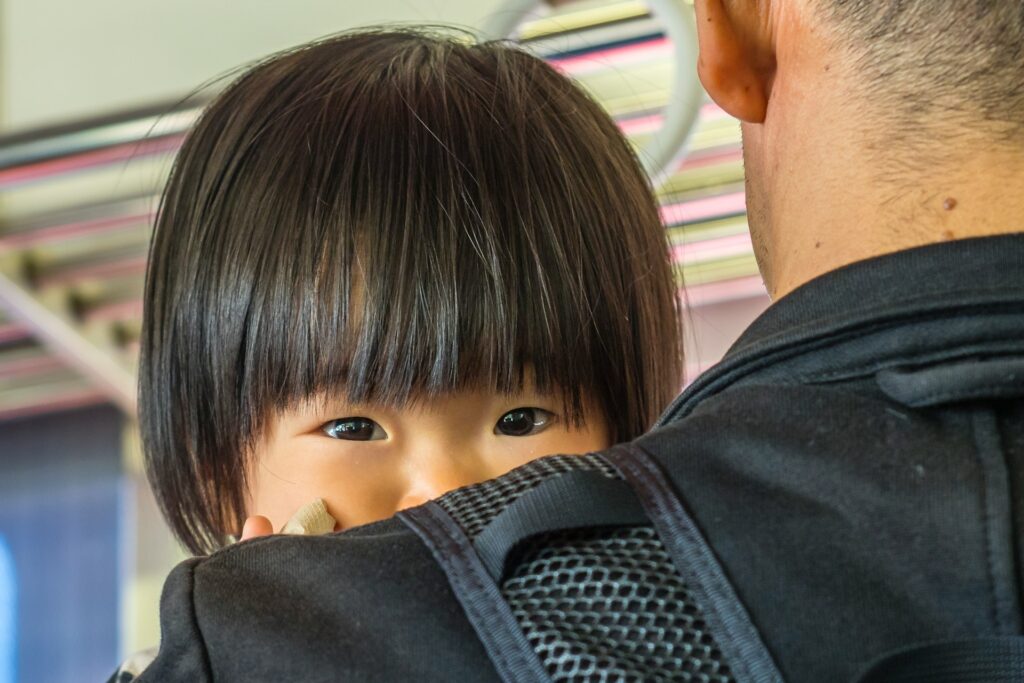
Looking back on my first trip to Japan, it wasn’t the hikes I struggled through or the ones I missed that determined the trip. It was the little human interactions that occurred in between — the waiter who served as my guide for an afternoon, the women on the beach who welcomed me into their world for a few minutes, and learning how to navigate uncertainty with just a handful of Japanese words: arigatō, sumimasen, konnichiwa, hai, yasai.
Those few Japanese words didn’t make me fluent, but they made me aware of the power of making a genuine human connection despite having language barriers. They reminded me that travel isn’t about mastering a place or a language, but about arriving with curiosity, humility, and a disposition to connect—even when you don’t have the language to explain yourself.
And sometimes, that is more than enough.
Want to discover your own version of Japan? Explore our collection of immersive, authentic guided tours today.