


Is Finland a Scandinavian country or is it Nordic? In the north of Europe many countries get cast into the same bucket, but titles matter and bunching them together like a set of matching nesting dolls skips centuries of nuance.
We sat down with expert Trafalgar Travel Director Ebony Anderson. She’s been guiding guests through these high latitudes for over a decade. Ebony explains to us the difference between Scandinavian and Nordic countries and the cultural differences, and shares her favorite places to explore on tour.
Geography lesson: Scandinavia vs Nordic countries
“The Baltic countries all get grouped together under the Scandinavia banner, because it’s great for tourism and marketing,” says Ebony. Let’s fix the first big mix-up right out of the gate. Strictly speaking, Scandinavia is a very exclusive club of just three nations: Denmark, Sweden and Norway.
“It’s because they’re the only three countries that have monarchies,” explains Ebony. “It links back to the old historical terms like the Kalmar Union, which is when those three countries had an official union between them.
“The rest are the Nordics. The Nordic Alliance, which is an alliance similar to the European Union, is Iceland, Denmark, Norway, Sweden, Finland, Latvia, Lithuania, Estonia.”
But what about Greenland? And Svalbard?
Even the massive, ice-capped expanse of Greenland sits curiously across these definitions. As Ebony points out, it is technically “Scandinavian by default, that it is part of the country of Denmark, but it is Nordic geographically” as it physically rests closer to Canada than Europe.
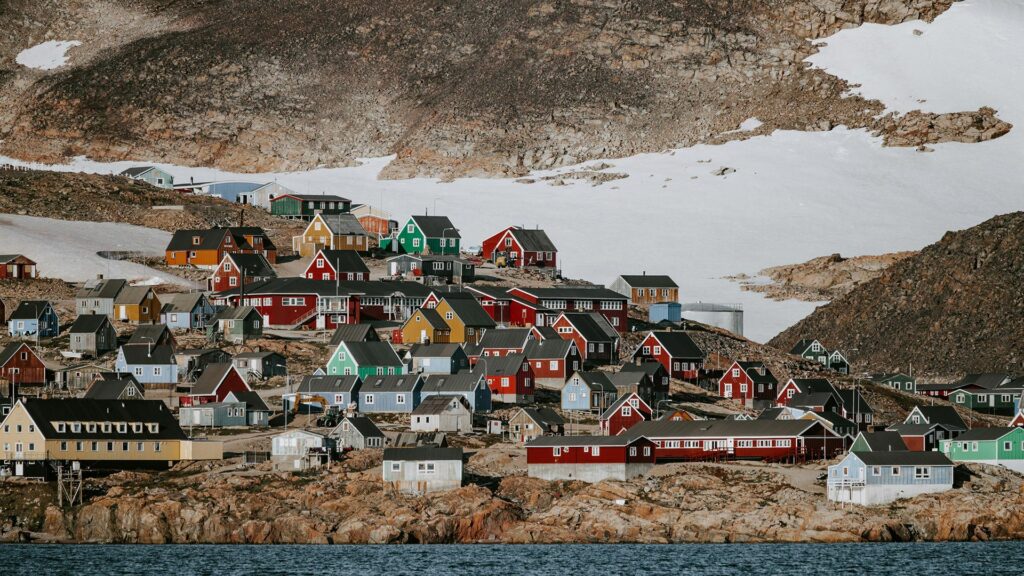
Then there is Svalbard, an intrepid Norwegian outpost sitting high in the Arctic Ocean.
“Svalbard is administered by Norway, but it is completely autonomous,” says Ebony. “It’s where the world seed bank is, so if anything happens in the world to all of our crops, they have the seeds up there ready. Plus it’s one of the only places you’ll see polar bears in the wild these days.
“Svalbard is the only place in Europe that you can go and live and work without a passport or visa from. You don’t need permission – anyone can go to Svalbard, really.
“You can’t actually give birth on the island. If you get pregnant on Svalbard, you get to a certain point in your pregnancy and they fly you back to mainland Norway to give birth.”
What’s the relationship like between Scandi and Nordic countries?
Scandinavian countries share deep, historic ties. Between wars and constant trading they share similarities in culture and a sort of sibling rivalry.
“The Danes and the Swedes have a love-hate relationship, like a brother and sister would, because they have fought something like a dozen different wars centuries ago,” explains Ebony. “In the middle ages – like the 1500s, 1600s, 1700s – the Baltic Sea was referred to as Sweden’s lake, because they owned everything around it, including the north of Poland and Germany. They were this massive superpower during that time.
“Then Norway has always been the one that everyone fought over. Everyone wanted Norway’s beautiful big coastline.”
The historic power dynamics have completely shifted today. For a long time, Norway was considered the less wealthy relative of the trio, until 1969 when Norway discovered the oil in the North Sea.
“[Norway] went from being quite a humble fishing and farming country to having this exponential amount of wealth sitting in their sea. The country was really smart – they didn’t spend the money straight away. They invested it back into the oil, then they invested it into the country to build roads… in the 1980s and ‘90s. And then the other big part of it was they put all of that money into like a public trust that is run independently from the government. It is basically known as the Norwegian Retirement Fund and it has like 2 trillion US dollars.”
Norwegians are proud people, but they’re not boastful about wealth… “unless it’s the 17th of May, which is their national holiday,” says Ebony. “They will wear their Bund, which is their national dress. It’s wool, it’s really heavy and can cost like $5,000 for one. But you own one for life!”
Choose your vibe: what each Nordic country offers
When deciding where to spend your travel days, it helps to understand what each country brings to the table.
- Denmark – “Scandinavian fashion is incredible. Copenhagen’s Fashion Week is a hotbed of small independent designers and artists. The fashion is much more avant-garde, like pushing the boundaries,” says Ebony. “You’ll be walking down the street, and you’ll see like a great grandmother that’s decked out head to toe in mismatched patterns and it looks like they’ve just walked off a runway.”
- Sweden – “Sweden is definitely like the home of Fika,” say Ebony. It’s a non-negotiable daily ritual of slow coffee and cinnamon buns. Curiously, Sweden has a curious, quiet legacy shaping global pop music! “There’s a guy in Sweden, his name is Max Martin. He is responsible for more number one and top 100 hits in the last 45-50 years than any other person on the planet. So every pop song that you can think of, especially in the ‘90s, it’s him,” she says.
- Norway – the landscape is dominated by raw, dramatic wilderness and a deeply ingrained cabin culture. “The further north you go, the more sparsely popular it is. But then you have cabin culture in Norway, so a lot of people on a Friday afternoon in the summer, if they live in, say, Oslo or something, they will then drive out into the mountains to the cabin,” says Ebony.
- Finland – many mistake Finland as a Scandinavian country, and it is at a cultural crossover point. Find grand, neo-classical waterfront architecture and a national obsession with the hot sauna. “Finland is sort of the odd one out. They have closer links to Russia because of their history,” she says, mentioning food, architecture and culture. “It gets confusing because some people in Finland speak Swedish… last year, the Eurovision competitors for Sweden were actually Finnish citizens. They sang in the Swedish language… about Finnish culture, which is sauna.”
- Iceland – a dramatic, otherworldly island of lava fields, thermal springs and glaciers. Iceland is a spectacular place to explore nature and watch the Northern Lights dance over your head in winter. “Icelandic language is actually Old Norse – so similar to Shakespeare in English to a modern English speaker in Britain today,” says Ebony.
- Estonia, Latvia, & Lithuania – this Baltic trio officially sits under the broader regional alliance, bringing another layer of history and medieval old towns to the mix. All three are interesting to see how northern European geography blends into Baltic traditions.
READ NEXT: Sensational spots to visit in each Scandinavian capital city
Ebony’s favorite places to visit on tour in Scandinavia
So, what does this actually look like when you’re standing out in the elements on a tour coach? According to Ebony, nothing alters your perspective quite like the sheer scale of the Geiranger Fjord in Norway. It’s a tiny hamlet of under 500 year-round residents, but the population explodes in the summer.
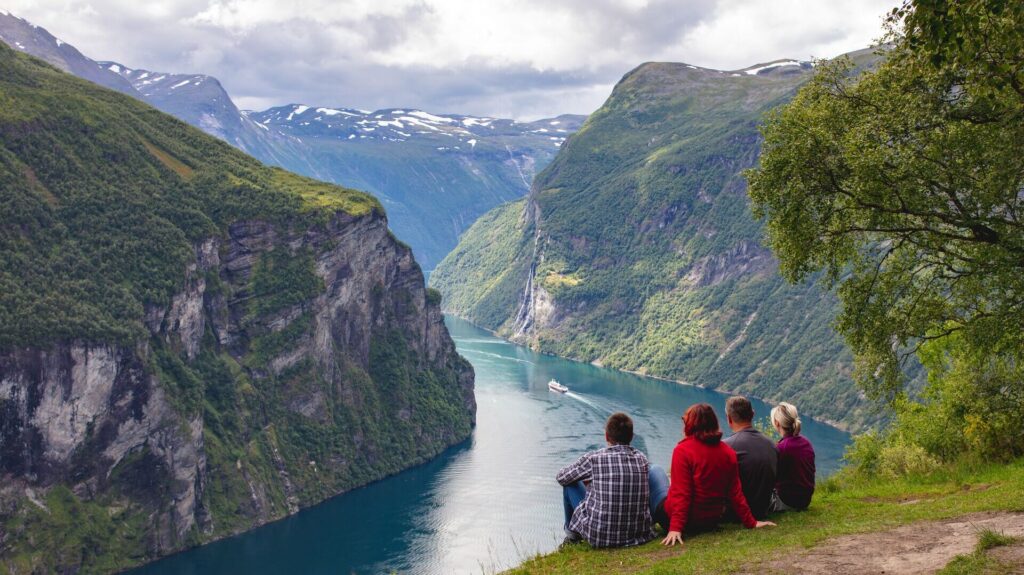
“It’s the nature at night – you can hear the birds chirping, you can hear the waterfall up on the mountain and you could go for a walk down to the waterfront,” Ebony says. “It’s the start of a few optional experiences – the Troll’s Road, which is the 12 hairpin turns. We’ve also got the Dalsnibba, which is part of the UNESCO World Heritage area and it’s the highest point in Norway.
“You go up above a fjord, at over 1500 metres (5,000 ft)… at the very top you’re higher than all the other mountains around… and you can see a glacier on another mountain, waterfalls, and there’s still snow in July up there. When you hear 1500 metres on a piece of paper, it doesn’t sound that impressive, but when you’re actually standing there, that’s when your jaw drops.”
READ NEXT: These are the most breathtaking sights in Scandinavia
Chasing the Northern Lights
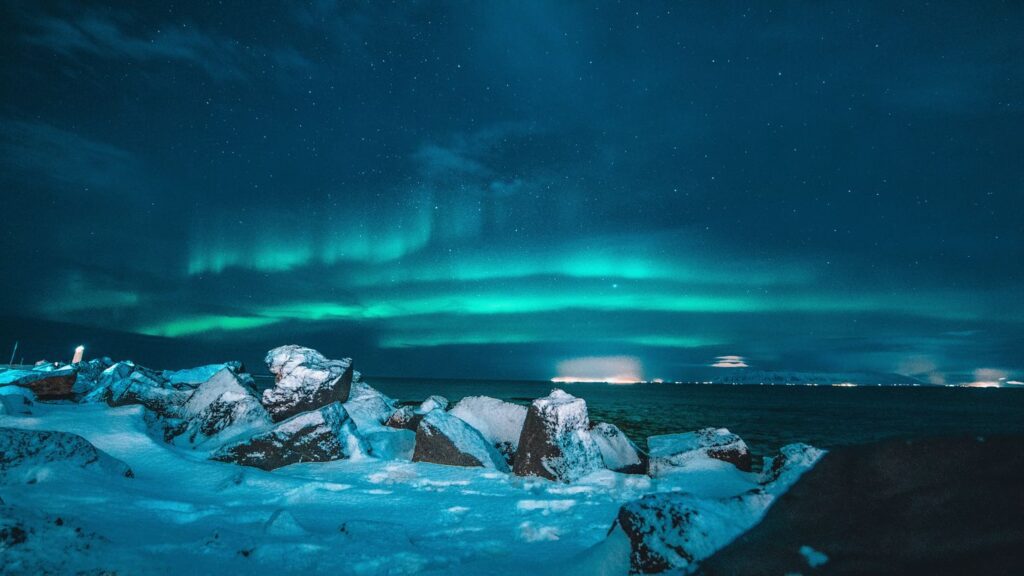
Then, of course, there is the winter magic of the Northern Lights. Chasing them successfully requires leaving the bright city lights behind and heading into the remote, sub-zero wilderness of northern Sweden, Finland or Norway.
“I’ve been really lucky a few times in Kirana, which is in the very north of Sweden, where Trafalgar goes, and in the Abisco National Park,” she says. “It was minus 35 degrees celsius (-31°F) when I was there, and we had big Michelin-man style suits.
“We were on a chairlift. It was 3 o’clock in the afternoon, but it was pitch black and all you could see was the little red flashing light of the person ahead of you. We got up to the very top, and we went into a restaurant for cloud berry cocktails. It’s a berry that’s only grown in the Arctic – it looks like a raspberry, but it’s like a yellow orange colour. It’s very sweet but can be tart. After eating, we went out with snowshoes to go see the Northern Lights.”
“I’ve also seen them multiple times on trips in Finland and in Norway, and then also in Iceland, because I do run the Iceland trips.”
While nature doesn’t operate on an on-off switch, Ebony notes that mid-January to the first week of March offers the prime viewing window, thanks to clear skies after winter snowfalls.
That’s our beginner’s travel guide to Scandinavian vs Nordic countries. Any more questions? Drop them in the comments…