



There’s a reason people have been running away to the French Riviera for centuries. The Côte d’Azur, which translates literally as the ‘Azure Coast’, earns its name every single day with its glittering oceanic charm. But the Riviera isn’t one thing. It’s a string of wildly different places, from medieval hilltop villages to city-states and elegant seaside towns, each with its own character and romance that draws millions of visitors a year. To find out which French Riviera towns deserve a place on your itinerary, we spoke to Trafalgar Travel Director Tim Smith, who spent his formative years visiting its treasured shores like a true Azuréen.
1. Monaco
No list of romantic French Riviera towns can start anywhere else. With a port packed with superyachts, streets threaded by a Formula One circuit, and a palace watching over with aristocratic charm, Monaco has become the world standard for what is glamorous, vogue, and elite.
“Last time I was in Monaco, it was the vintage Formula One”, says Tim. “We were watching the changing of the guard in front of the palace, and in the background we could hear the old V8 engines going around the circuit — and it was kind of just the noise, the pageantry, the performance, everything combined.
“I had a guest on one of my tours who, when he was young and just had his first daughter, went down to the finish line of the Monaco Grand Prix and took a bit of gravel he took it home. Thirty years later, and he was on my tour and he wanted to get a postcard and rub it on the start and finish line of the Formula One Grand Prix. So, I went down with him from the palace, we had just enough time to run down. It was right before the actual Grand Prix itself, and we bought a postcard and he put it on the finish line and then he wrote a little letter to his daughter and sent that back home. And that was a really special moment for him. It’s little things like that that I think, for people that are interested in Monaco, interested in that sort of lifestyle, this place is definitely something that is really impressive to see.”
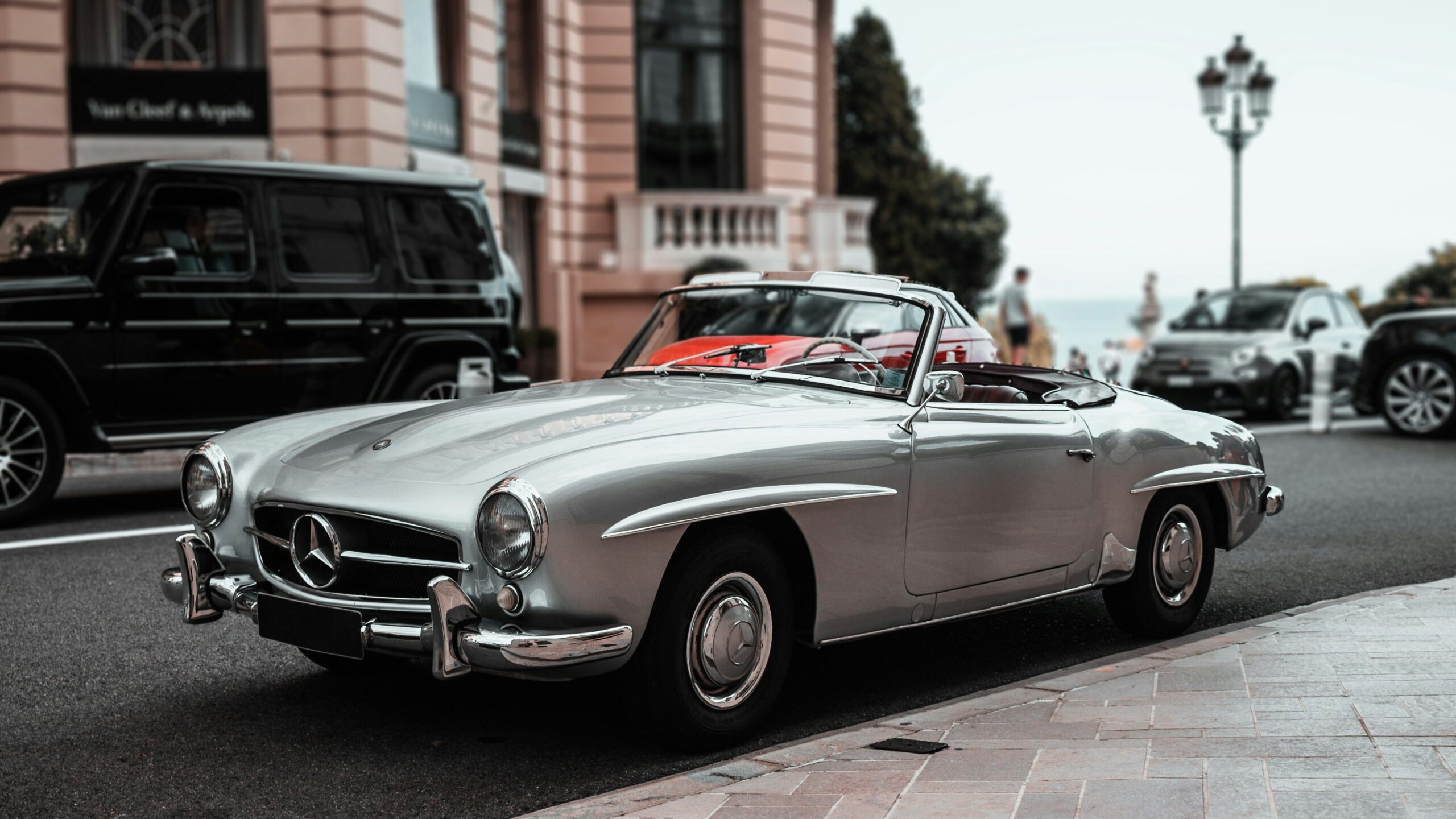
What to Do
“There’s the Hercules port, which is located in the center, full of super yachts from millionaires and billionaires from all around the world. Obviously, its association with Formula One is undeniable, being one of the classic races on the Formula One circuit. But also, you know, it’s not only about that but it’s also about visiting the little side streets which is typical of any French village. On the Country Roads of France for Insight Vacations, which is the tour that I run a lot, guests also have the Insight choice to visit the Oceanographic Museum; a fantastic museum that brought a lot of tourism and a lot of wealth into the country.”
The Changing of the Guard at the Palais Princier is a fixed-point ritual that still commands a crowd. Walk down from the palace to the Port Hercule — the harbor Tim references — where the superyachts moor and where, on Grand Prix weekend, hospitality suites rise up around the circuit’s famous hairpin bend. The Musée Océanographique, founded by Prince Albert I in 1910, is one of Europe’s finest marine museums and worth more time than most visitors give it. For the quieter side of Monaco, loop through the old lanes of Monaco-Ville around the palace — terracotta walls, flower boxes, none of the casino district’s noise.
How to Get There
Monaco is reachable by plane from most major airport hubs. Within France, there is no direct train from Paris but you can change at Nice, from which you have a 25 minute journey, or from Menton (around 15 minutes), with regular services throughout the day. Trafalgar’s Best of France and Mediterranean Highlights tours both include a visit to Monaco.
2. Èze
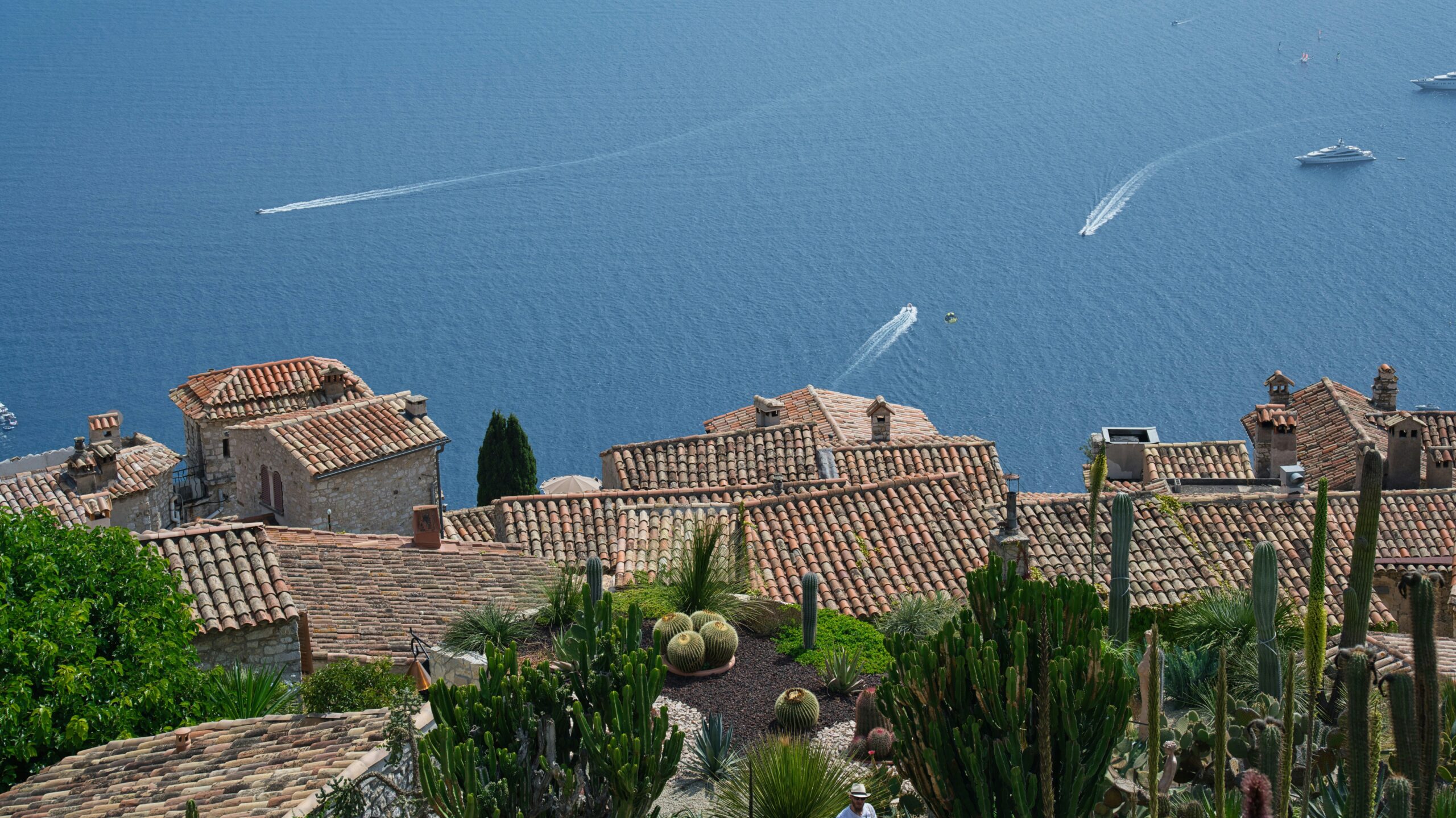
“Èze is a little village that’s perched on what is called the Moyenne Corniche. It’s the most beautiful drive in the world”, says Tim.
Èze (or Èze-Village, to distinguish it from Èze-sur-Mer below) traces its origins to Phoenician and Ligurian settlements, with the hilltop position chosen purely for its defensibility. The village passed between Savoy and France repeatedly over the centuries, its Italian inheritance visible in both the architecture and the cooking. The philosopher Friedrich Nietzsche was a regular visitor in the 1880s, walking the steep path from the coast below each day, so the trail is still called the Chemin de Nietzsche today. In the twentieth century, it became a discreet retreat for artists and aristocrats, and the medieval bones of the village have been exceptionally well preserved.
What to Do
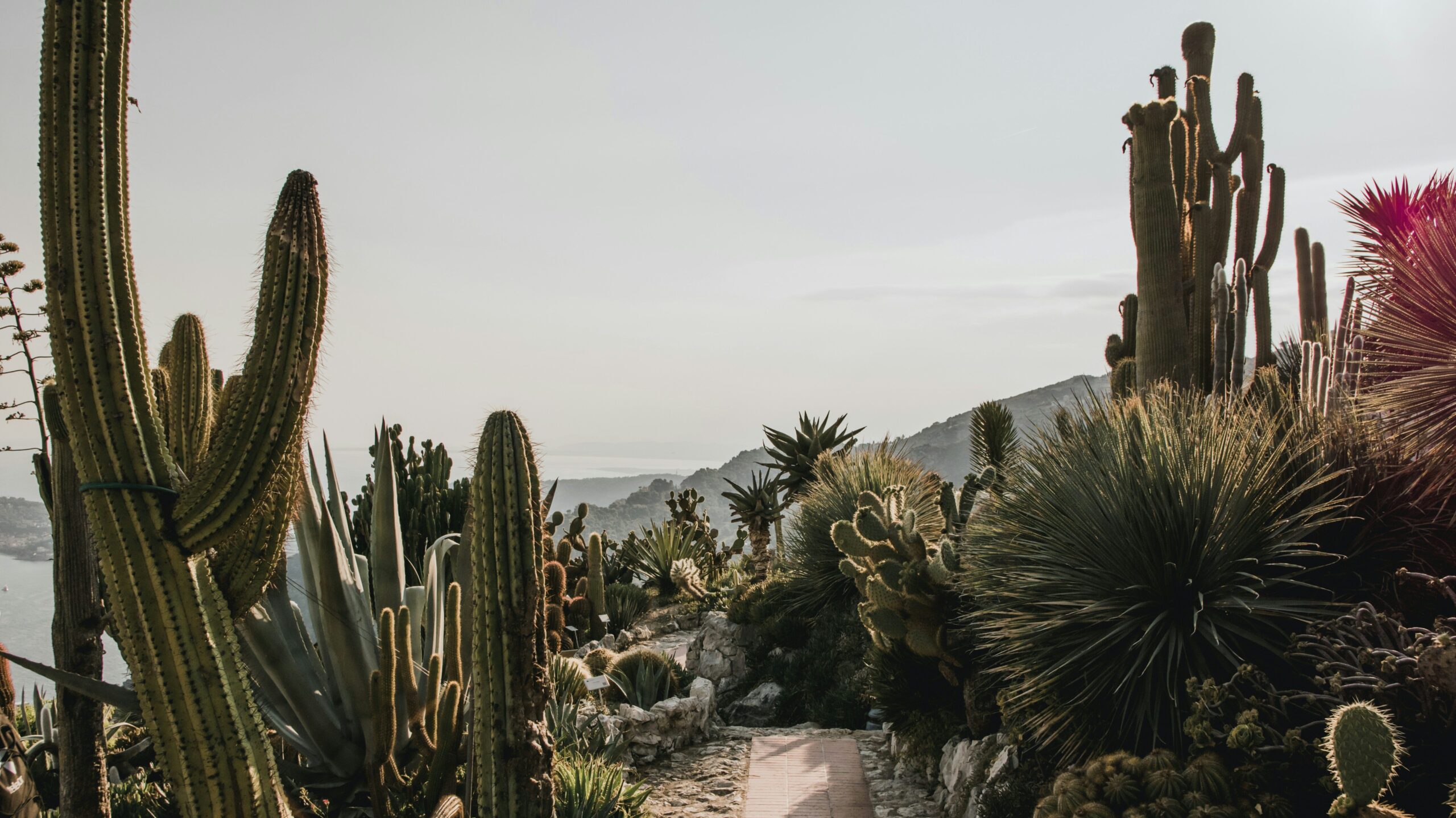
Start at the top, literally. “They have one of the best botanical gardens in the south of France,“ says Tim. “You can go right up to the top and get a great viewpoint.” The Jardin Exotique sits on the ruins of an ancient fortress at the village’s highest point, a sweep of cacti, succulents, and Mediterranean flora with panoramic views stretching the full length of the Côte d’Azur. Coming back down through the lanes, look out for lavender vendors peddling their fragrant wares. “Generally there’s a guy that’s selling lavender as we arrive and he makes little soaps and that sort of thing. I buy our guests little lavender pockets and I tell them to put them in their suitcase because it makes their clothes smell nice.” It’s a small thing, but those are the details that stay with you.
From there, the village church is worth a stop: this small baroque structure is beautiful and, for music fans, a piece of rock history. “You can visit the church where Bono, the famous rock star from U2, got married.”
“We then visit Fragonard’s Perfumery, which is very famous internationally. On our tour, we have a visit of the factory and guests get to sample some of the best perfumes found anywhere in the world, and purchase them as a gift to head back home. World renowned, because that part of the world also grows a lot of the flowers which create the scents for the perfumes and beauty products.”
In the evening, book ahead for dinner at either Château Eza (one Michelin star) orLa Chèvre d’Or (two stars), both perched over the cliff edge, both with the kind of views that accompany the the food better than any vintage wine. The food itself reflects Èze’s complicated geography. “It used to be part of Italy for a very long time. So they have a mixture between the two, it makes a really interesting blend of a very interesting culinary experience.”
How to Get There
“Èze is a little village that’s perched on what is called the Moyenne Corniche. It’s the most beautiful drive in the world, up there with, maybe, the drive between Naples and Sorrento. It’s unbelievable. It’s where the Alps crashes into the sea and it’s called, the Alpes-Maritimes, that is the department name”. Along the way, Cap Ferrat appears below, boasting some of the most valuable property in France, its shoreline dotted with villas owned by billionaires and oligarchs. You can take the Corniche from Nice or Monaco.
3. Saint-Paul-de-Vence
“It was an artist’s hub that was famous all over France and attracted people in the impressionist and post-impressionist movement. Most notably, Marc Chagall — he’s buried in the cemetery there”, says Tim.
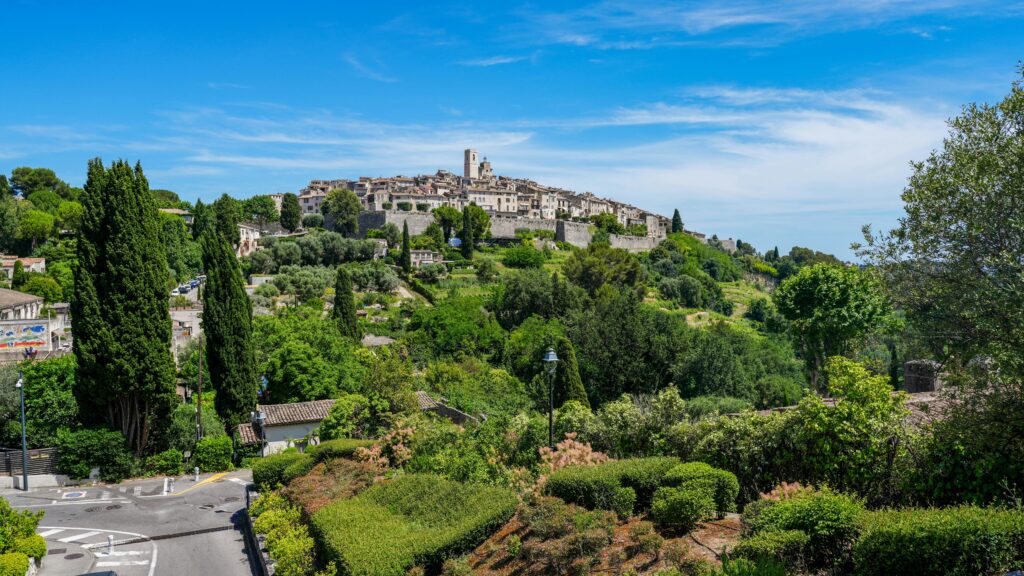
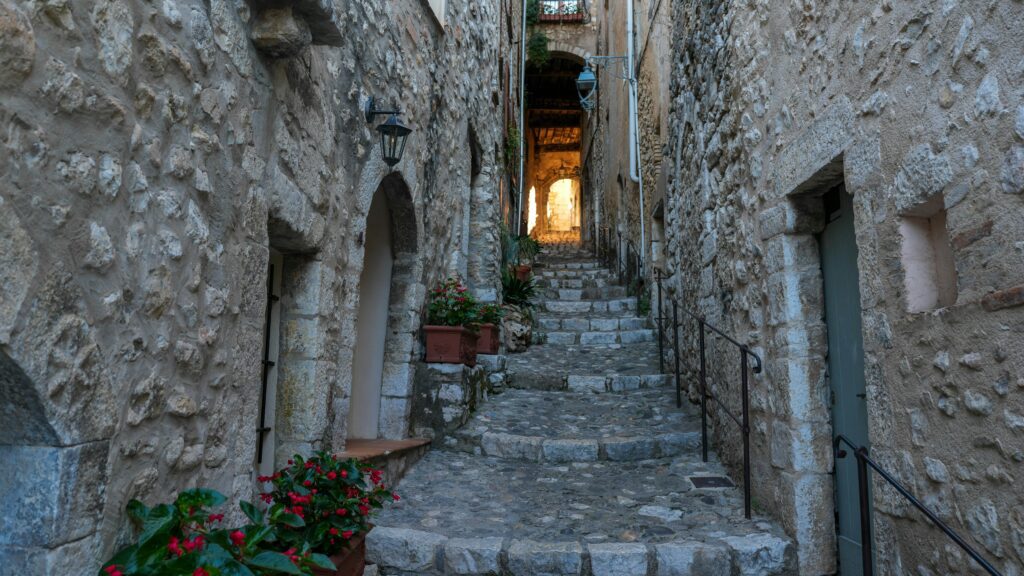
There are medieval walled towns scattered along the Riviera, and then there is Saint-Paul-de-Vence. A village so beautiful, and so long beloved by the world’s most discerning creative minds, that its cobbled streets practically hum with history.
Saint-Paul-de-Vence’s medieval walls were commissioned by François I in the sixteenth century, a strategic fortification on the border between France and Savoy which was designed to be impregnable. They proved so effective that they were never seriously breached. By the nineteenth century, artists discovered the village for its light and its quiet, and from the 1920s onwards it became one of the most celebrated gathering places in European cultural life. The hotel La Colombe d’Or, whose owner accepted paintings in lieu of payment, built one of the great accidental art collections in France; works by Picasso, Matisse, Miró, and Léger still hang on its walls. The Fondation Maeght, opened in 1964, consolidated the village’s reputation as one of the finest small art destinations in the world.
As for what puts Saint-Paul-de-Vence in a category of its own, the answer lies partly in who chose it. Picasso, Matisse, Modigliani, Dufy — all came here, drawn by the quality of southern light. Marc Chagall came and never really left, spending the last nineteen years of his life in the village and producing, during that period, some of the most luminous love paintings in the Western canon: entwined couples floating above rooftops, surrounded by flowers, with the Riviera spread below them. He is buried in the village cemetery, where visitors still leave pebbles on the grave in the Jewish tradition of remembrance.
What to Do
At the heart of the village, sheltered beneath a canopy of old plane trees, the Café de la Place is where the locals play pétanque, the traditional game of steel balls and a wooden target that functions, across the whole of southern France, as an excuse to stand outside in good company.
Then, stroll the main street along the “art galleries and antique shops and little cafés”. For lunch, Tim has his own preferred address. “One of my favourite restaurants is located in Saint-Paul-de-Vence. It’s called Le Tilleul. Tilleul in English is ash tree, and it’s got a gigantic 200-year-old tilleul and you sit underneath this beautiful tree and you have a wonderful meal underneath it.”
Walk the ramparts in the late afternoon for the best light over the olive groves. Visit the cemetery to find Chagall’s grave. Browse the galleries along the Grand Rue, where several show serious contemporary work alongside more accessible pieces. Spend an hour or two at the Fondation Maeght, where Miró’s sculptures occupy the garden and Chagall’s mosaic greets you at the entrance. For a drink with serious pedigree, the terrace at La Colombe d’Or is as good as anywhere on the Riviera.
How to Get There
Saint-Paul-de-Vence is around 20 kilometres from Nice, accessible by bus from Cagnes-sur-Mer or Nice. You can visit Saint-Paul-de-Vence on the Wonderful France tour, where you’ll have the option of spending the day in this medieval artistic retreat after a glamorous jaunt in Monaco.
4. Nice
“If you have a free day in Nice, it’s one of the greatest places in the world.”
Nice is the capital of the Côte d’Azur, and like all great capitals, it is impossible to fully summarise and worth surrendering to entirely. The Baie des Anges (the Bay of Angels) curves before it as the Alps press down from behind, and somehow the city between the two manages to feel simultaneously grand and liveable.
Tim has watched Nice change over the years. A previous mayor restricted coach access to the famous Promenade des Anglais, closing off portions of the city to large groups. That era, he reports, has ended. “I think he’s just announced that we can drive into Nice now.
Nice was founded as a Greek colony around 350 BC, called Nikaia, before becoming a Roman city of some importance. For centuries it sat within the Kingdom of Sardinia, under the House of Savoy. Its Italian character is still present in the cooking, the architecture of the old town, and family names across the region. Nice formally became French only in 1860, following a popular referendum. In the nineteenth century it became one of Europe’s premier winter resorts, with its long promenade (named for the English visitors who funded it) attracting everyone from Queen Victoria to Chekhov. Today it is France’s fifth largest city and the main gateway to the Riviera.
What to Do
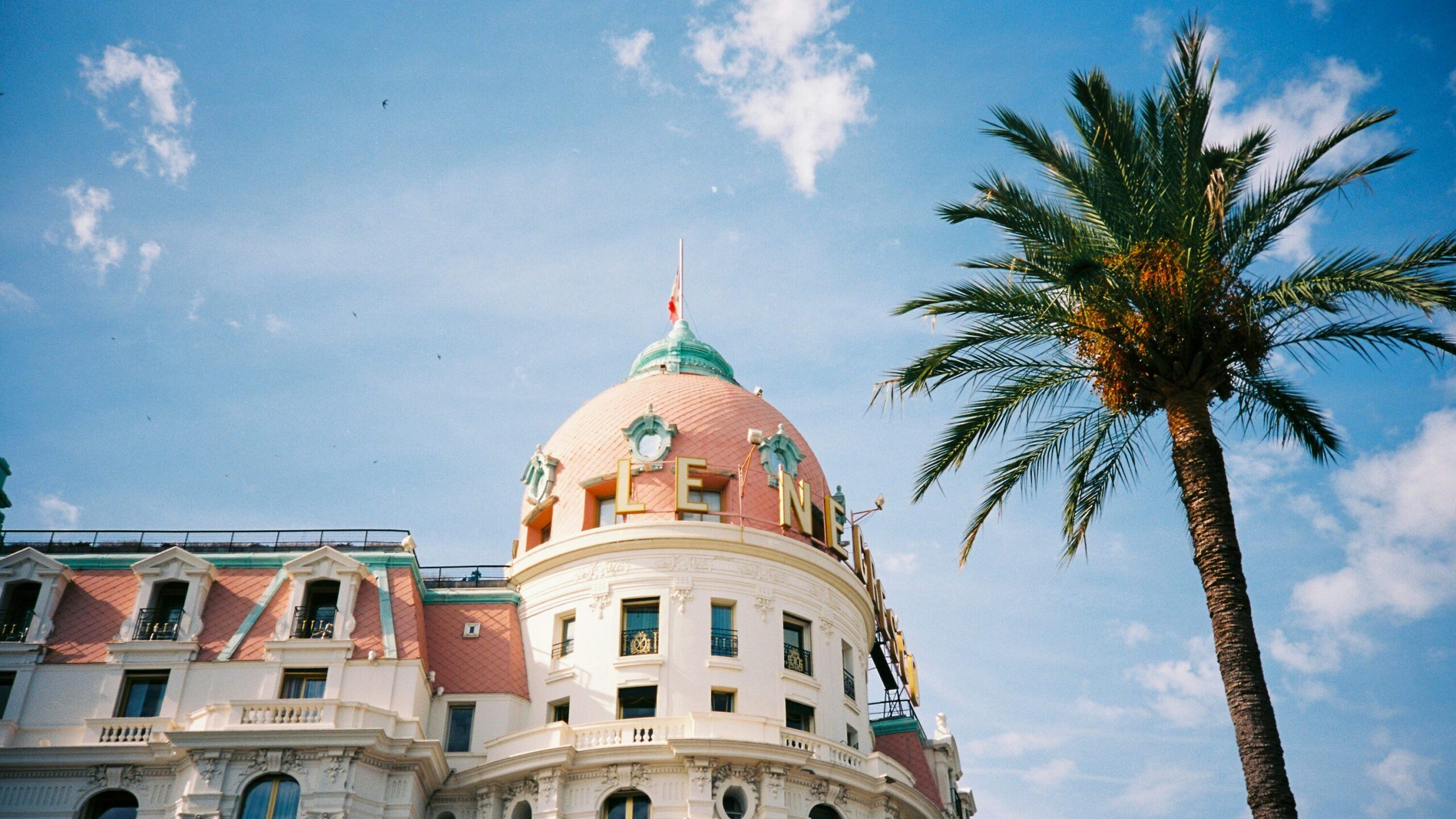
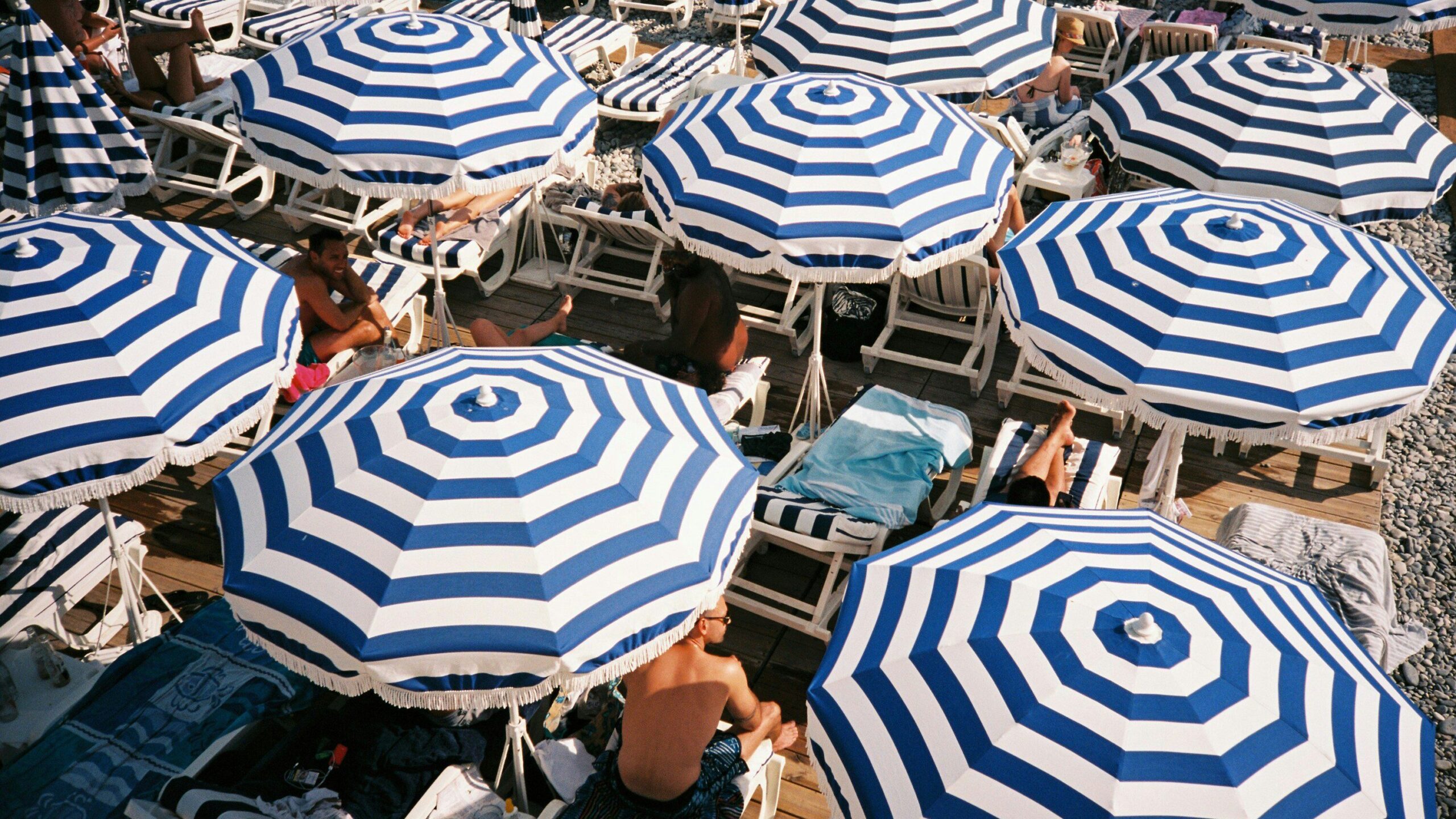
Walk the Promenade des Anglais at sunrise before the day-trippers arrive, and again at sunset. “As a traveler, if I was going there by myself, I would go for a walk along the Promenade des Anglais. It goes for eight kilometres along the bay.” One thing to prepare for: “Something that our guests may not be aware of is that it’s not a sandy beach — it’s a pebble beach, because there are two rivers that come from the Alps and they put pebbles into the ocean.” Book a beach club for the afternoon (private clubs along the promenade offer deck chairs, waiter service, and a level of Riviera comfort that is worth the cost). “You can hire a deck chair at one of the local beaches, then go for a swim and get food and Aperol Spritz brought to you. It’s a lovely way to spend a day.
The old town offers a different kind of pleasure, where the Cours Saleya flower and produce market is one of the finest in France. Climb to the Colline du Château — the castle hill — for a panoramic view of the entire bay. “They have lots of grand boulevards lined with plane trees, which cool down the city. They have lots of parks. And also their culture is very much a terrace culture, so in summertime in Nice you’re going to spend most of your time sitting outside on a terrace.”
In the evening, eat in the old town, and look for socca, the local chickpea flatbread, at a street stall before you sit down. The food reflects the city’s long Italian history: “Lots of aubergine and pizzas and pastas and fresh produce. They have amazing local markets, and you can have really good gelato with interesting flavors such as basil and tomato — these kinds of things are really unique to that area.”
How to Get There
Nice Côte d’Azur Airport is one of France’s busiest international airports, with direct flights from cities across Europe, the US, and beyond.
5. Hyères
When asked for one more recommendation, somewhere beyond the circuit of the well-known French Riviera towns, Tim doesn’t reach for Cannes or Antibes. He tells a story instead.
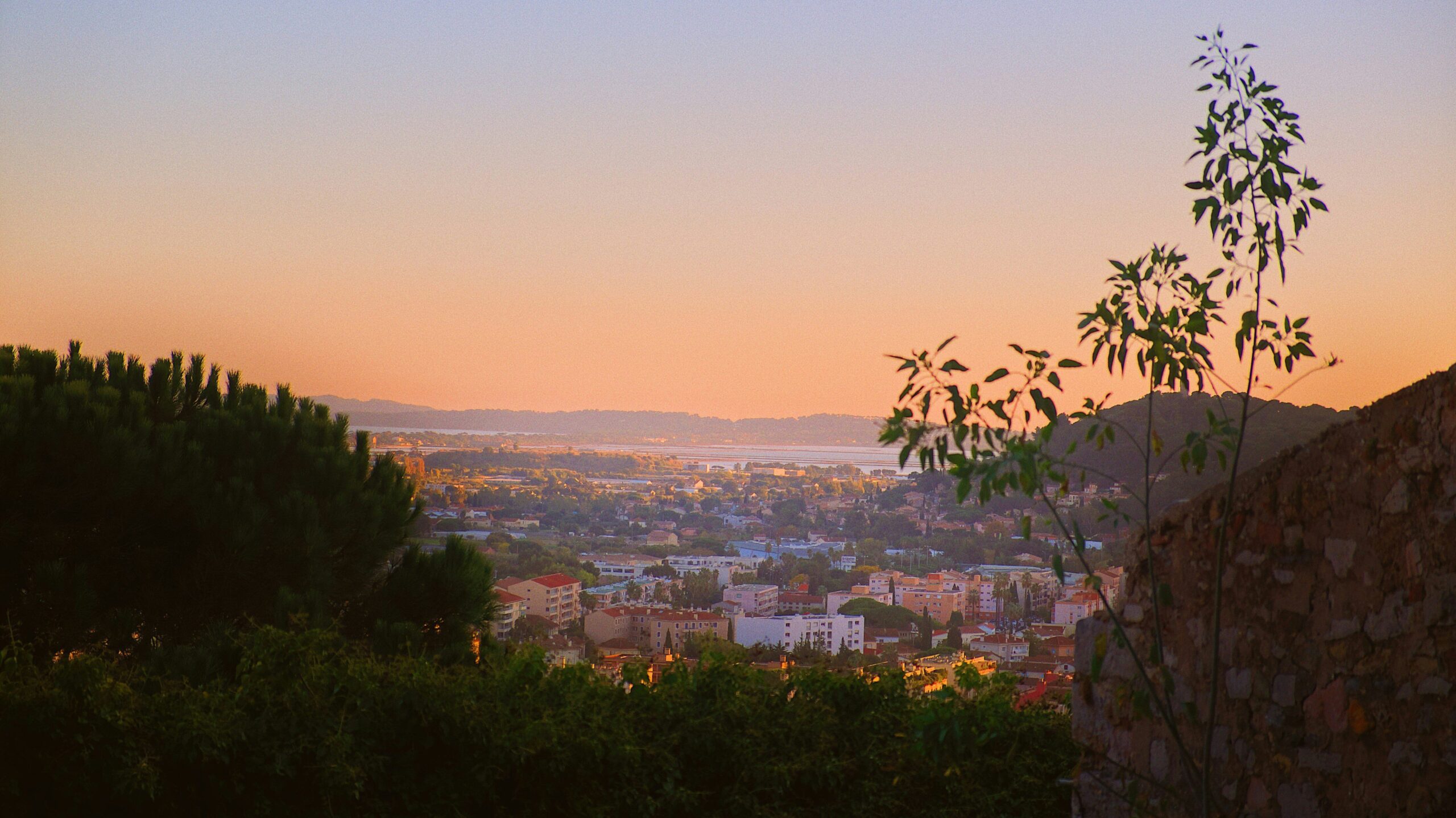
“My auntie used to live in Hyères, a town in the south of France on the French Riviera. She used to live right at the top of the old town. So it was very, very difficult to climb. Her calves were like steel because she would always walk down to the markets every day and then walk all the way back up this medieval town, with beautiful little shutters and all the same colors, oranges and reds, which is very typical from the south of France.”
Her house, he says, occupied multiple levels and had a rooftop infinity pool. “You used to sit in the pool and you would just see the ocean in front of you. And that was unbelievable.”
“Out of a lot of the French towns that are really beautiful, maybe somewhere that’s like untouched and yet to be discovered. It’s definitely one of those towns that I thought was really lovely.”
What to Do
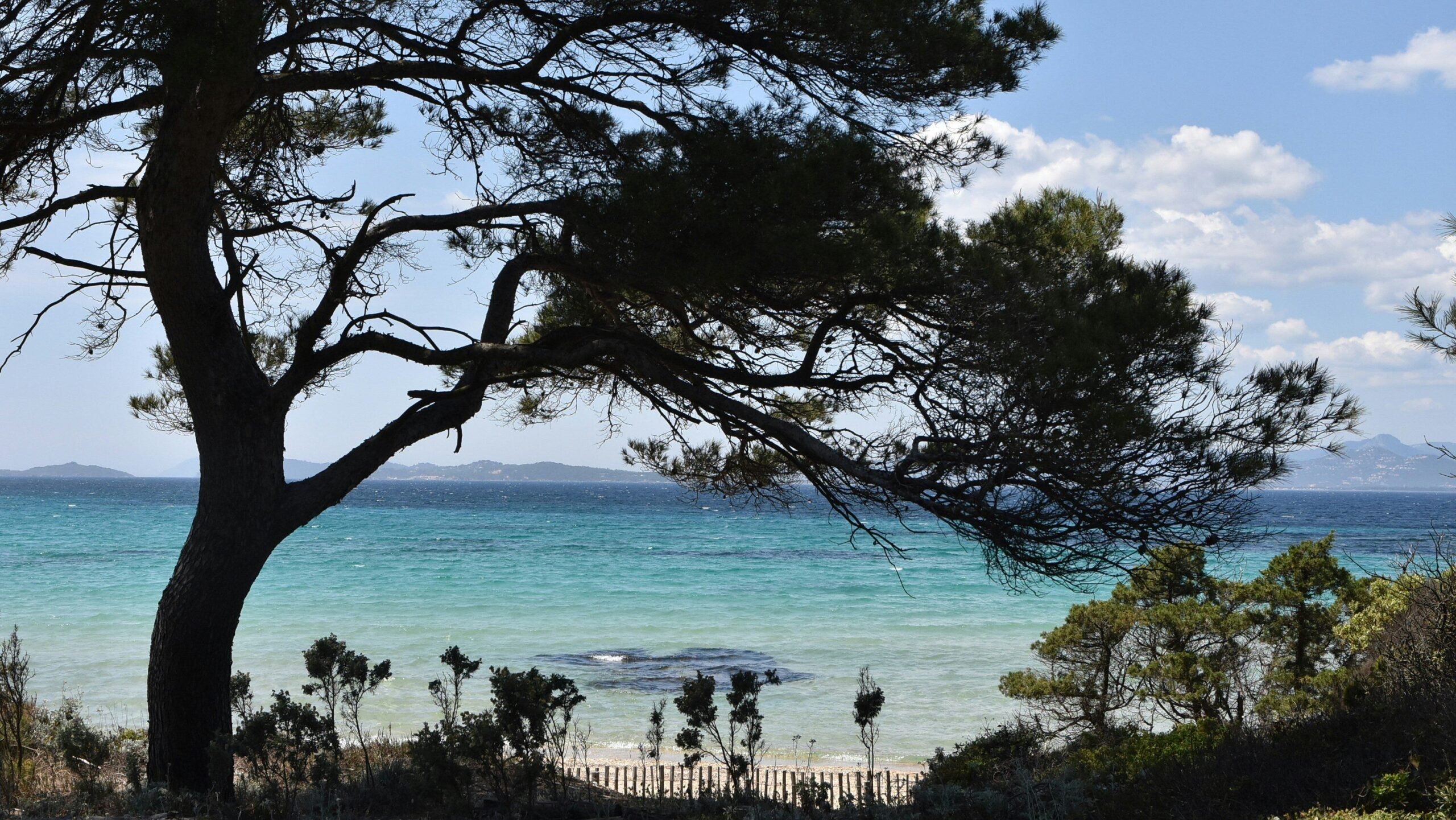
Beyond the old town, Hyères occupies a uniquely privileged position on the coast, making it the departure point for the Îles d’Or, the Golden Islands: Porquerolles, Port-Cros, and Île du Levant. A former royal hunting ground and now a protected marine reserve, Porquerolles in particular offers up the quintessential Riviera summer day: cycling through pine forests, swimming into quiet coves, floating in water the color of glass.
Back in Hyères, climb through the old town to the ruined castle at the summit for the view out over the peninsula, the salt flats, and the islands beyond. Browse the market at Place Massillon in the lower town. Visit the Villa Noailles, a modernist art centre set in a 1920s Cubist villa above the town, with rotating exhibitions and a garden designed for the views.
How to Get There
Hyères is around 90 kilometres from Nice and 18 kilometres from Toulon. Toulon–Hyères Airport has connections from Paris and select European cities. Regional trains (TER) connect Hyères to Toulon and the wider network.
What is the most romantic town in the French Riviera?
“I would say Èze. If I was going there with a partner, I would book a really nice hotel in Èze and I would go for a stroll through the botanical gardens. You spend the evening there by booking a nice table with a view overlooking the ocean, watching the boats sail past. Anywhere is great, though. The images that spring to mind are the photos of Charles Leclerc and his wife at their wedding in Monaco. Driving along this beautiful romantic road in a Ferrari. It’s like the best wedding photo you’ve ever seen.”