
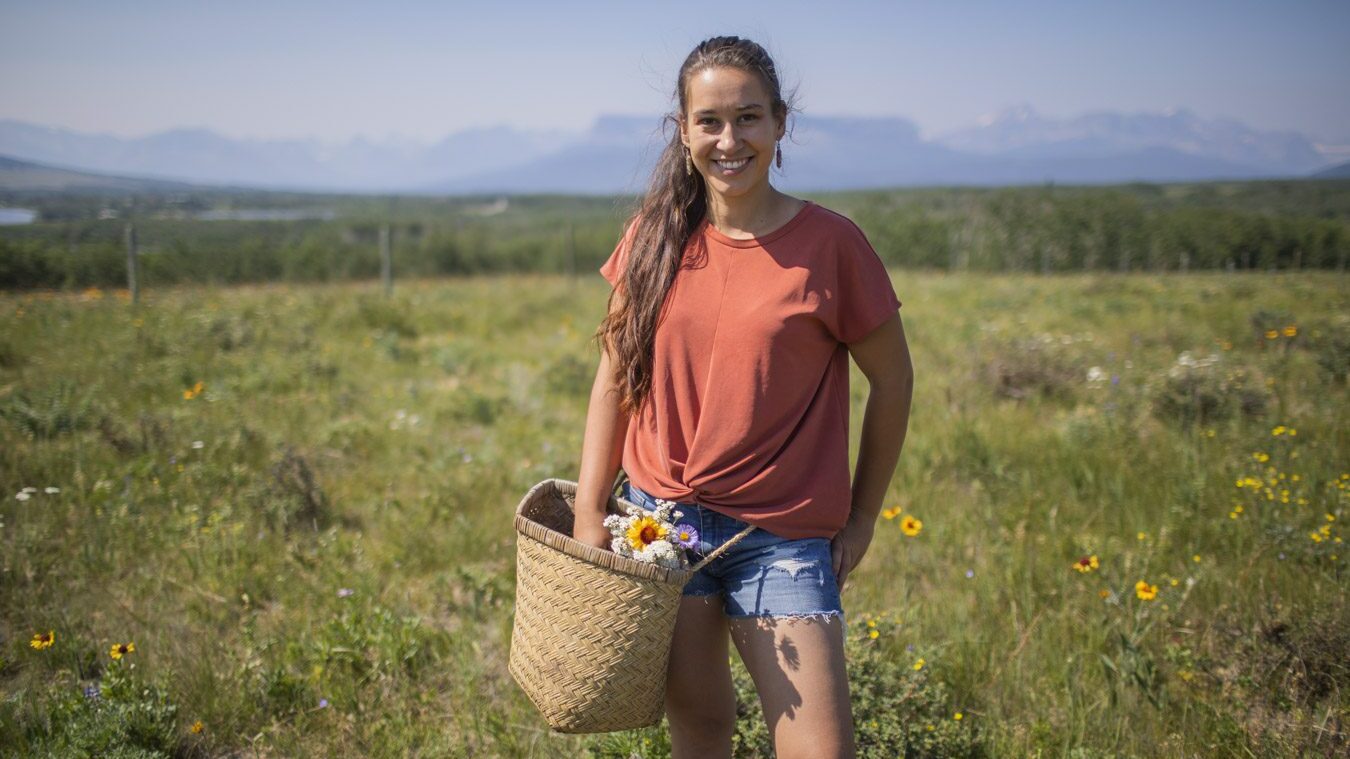
Born and raised on the Blackfeet Reservation in northwest Montana, the natural world is in Mariah Gladstone’s blood. Even during the brief spell she lived away from home, while completing her Master’s Degree in Environmental Engineering in New York City, she sought out ways to maintain that connection.
“As a poor college student, I thought: everyone’s getting sick, it’s New York City and supplements are expensive, but conifer trees are full of vitamin C,” Mariah recalls. “I got very into urban foraging because I realized: okay, this is what I have. What can I make with it?” (She is quick to point out that while this applies to pine needles, spruce and fir, yew trees are poisonous and should be avoided.)
Unlike New York City, across the great plains and mountain plateaus of Montana, grocery stores are sparse. But flora and fauna thrive here in abundance, and Mariah’s ancestors learned the land and lived in symbiosis with this environment for millennia. Mariah has spent her career sharing the knowledge her Blackfeet ancestors have passed down through generations. “I want visitors like Trafalgar guests to learn from thousands of years of history on the landscape — the stories, the animals, the plants that have been here even longer than people.”
“As long as I’m outside… I’m happy”
Mariah is a born storyteller. It runs in the family, with her father co-founding what has become the oldest continuously running native speaker series in any US National Park 43 years ago. “When I started doing storytelling for that program in college, I was the first woman and the youngest presenter they had ever had.”
From there, Mariah built an inspirational career within sustainability and food advocacy, starting with creating cooking demonstrations and online classes for Indigikitchen, her platform teaching people about re-indigenizing their diets with ‘pre-contact’ foods that are native to North America. After a year working in government writing a climate action plan, in 2018 she decided to pursue Indigikitchen full time — all while working towards her master’s.
Alongside Indigikitchen, Mariah teaches visitors to Glacier National Park about Blackfeet history and contemporary life through storytelling and foraging, as well as hosting more focused plant walks through the land from her house on the reservation. “I get to live really in connection with the seasonality of things,” she acknowledges. “Right now there are certain edible wildflowers that I’ve been using to decorate salads. In a couple of weeks they won’t be here anymore, but I’ll have new things. It keeps me very connected to the land.”
“As long as I’m outside — picking berries, digging roots, playing in my garden, kayaking — I’m happy.”
“We drive past the house my grandpa was born in”
One of Mariah’s focal points is communicating the understated and lengthy history of the Blackfeet people on this land. “The reservation is about 150% larger in area than Glacier National Park, covering over 1.5 million acres extending to the border with Canada,” she explains. “We have archaeological evidence that puts us here for at least 14,000 years. Glacier National Park was founded in 1910, so it’s cool to go back thousands of years before then, to bring in Native voices and get a totally different perspective.”
“I have long familial connections to the land, so I get to tie in stories that are personal to me. On tour, we drive past the house my grandpa was born in, or the family that opened the general store in 1913,” Mariah continues. “It helps bring Native people out of just a historical context.”
“People are seeking out Indigenous experiences”
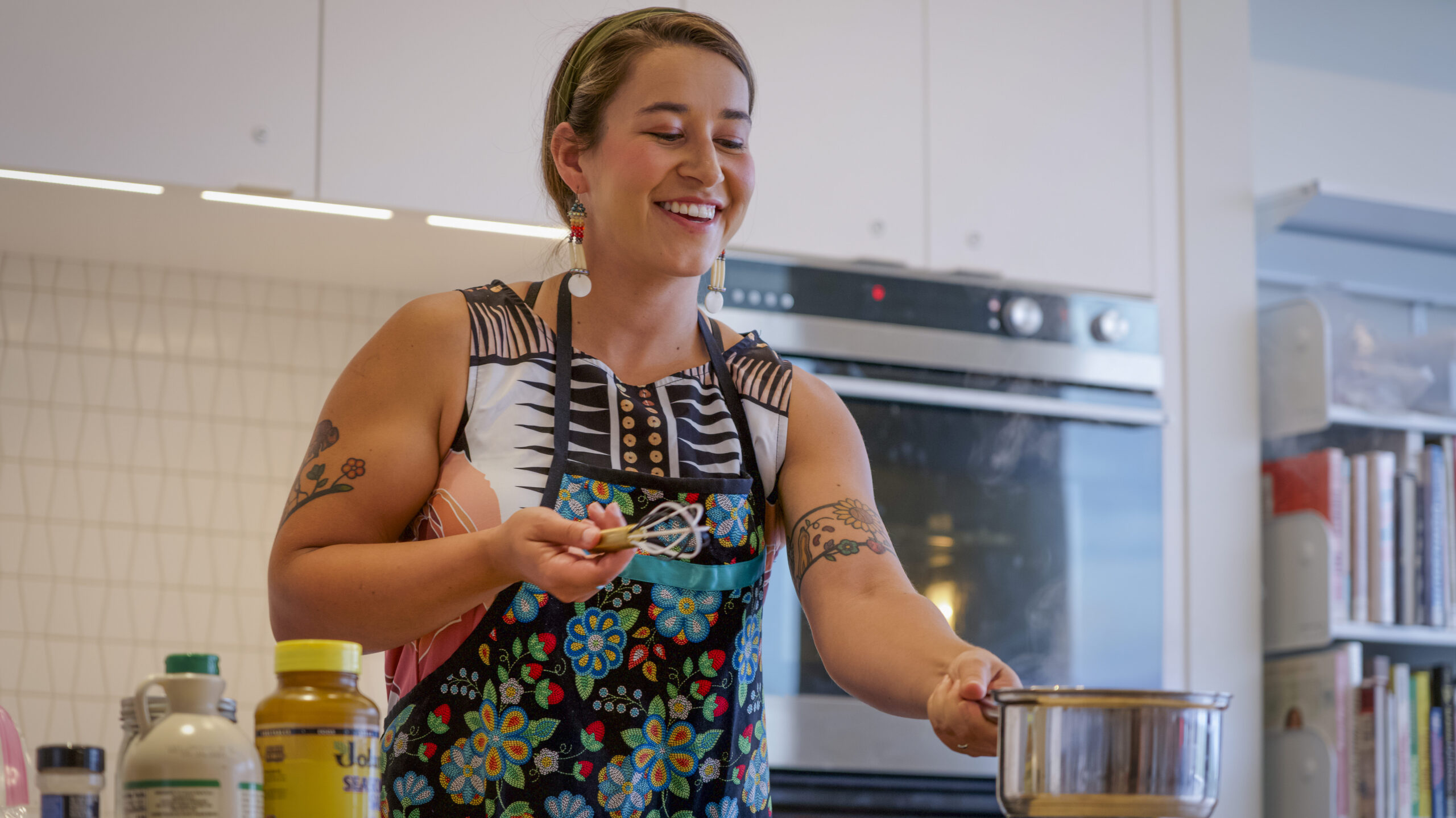
Mariah emphasizes the importance of experiencing native ingredients in their homeland. “It’s amazing to be out on the land saying: you can touch this, you can taste this, you can smell this. Trafalgar guests are always a super curious group, and it’s fun that they’re willing to try the weird berries I find. For the rest of their time in Glacier, they get to see those plants and munch on wild snacks.”
Increased knowledge around Indigenous culture and history means that Mariah is now able to give deeper context to curious travelers. “It’s been interesting to see the shifting mentality of visitors in this area. Only 10 years ago people were asking: ‘Is it safe to go into the reservation?’ Now the questions are: ‘Is there a movement to change the names of the mountains back to their traditional Blackfeet names?’ You can see people’s perspectives are changing and shifting toward seeking out Indigenous experiences and opportunities for learning, so we get to have deeper discussions.”
“You should appreciate the prairies as much as the mountains”
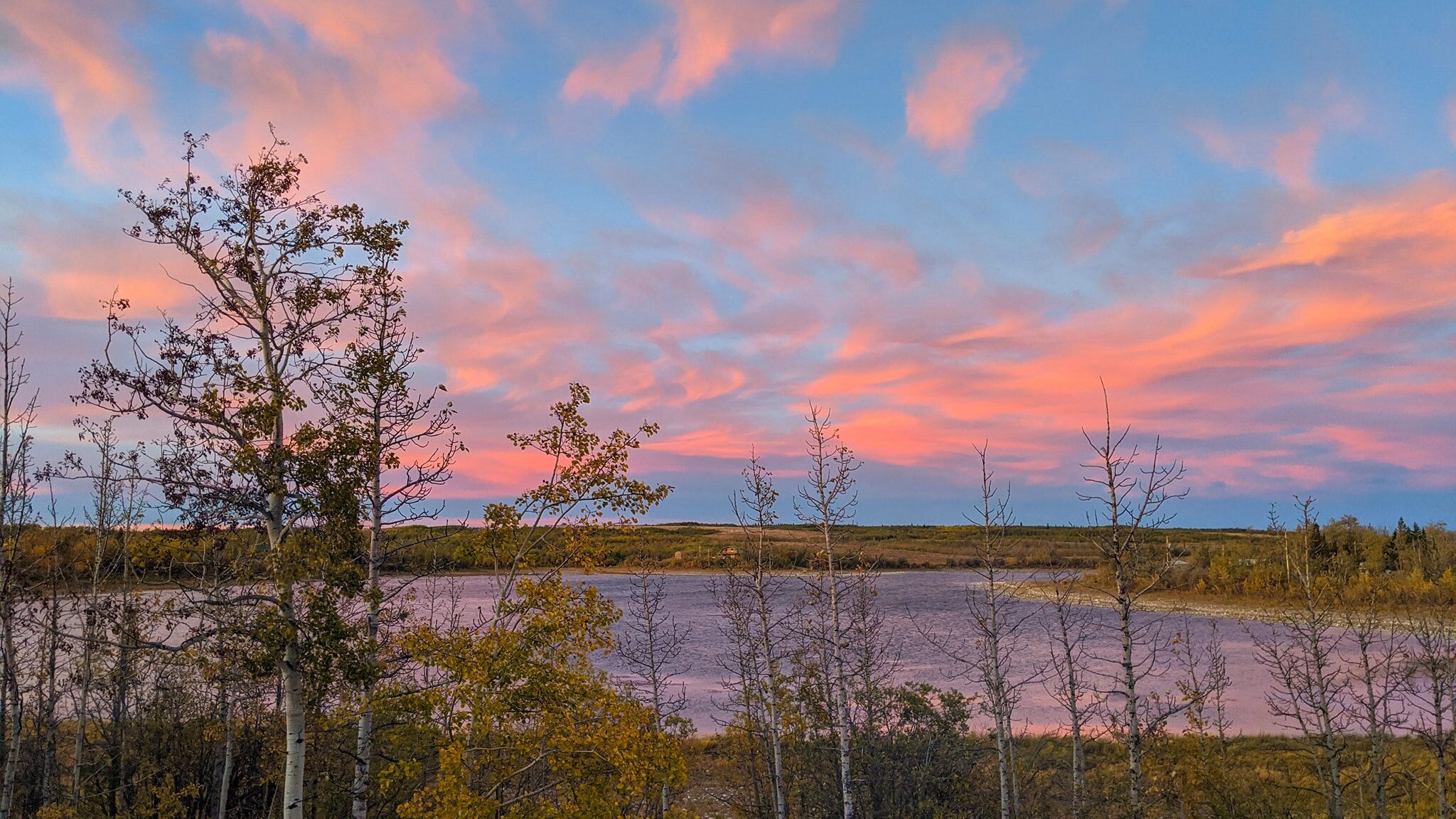
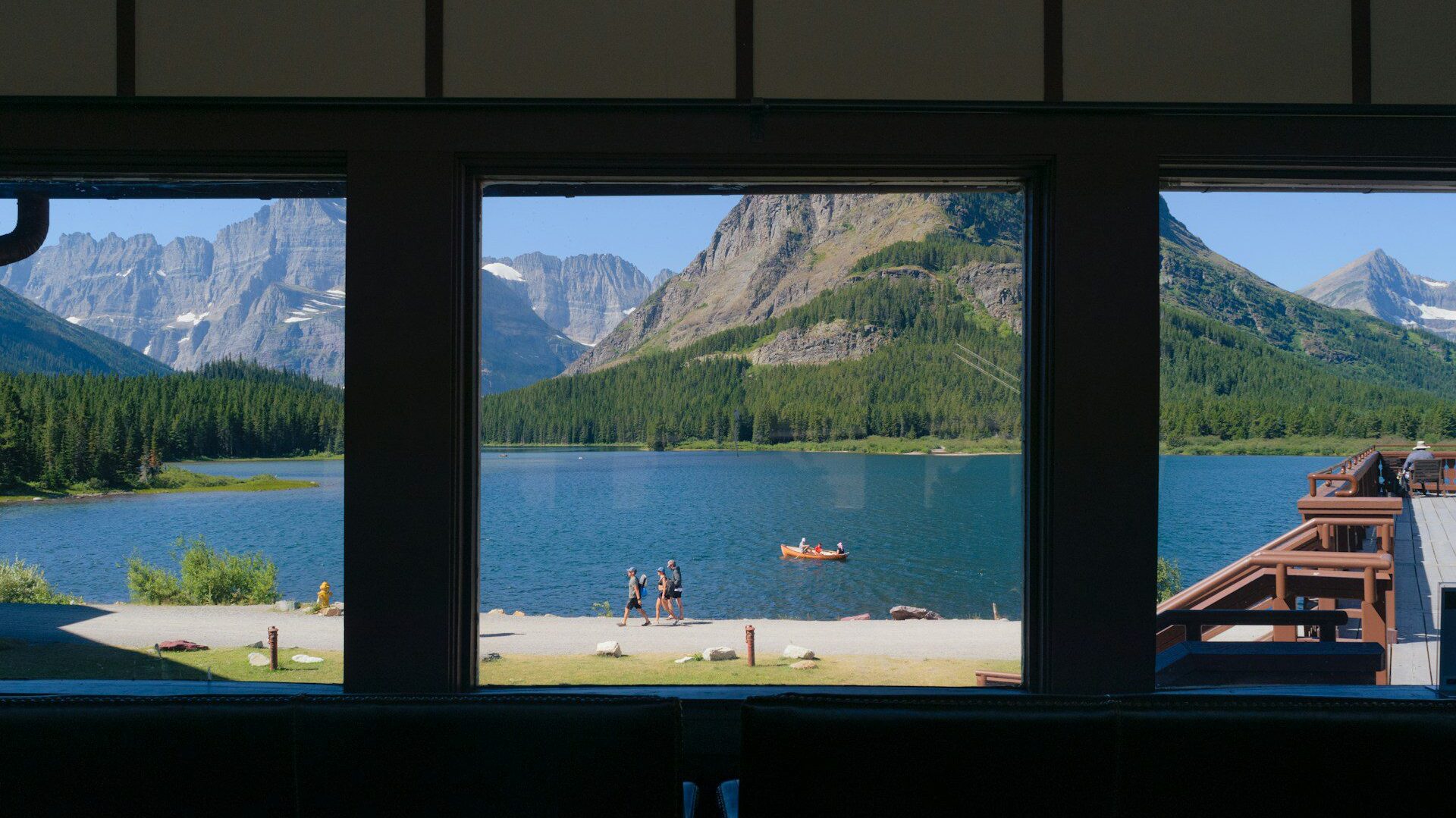
Mariah’s best local advice? Don’t let the rest of Montana get lost in the shadow of the mountains. “People should appreciate the prairies just as much as the mountains,” she says, acknowledging that the bounty of natural beauty in the region means that some of it flies under the radar. “Folks will drive across the flat lands just to get to the mountains, but the prairies have such beautiful sunsets. You can see antelope, and even bison in certain parts of Montana.”
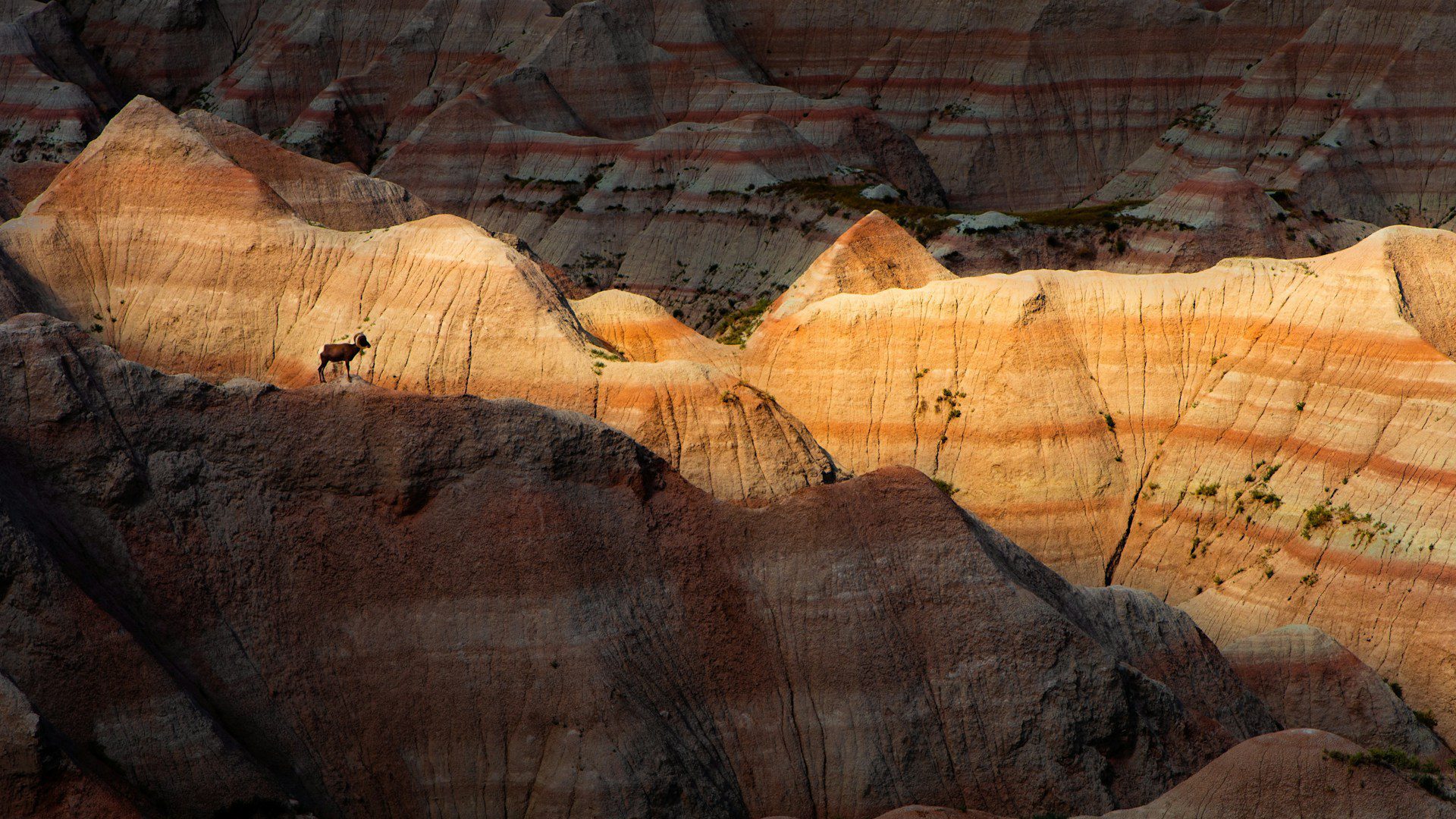
“We also have Badlands on the reservation; they’re in big canyons cut out by the river on the eastern part. They have these weird sandstone features and look very otherworldly, but most people don’t know about them — even locals — because everyone’s used to our pretty mountain pictures. When the Badlands are in South Dakota, they’re a national park. When they’re in Montana, people just drive past them because they’re going towards the mountains.”
Otherworldly Badlands, sprawling prairies, crystal lakes and mammoth mountains… Montana surely has it all.