



Recently updated on March 11th, 2026 at 12:15 pm
Did you miss the February 17 eclipse? Don’t panic, there’s an even better one set to arrive on August 12 – so add that date to your diary. The solar eclipse of 2026 will sweep across parts of Europe, offering travellers a rare chance to watch the Moon glide across the Sun in broad daylight.
Depending on where you stand, you’ll experience either totality – when day briefly turns to dusk – or a dramatic and deep partial eclipse. Let’s look at what happens during a solar eclipse and where in Europe is the best position to see this phenomenon.
1. What actually happens during a solar eclipse?
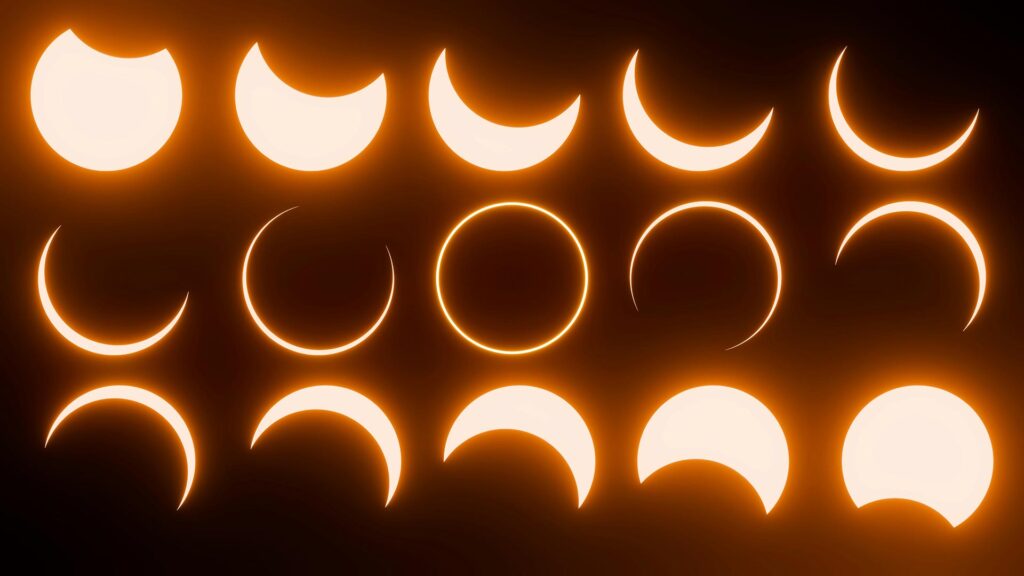
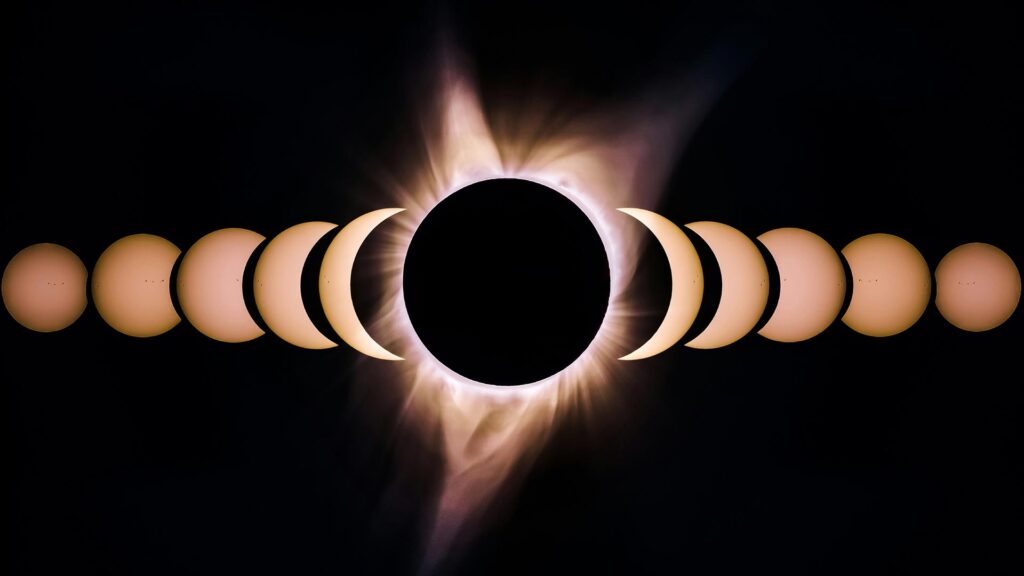
A solar eclipse happens when the Moon passes directly between the Earth and the Sun, temporarily blocking the Sun’s light from reaching us. In a total eclipse, the Moon fully covers the Sun for a few brief minutes, revealing the Sun’s outer atmosphere – the corona – and plunging the landscape into an eerie twilight.
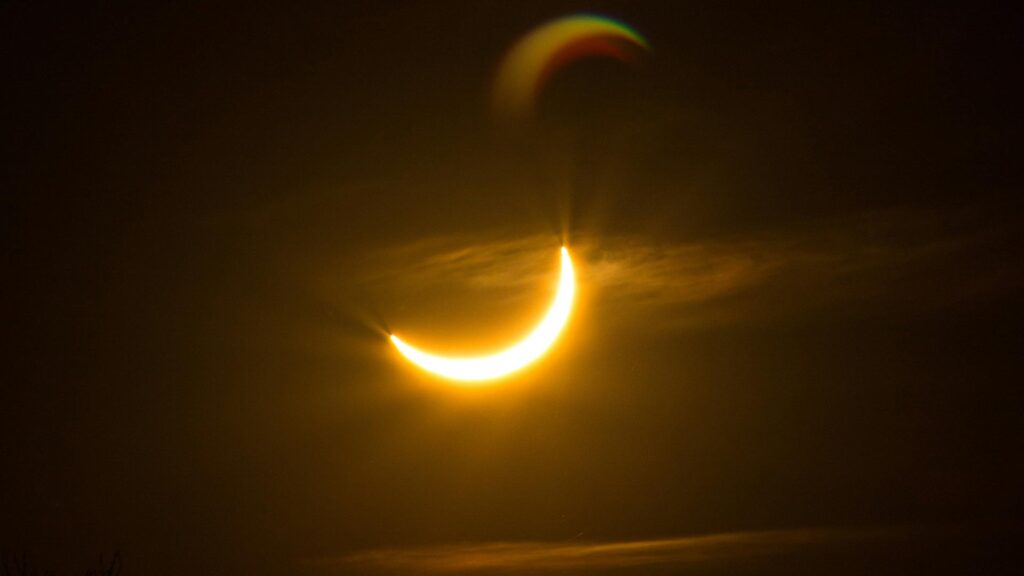
In a deep partial eclipse, more than 90% of the Sun can be obscured, creating a crescent-shaped sliver of light and noticeably dimming the day. Observers often report a sudden temperature drop and unusual animal behavior as daylight fades unexpectedly.
Important note: eclipse glasses that meet international safety standards are essential for viewing any partial phases.
2. Why August 12, 2026 is worth planning a trip around
While there’s a total solar eclipse occurring somewhere in the world every 18 months or so, it’s rare to happen in the same location (it takes almost 400 years to return!). So if you have the once-in-a-lifetime opportunity to be in the right place on August 12, 2026 when the path of totality crosses parts of the North Atlantic and southern Europe, then take that chance!
This eclipse is unusually accessible with total views in areas of Iceland and Spain, and more than 90% coverage across Portugal, the UK and Ireland. You won’t need to cross continents or camp in remote desert plains – instead you could just be at the beach in Valencia, or standing in Reykjavik’s harbor to see the light shift and feel the temperature dip.
August also brings long summer days, so you could use the eclipse as your excuse for a summer vacation to one of these destinations!
3. Where to go for a full eclipse experience
🇮🇸 Iceland – Reykjavik & beyond
Iceland feels like the perfect, rugged otherworldly stage for a total solar eclipse to play out. On August 12, 2026, the Moon’s shadow will sweep across the western edge of the island, bringing a total solar eclipse to places including the Westfjords, Snæfellsnes Peninsula, Reykjanes Peninsula and even central Reykjavik itself. In the city proper, totality around 17:48 UTC will last roughly a minute, with longer durations (up to ~2 minutes) farther west toward Látrabjarg and the outer peninsulas.
Seeing daylight briefly dim over the snow-topped peaks, volcanic lava fields and Atlantic swell will add an unforgettable layer to your trip to Iceland this summer. Pair the solar eclipse 2026 with geothermal baths and long days where the sun barely sets.
Totality duration: ~1m in Reykjavik; up to ~2 m further west
Maximum eclipse time: 17:48 (local time)
Best vantage: Westfjords, Snæfellsnes, Reykjanes
Join this trip: Iceland Highlights
🇪🇸 Spain – Northern Spain & The Balearics
If a Mediterranean backdrop appeals more than Arctic winds, head to sizzling Spain. It’ll be sweltering in many smaller towns and cities where the total solar eclipse of 2026 will pass over, so perhaps the cool island breezes on the island capital of Palma de Mallorca will be the best spot.
On August 12, 2026, the path of totality skims northern Spain and then dips over the Balearic Islands. If you’re in the north of Galicia, any of Asturias, or between Madrid and Bilbao then you’ll have a great chance of seeing the total eclipse. In fact, even Madrid and Barcelona will experience 99% of the eclipse.
The final destination for the eclipse is over Palma, which will see the full experience just before sunset. Gorgeous! Stand in Palma’s broad harbor for a good view, or head to coastal headlands around the island for open-sky views.
Totality duration: ~1m 30 s (varies by location)
Maximum eclipse time: 20:31 (local time)
Best vantage: Western and southern coasts of Mallorca
Join this trip: Northern Spain, Highlights of Spain and Portugal, Best of Spain
4. Where to see the 90%+ partial eclipse
A deep partial eclipse – where the Moon obscures more than 90% of the Sun – is still a fantastic eclipse experience and in no way inferior. This sort of eclipse still dramatically alters daylight, transforming the sun into a slender crescent and bathing landscapes in strange, shifting light. Across parts of Western Europe people will be able to see this eclipse – so long as the skies remain cloud-free! The atmosphere will still feel otherworldly, even without the totality.
🇫🇷 France – Nice & Paris
France won’t quite slip into totality, but it comes impressively close. In southern France – Marseille and Nice – around 95% of the Sun will be obscured, while in Paris, roughly 92%. That’s more than enough to feel the light shift and the temperature dip. Expect a crescent Sun and a distinctly muted afternoon glow rather than full twilight.
On the Riviera, head down to the Mediterranean to witness it by the sea, while in Paris find an open space like a garden or the riverbanks along the Seine.
Eclipse time: Approx. 20:20–20:30 (local time)
Sun coverage: Nice ~95% | Paris ~92%
Join this trip: Best of France
🇵🇹 Portugal – Lisbon & Porto
Portugal enjoys one of the strongest partial views in Western Europe. Lisbon will see around 94% coverage, while Porto sits just below that at approximately 92–93%. That’s a dramatic bite taken from the Sun, enough to noticeably dim the golden Atlantic light Portugal is famous for.
In Lisbon, head to one of the city’s miradouros (viewpoints) overlooking the Tagus River for a wide, unobstructed view. In Porto, head down to the Douro riverside.
Eclipse time: Approx. 20:30 (local time)
Sun coverage: Lisbon ~94% | Porto ~92–93%
Join this trip: Best of Portugal
🇮🇪 Ireland – Dublin
Dublin will experience around 94% coverage – one of the strongest partial views in the British Isles. While it won’t tip into totality, the shift in light will be severe, particularly along the coast if there are clear western skies.
For the best view, make your way to Dublin Bay or the cliffs around Howth where the Irish Sea stretches out before you. Then wait for this dramatic moment to unfold! Places like Cork and Waterford should also have a great advantage.
Maximum eclipse time: Approx. 19:55 (local time)
Sun coverage: Dublin ~94%
Join this trip: Irish Highlights, Britain and Ireland Highlights
🇬🇧 United Kingdom – London
Old London town will see roughly 91% of the Sun obscured. That should give the capital’s skyline a softer, almost sepia tone as daylight fades slightly and shadows sharpen.
Primrose Hill, Greenwich Park and the South Bank all offer broad sky views without straying far from the action. And while British weather always adds an element of suspense, August gives you a fighting chance of clear skies.
Maximum eclipse time: Approx. 20:00 (local time)
Sun coverage: ~91%
Join this trip: Real Britain, London and Paris Explorer
5. Where to find more visibility details
Space.com has a great visibility guide for the total solar eclipse in August 2026. It lists major cities across Europe withthe time to look at the sky and percentage cover.
6. How to prepare for the solar eclipse in 2026
- Check your exact timing again – Look up your location’s precise maximum eclipse time a few weeks before travel. Even a 10–15 minute difference matters.
- Buy certified eclipse glasses – Make sure they meet ISO 12312-2 safety standards. Ordinary sunglasses are not safe.
- Scout your viewing spot the day before – Avoid tall buildings or mountains blocking the late-afternoon sun.
- Have a weather back-up plan – Be flexible or ready to drive a few hours to avoid clouds.
- Dress for a temperature drop – Even in August, eclipses can cause a noticeable chill. Bring a light layer.
- Protect your camera (and your eyes) – Use a proper solar filter for photography. Never look through a lens without protection.
- Stay for the full experience – The build-up and the return of light is just as memorable as maximum coverage.
- Book tours and accommodation well in advance – Cities in the high-coverage path will see increased demand.
That’s our guide to the best places in Europe to see the August 12 solar eclipse in 2026. Where will you be?…