



Turin is probably not the first place you’d think of when planning a trip to Italy. It is an industrial city; the home of Fiat and chocolate-making, where Italians come for work rather than holidays. Although it was the first designated capital of Italy after Italian Unification and home of the royal family of Savoy, it wears its Old World elegance less overtly than somewhere like Florence or Venice. Perhaps this is in part due to the huge postwar migration of Italians from the bomb-scarred south, which dramatically changed the dynamic. Now it is a rich, northern city with fiery southern blood; graceful and unpolished all at once.
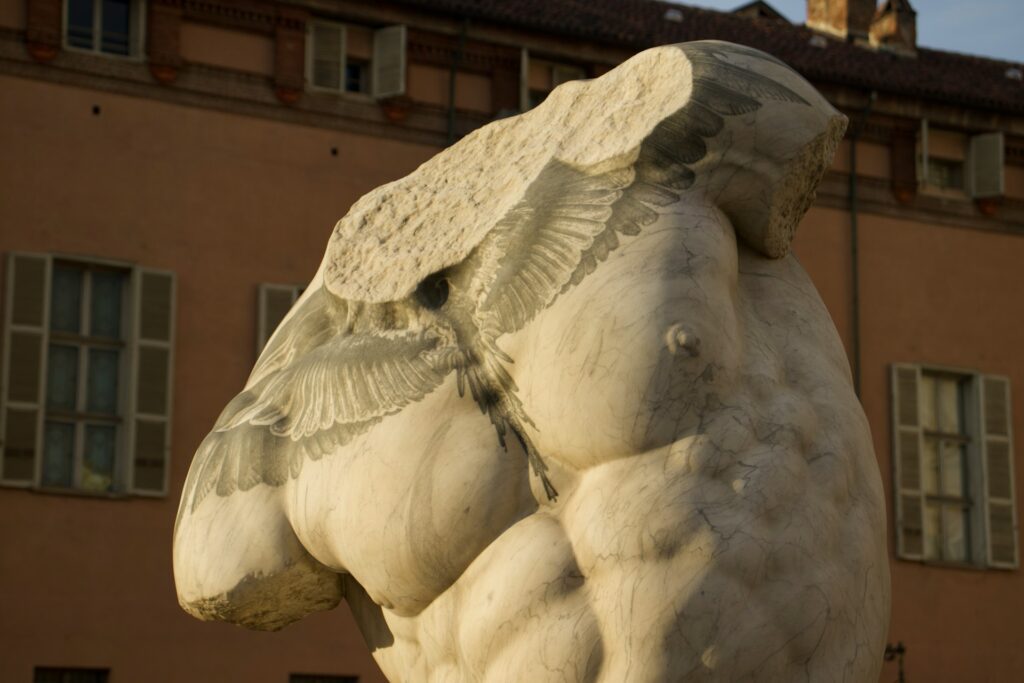
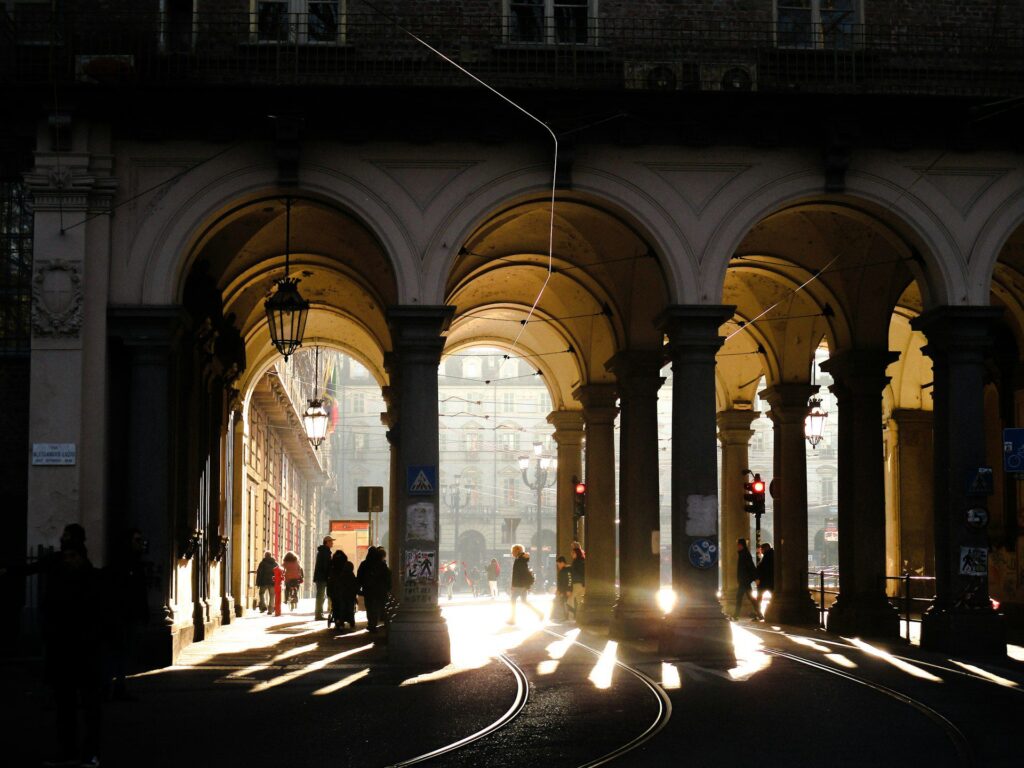
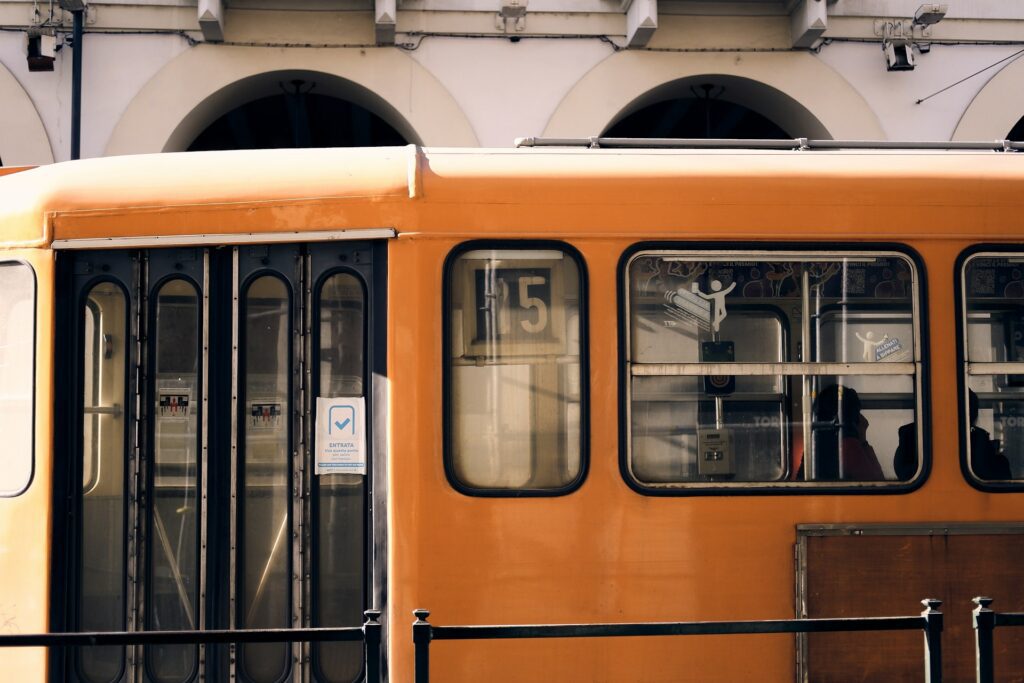
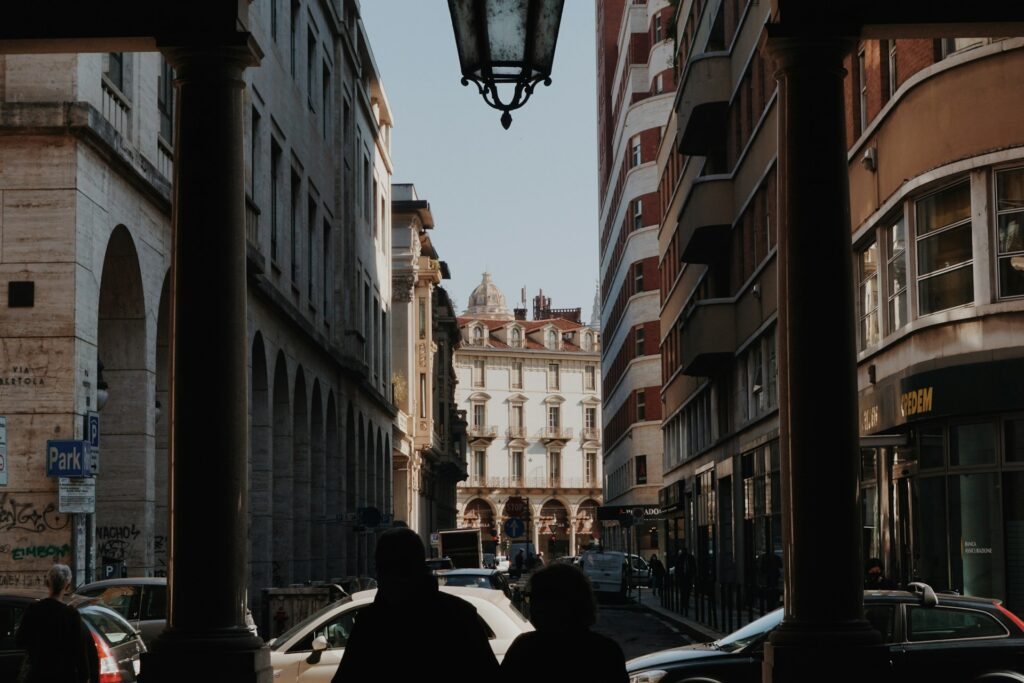
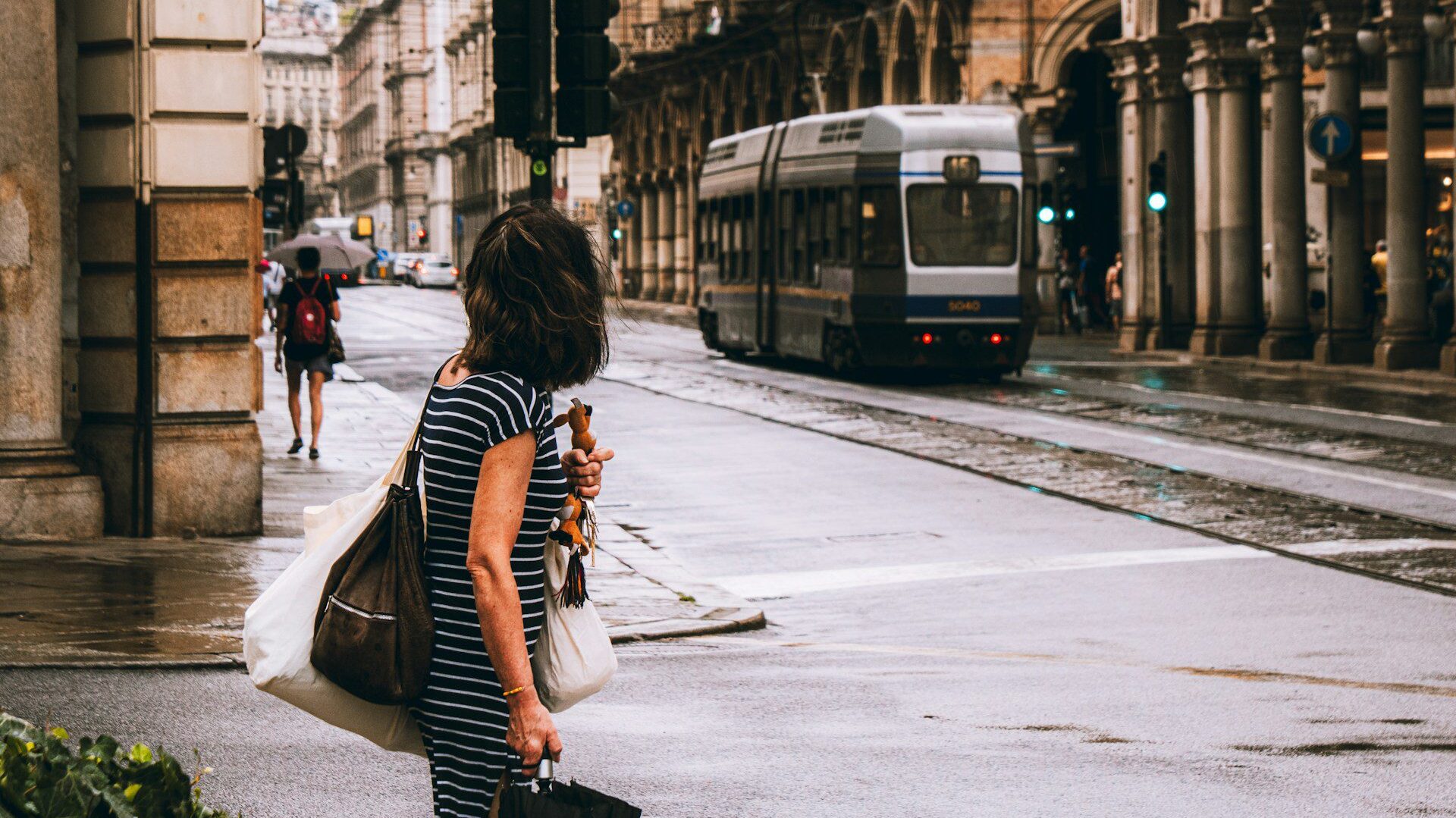
I’ve always had a soft spot for Turin (or Torino, as it’s known in Italy) — after all, it was where I was born. My mum grew up there, and in the mid 90s she met my dad on the nearby Ligurian coast, where he had settled after years of wandering. For my first four years we all lived together in a typical Torinese apartment with my Sicilian half-sister, before moving to London — the city I now call home. But while the English capital is where I live, the tramlines, porticoed streets and mountainous backdrop of Turin will always be a part of me.
Recently, I visited Turin for the first time in 25 years with my mum and sister, retracing our past by coming back to old haunts like our family apartment, the local aperitivo bars, and the seaside village we’d go every summer. In doing so, I got to see Turin in a fresh light, which sparked all kinds of thoughts about how the city exists both in my past as a mythical place, dream-like and mysterious, and in the present as a living thing, in many ways more real than any other place I’ve visited.
Here’s what I discovered — and why I think Turin is worth extending your time in northern Italy to experience.
“…the Western Alps watch over the city like friendly giants…”
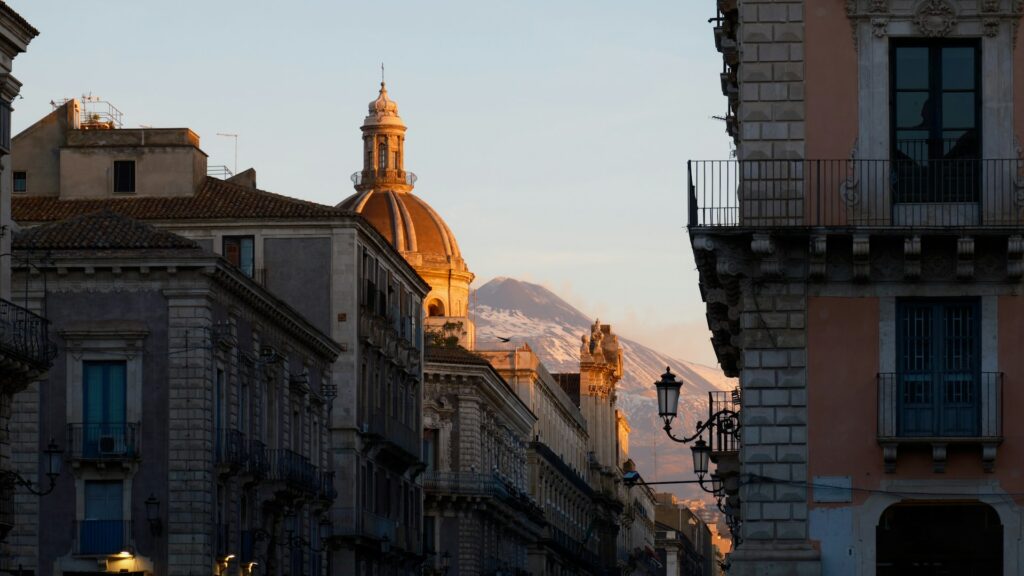
One of my favourite things about Turin is its location. It sits right in the middle of the alpine Piedmont (or Piemonte) region, where the Western Alps watch over the city like friendly giants, creating a dramatic backdrop on a bright winter day. On our trip, my sister and I regularly found ourselves pointing and yelling on some serendipitous hill, gawking at the rising behemoths peeping through gaps between the boulevards’ buildings.
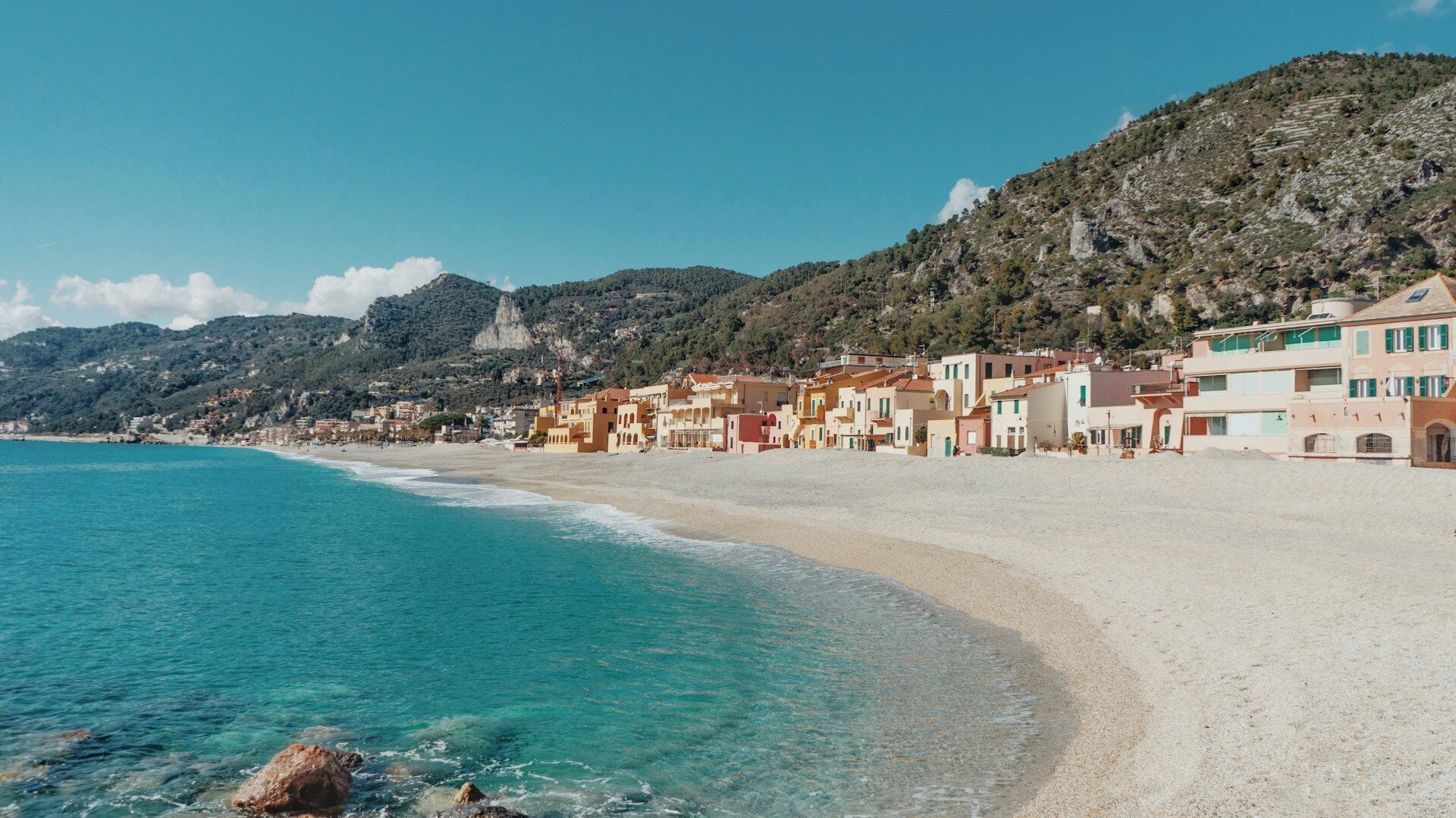
Head less than two hours the other direction, south from Turin, following the curvature of the Alps as they march into the Mediterranean sea, and you’ll get to the glittering waters of the Italian Riviera. We came here a week before we revisited Turin to see the little piazza where my parents met, and walked along the pretty, bohemian seaside towns near to where my dad used to live, like Alassio — a frequent haunt of Ernest Hemingway.
In August, Italy shuts down for summer. This is a public holiday centred around ferragosto on the 15th of August, whose origins go back to ancient Roman festival of Emperor Augustus. We would go down to Liguria every single summer and play on the beach all day, every day. Those towns and their comforting spiagge set the sandy stage for hundreds of my childhood pictures. Upon visiting this coast again and then heading up to Turin, I realized something: the city gives you the best of both worlds. You can take a day trip to the most gorgeous coastline, and then the next day find yourself hiking (or skiing) through the most iconic mountain range in the world.
“…I remember devouring (farinata) on languid evenings in the city’s piazzas…”
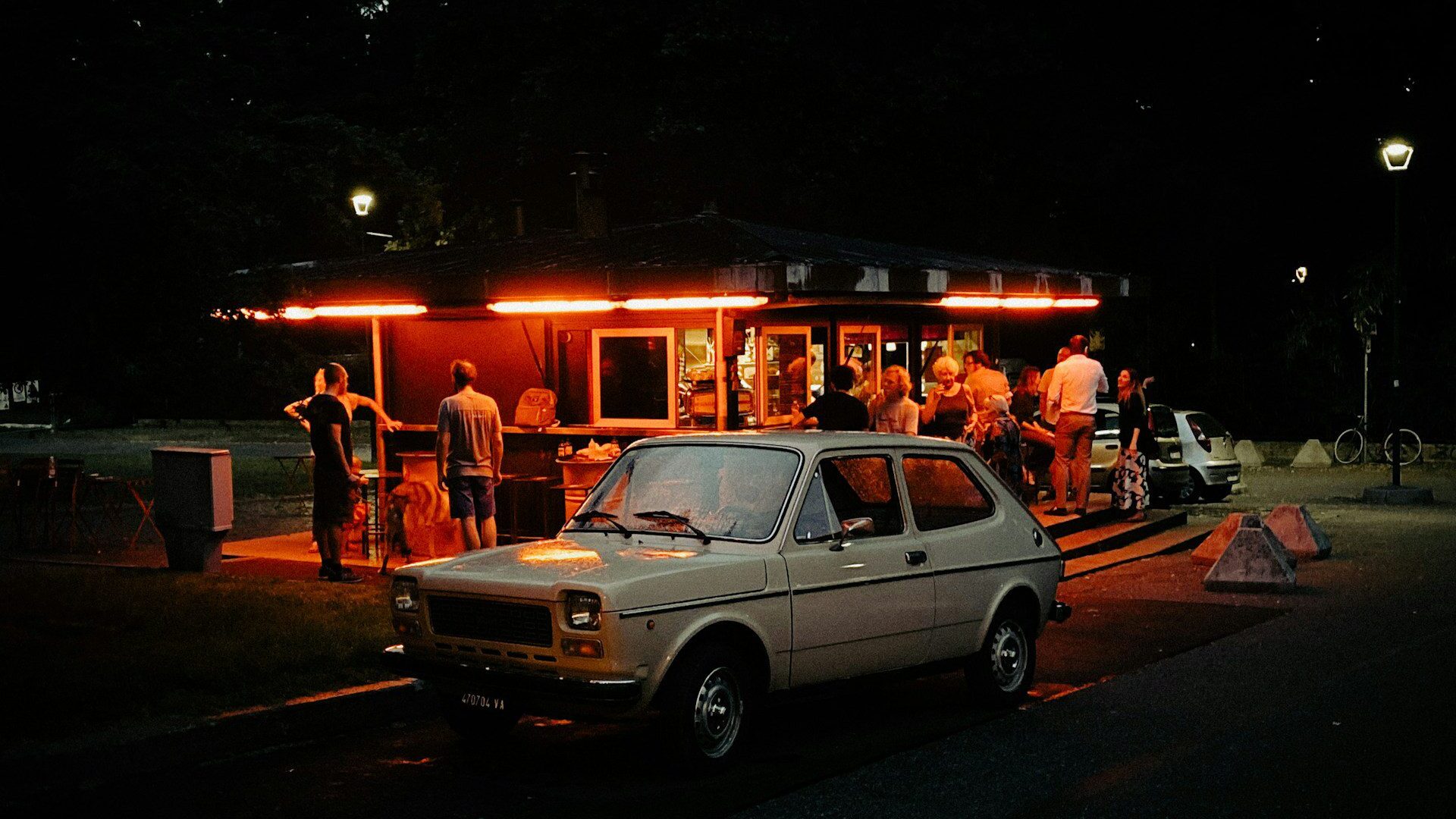
There’s a particular smell that I associate with my childhood flat in Turin. It’s a warm smell, thick and oily. It is of steamed potatoes which have been cooked in the drippings of a rotisserie chicken at a typical Torinese takeaway, the girarrosto. In Turin there are girarrosti everywhere, the most iconic being the chain Girrarosti Santa Rita, where my parents would order pollo e patate, chicken and potatoes when they didn’t feel like cooking. They’d burst proudly through the door with a heavy paper parcel in their hands, golden and dripping with juices. Taste and smell is inextricably linked to memory, and as the flavours of those sumptuous takeaways flood in from my subconscious, I start to remember another dish that reminds me of childhood.
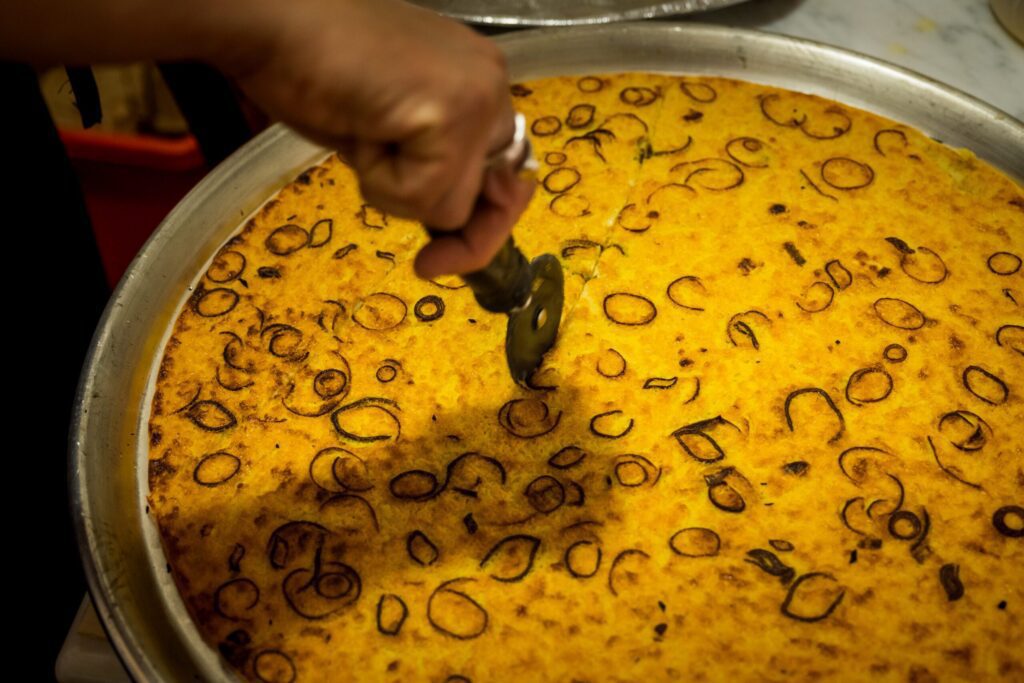
One of the best things about London is that you can eat pretty much any cuisine, and there’s no shortage of Italian restaurants. But I’ve never been able to find farinata, a chickpea-flour pancake that’s crisp at the edges, crumbly in the middle, always served with a generous crack of black pepper and sometimes a bit of fresh pesto on top. I always thought it was a Torinese dish, as I remember devouring it on languid evenings alfresco in the city’s piazzas, before running off to play with other random, roaming children. But when I texted my mum when writing this article, she told me it’s not Torinese at all — it’s a Ligurian dish that was adopted by Turin in the way port cities tend to end their food inland. Still, it’s everywhere and it’s delicious, and hard to find anywhere else outside of Liguria or Piedmont, so I’m going to claim it as part of the Turin experience.
“…finally I could feast on that mysterious red drink that made everyone so chatty…”
We spent the days of our trip revisiting the locations of our Torinese memories. The nights, then, were spent having countless aperitivi — as per Italian tradition. I was happy. Finally, I could sit at the adults’ table and feast on that mysterious red drink that made everyone so chatty.
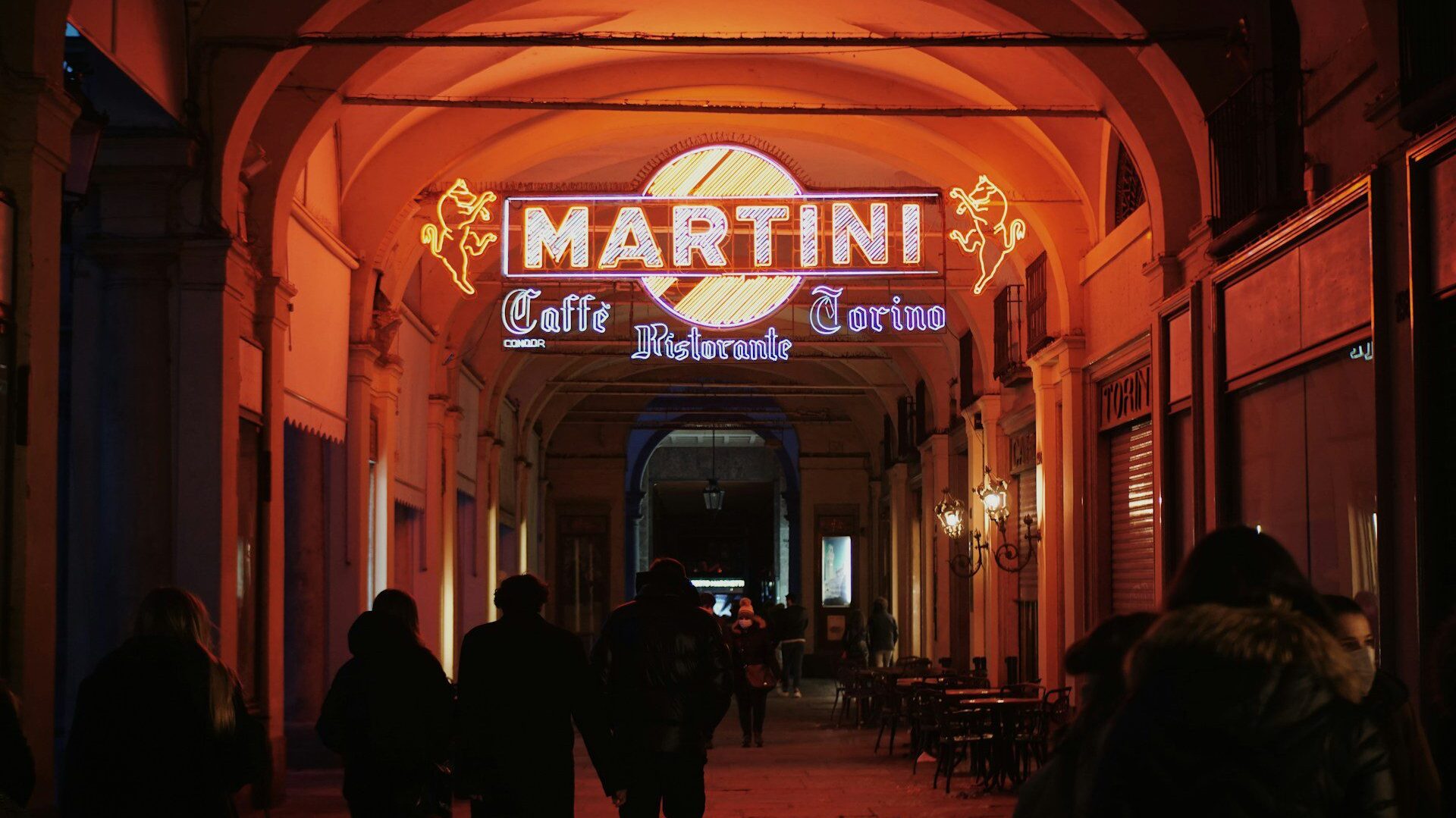
Aperitivo bars are etched into Italy’s cultural identity — and it all started in Turin, my mum told me in a bar one night. Vermouth was created here in 1786, when Antonio Benedetto Carpano began infusing white wine with wormwood and alpine herbs in his shop near Piazza Castello. The Savoy court took to it, the city’s distillers followed (Cinzano and Martini & Rossi are both Turin-born names) and the grand cafés have been serving pre-dinner drinks with small plates ever since. The ritual it created is now so protected that Vermouth di Torino carries its own official designation, like a wine appellation for an aperitif.
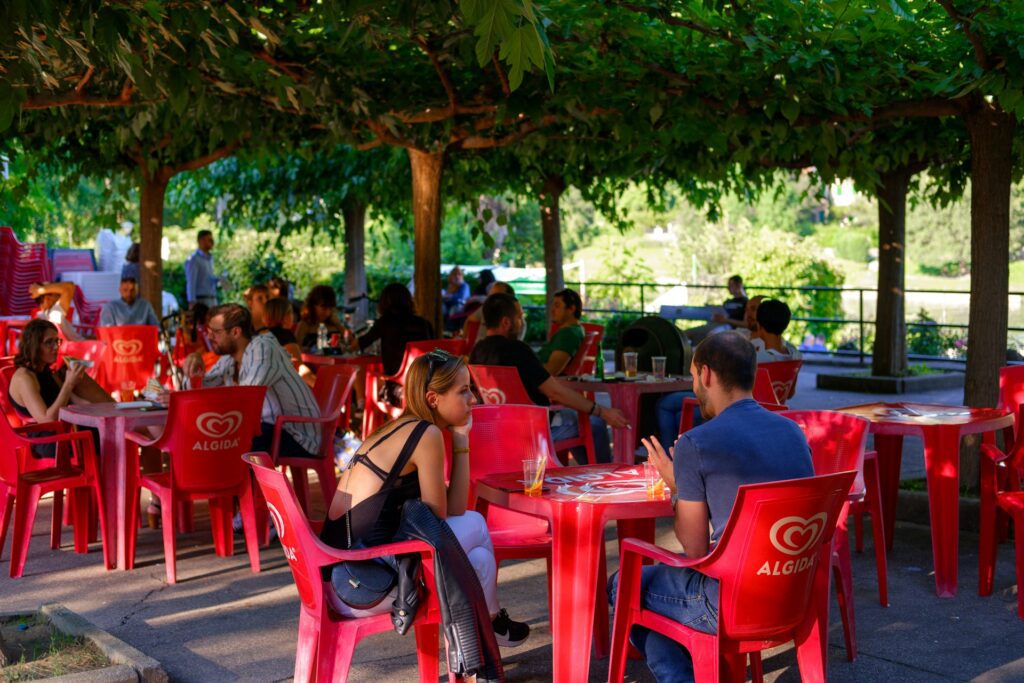
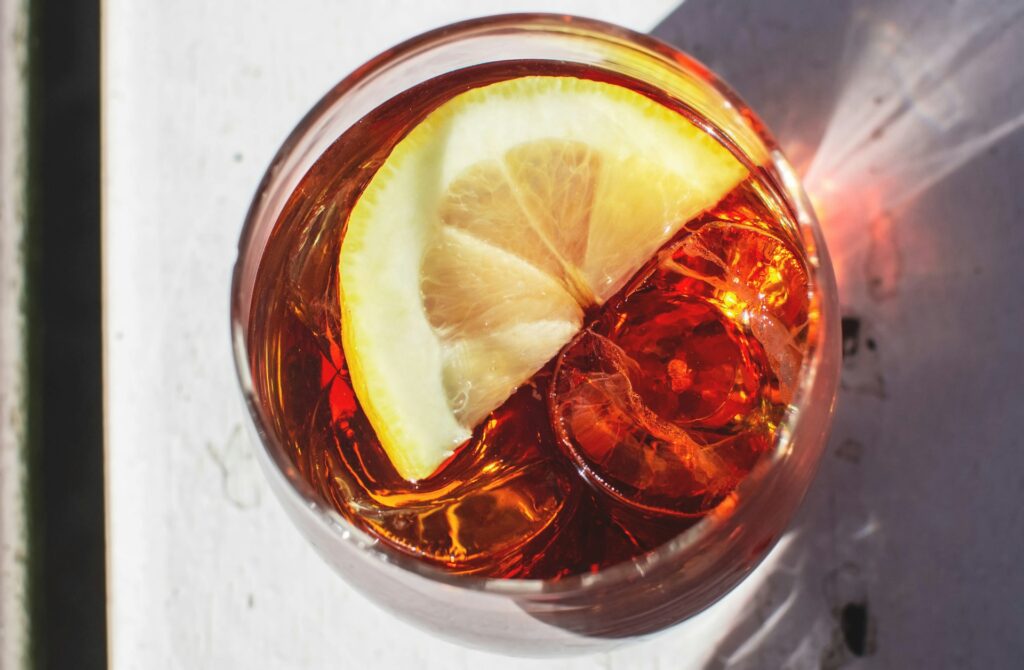
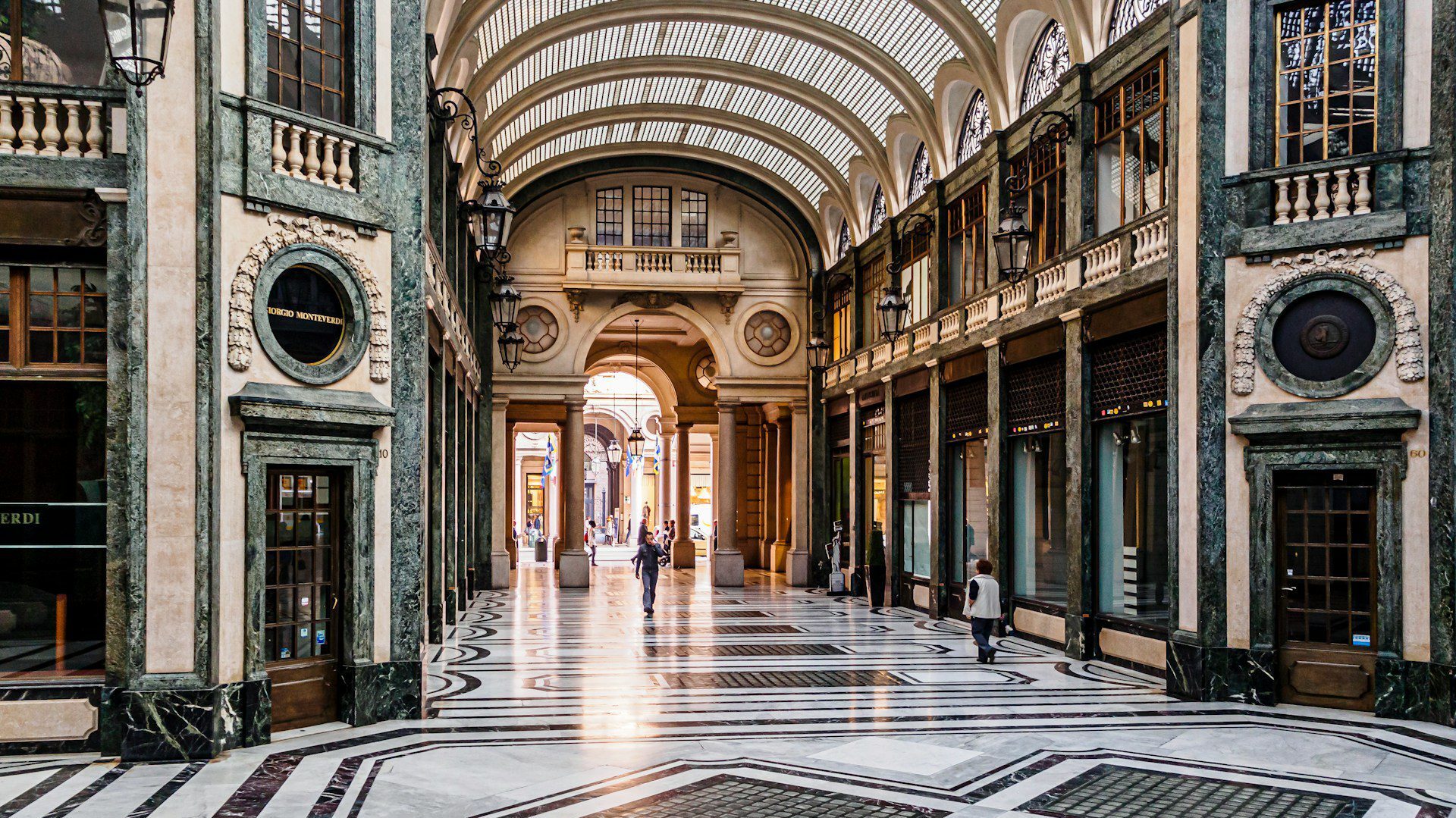
So I recommend you do aperitivo properly. At six o’clock, go looking for a café or bar around Piazza San Carlo or the Quadrilatero Romano and order a vermouth on the rocks with a twist of lemon, and graze on whatever arrives with it. If you want to drink where the history happened, the city’s nineteenth-century cafés, which are all marble, mirrors and waistcoated waiters are still pouring. This is also where the tramezzino, Italy’s soft crustless sandwich, was invented, at Caffè Mulassano in the 1920s. And while you’re in café mode, try a bicerin too: Turin’s layered drink of espresso, drinking chocolate and cream, served since the 1700s and best consumed slowly and without stirring.
“…the atmosphere is all heart, history and grievance…”
My mum and dad recently returned to Turin, about a year after that trip we took with my sister. When they came back, mum shoved a football (soccer) jersey into my hands — a keepsake to remind me of the city.
In Turin there are two proud football teams: Juventus is the most famous club and one of Italy’s biggest and most successful, a global brand which has seen the likes of Zinedine Zidane, Cristiano Ronaldo and Alessandro Del Piero. But ask a taxi driver, a barista, anyone born within the city walls, and you’ll hear the same thing: Torino, Il Toro, is the club of the city. Associated more with Turin’s working class as opposed to Juventus’ international appeal, Torino is the far more locally-supported club and is, in fact, one of the most historically successful clubs in Italy.
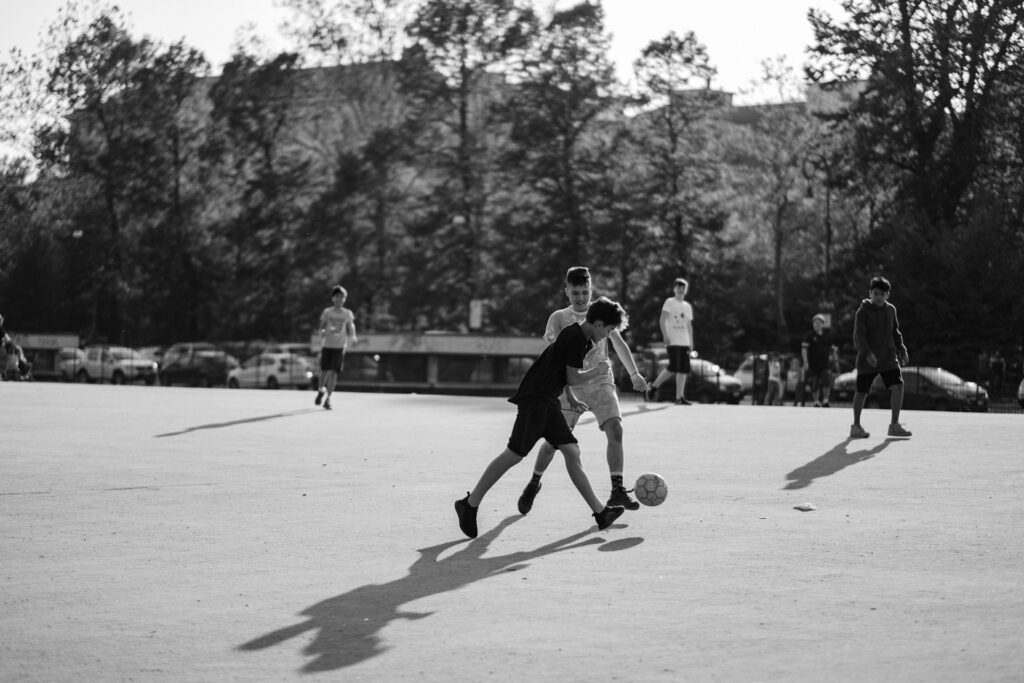
It also has one of the most tragic backstories. In the 1940s, Il Grande Torino were arguably the best team in the world: they won championship after championship and at times supplied almost the entire starting eleven of the Italian national team. Then, on 4 May 1949, the plane carrying the team home crashed into the hillside at Superga, just outside the city, killing everyone on board. A squad on the verge of a fifth consecutive title, gone in an instant. Half a million people lined the streets for the funerals. Torino have won just one league title since, and the tragedy has irrevocably shaped the club’s identity. In fact, every 4th of May, fans still climb the hill to pay their respects at the basilica where the plane came down. I Granata (the maroons) play at the Stadio Olimpico Grande Torino, and the atmosphere is all heart, history and grievance, which is exactly what Italian football should be. The jersey my mum brought back for me was, of course, maroon in colour.
Today, the scene of that tragedy is also the city’s best viewpoint. A historic rack tramway, one of the last left in Italy, climbs from Sassi station up the hillside to the Basilica di Superga, the baroque church that watches over Turin from its hilltop. The ride itself is part of the attraction with wooden carriages, a steep forested climb, and then the city and Alps laid out before you
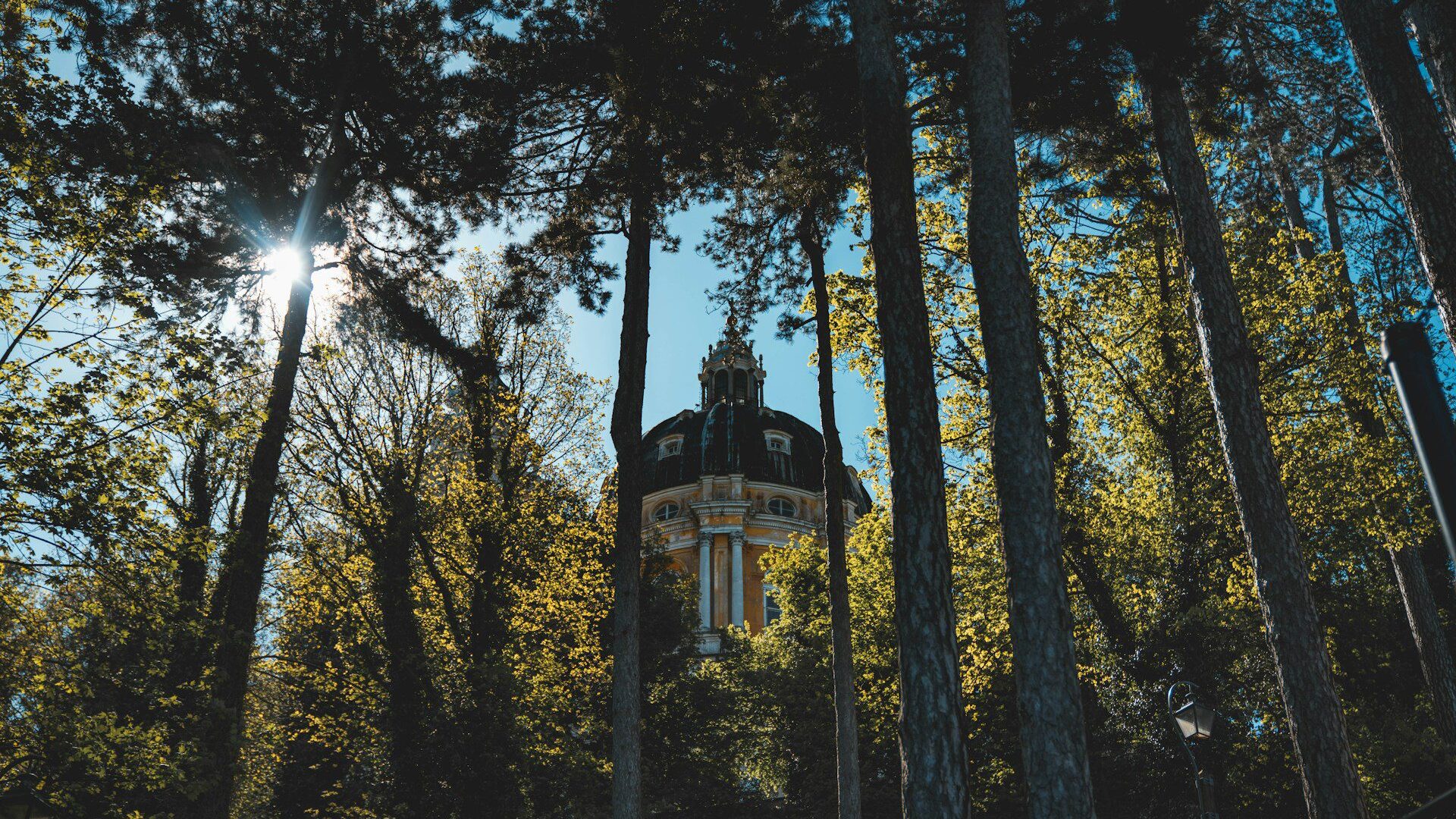
“…the viewing platform gives you a birds-eye view of the grid of baroque streets below…”
On my trip I was excited to be seeing the city with fresh, adult eyes. Though, while walking along the wide boulevards I can’t say that I was flushed with memories, even when we went to see our old apartment. I was four after all, so the hazy mementos of my Italian life appear simply as flashes of manic playgrounds, blurry beaches where I ran naked and wild, and of wide-eyed kids huddling to watch me play my Nintendo DS. So, it was nice to see the city as a man, which meant going to do things that first-time visitors to the city often do, including the Mole Antonelliana — Turin’s most iconic sight.
The story of Turin’s most iconic sight and the building on the Italian two-cent coin is gloriously absurd. It began life in 1863 as a synagogue. The architect, Alessandro Antonelli, kept revising the design upward, and upward, and upward, until costs had spiralled so far beyond the original budget that Turin’s Jewish community walked away from the project entirely. The city took it over and let Antonelli keep going, he was still adding to it in his eighties, and by the time it was finished in 1889 it stood at 167 metres, at the time the tallest masonry building in Europe. The name isn’t modest either: mole essentially means “massive structure,” and the Torinese have called it ‘The Massive Thing’ ever since.
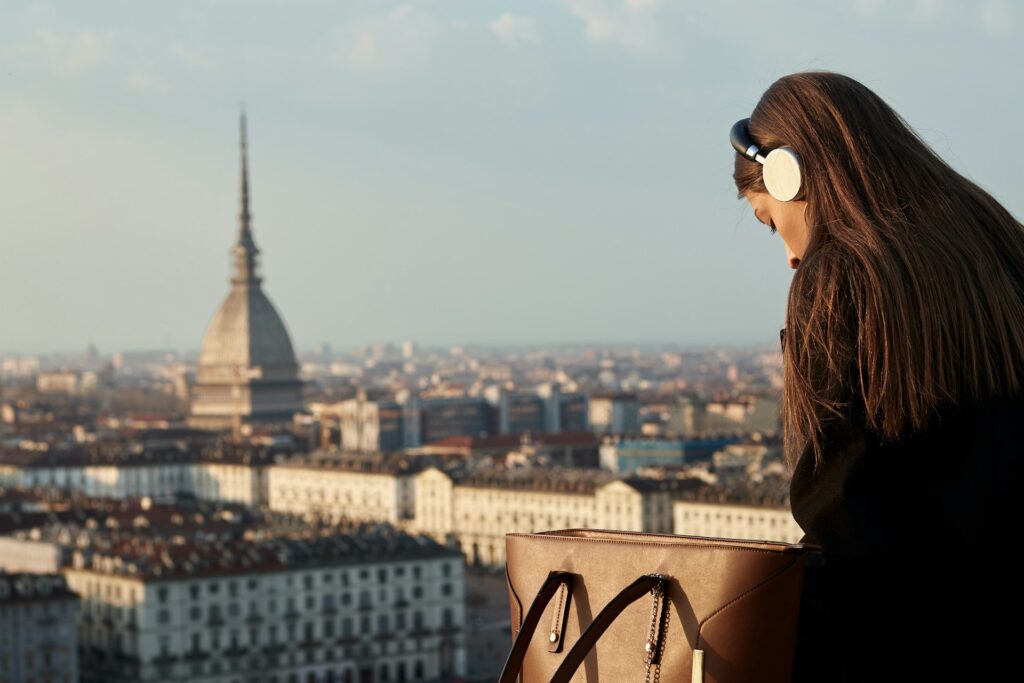
Its antenna-like spire is visible from almost everywhere in the city. A glass panoramic lift rises through the centre up to a viewing platform giving you a bird’s-eye view of the grid of baroque streets below, the Po curling past, the Alps forming a wall on the horizon.
As we went to the Mole to see the city from up above, we were pleasantly surprised to find that, under the spire, the building’s lower floors now house the National Cinema Museum. It seems a strange thing to find inside a nineteenth-century almost-synagogue, until you learn the twist: before Rome, Turin was Italian cinema. It was once the capital of the country’s film industry, and the silent-era epics that came out of the city’s studios were among the most ambitious in the world.
“…the whole migratory history of the city laid out on the trestle tables…”
On that note about Turin’s “cosmopolitan” reputation: due to the influx of Southern migratory workers, the Savoy family’s wide reach, and its proximity to France and the rest of Western Europe, Turin has gained a reputation for having an international identity, moreso than the rest of Italy. My dad’s favourite pub was his favourite precisely because it was full of labourers from Morocco, Romania, and Southern Italy, something which wasn’t so common in the 90s as it may be now.
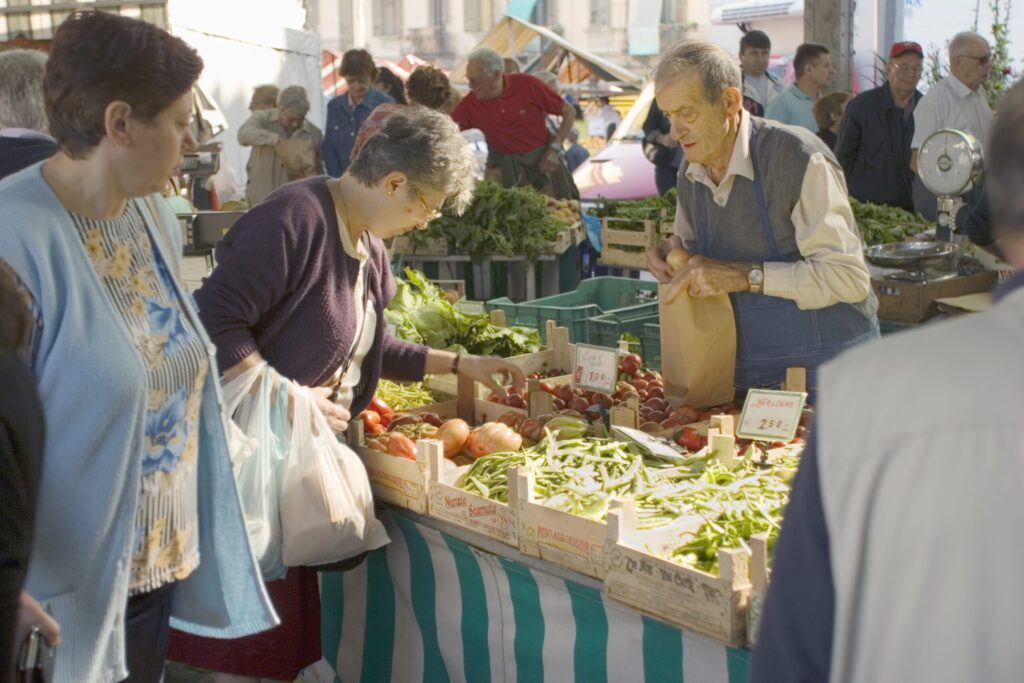
I saw this global identity myself when we visited Turin’s famous market, Porta Palazzo, which runs every single day except Sunday. It is absolutely vast, sprawling and filled to the brim with international products, imports, flea stalls, cheese, fish, knick-knacks and more. We went one day to get some lunch and I remember the air thick with loud, booming voices, the scent North African spice stalls, and the city’s nonne arguing about prices. Here you see Piemontese growers selling whatever came out of the ground that week side-by-side with Chinese grocers, halal butchers and Romanian delis; the whole migratory history of the city laid out on its trestle tables.
Behind the market sprawls the Balon, Turin’s historic flea market, running since the 1850s. Furniture, vinyl, questionable antiques and genuine treasure feature here (on Saturdays, with a bigger version once a month). And a couple of minutes’ walk away stands the Porta Palatina, a Roman gate from the first century that’s among the best preserved anywhere. It’s there casually sitting in a park, because Turin doesn’t make a fuss about these things.
“…in the windows stood row after row of little pastries topped with hazelnut hats…”
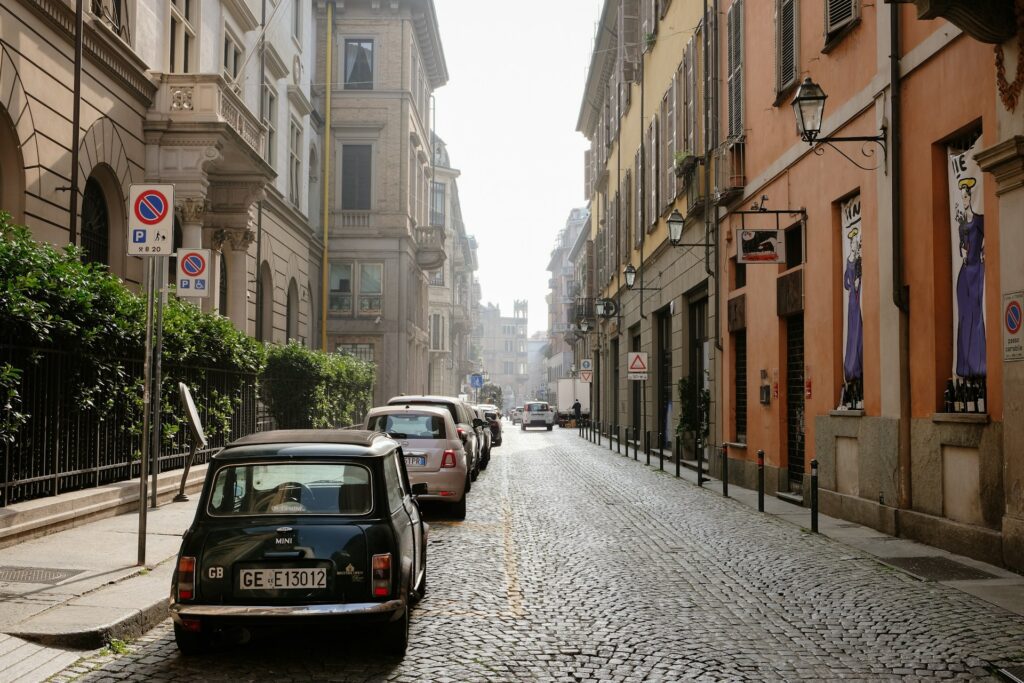
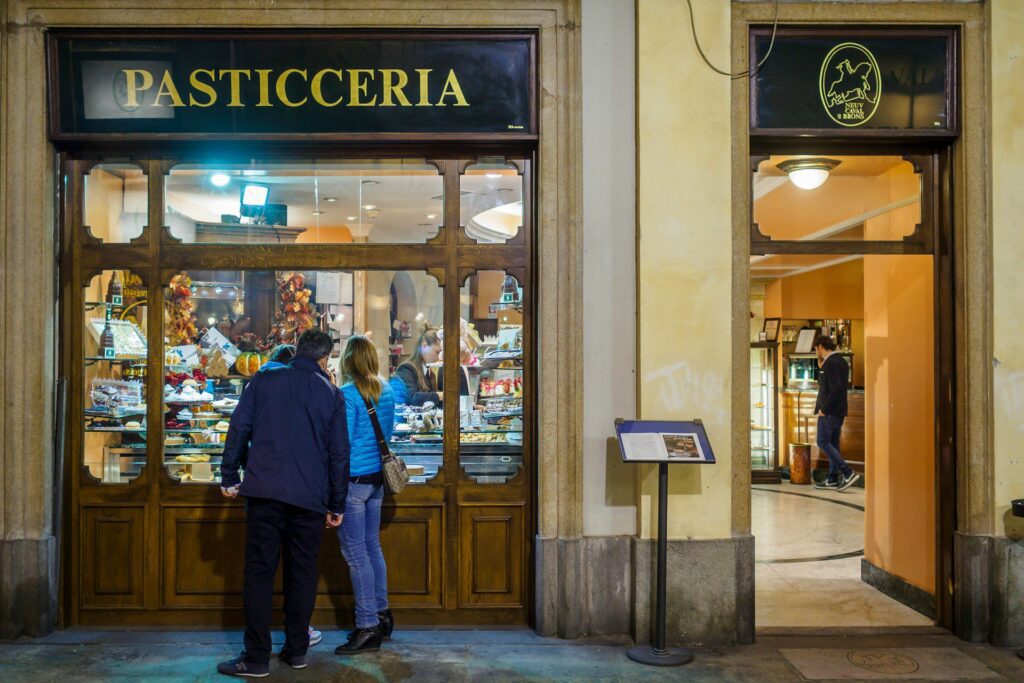
As we walked through the streets of my old neighbourhood, Crocetta, my mum and I walked past a wood-panelled shop with gold, rounded lettering and marbled pillars. In the windows stood row after row of little pastries topped with hazelnut hats, frosted with snowy sugar just like the the nearby Alps. My mum stopped in her tracks, grabbed me by the collar and yanked me into its ornate foyer, where stacked all higgledy-piggledy were every kind of dainty delicacy you could imagine. We had entered the beloved pasticceria.
A pasticceria sells pasticcini: miniature pastries, sold by weight that Torinese families carry home on weekends like small edible treasures. It occupies a place in Italian life somewhere between a bakery, jeweller and social institution. Every neighbourhood has one, and most families are loyal to theirs — my mum recognised her local pasticceria immediately and had to go inside to see it again. Every Sunday, someone is dispatched before lunch to collect a tray of pasticcini like fruit tartlets, little chocolate cups, and miniature meringues, which arrives wrapped in paper and ribbon like a present, because that’s exactly what it is.
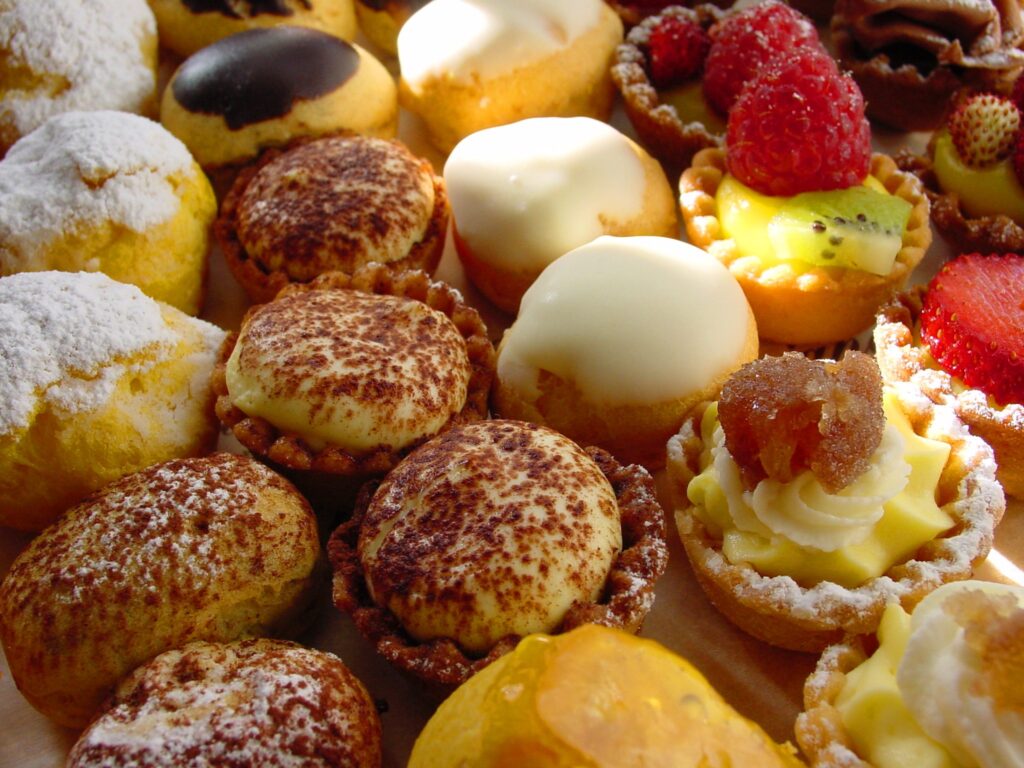
Nobody buys pasticcini for themselves. They’re bought for people: for the lunch you’ve been invited to, for the grandmother you’re visiting, for the family table. Turning up to an Italian Sunday lunch empty-handed is a faux pas; turning up with a beribboned tray from a good pasticceria is what makes you Torinese. The miniature format is the point, too. You’re not committing to one pastry, you’re having a little of everything, passed around and argued over.
Turin takes all this seriously even by Italian standards, because this is also Italy’s chocolate capital, home of gianduja, the hazelnut-chocolate blend born here when chocolate makers stretched scarce cocoa with Piemonte’s abundant hazelnuts. So anything involving hazelnuts is a safe bet, and a gianduiotto, the little gold-wrapped ingot of gianduja, belongs on any tray you assemble. We took away a tray of pasticcini for old time’s sake, but we were breaking tradition and greedily bought the tray for ourselves. Don’t tell nonna.
With our tray of goodies, we went straight to the city’s favourite place for a Sunday picnic: the iconic Parco del Valentino.
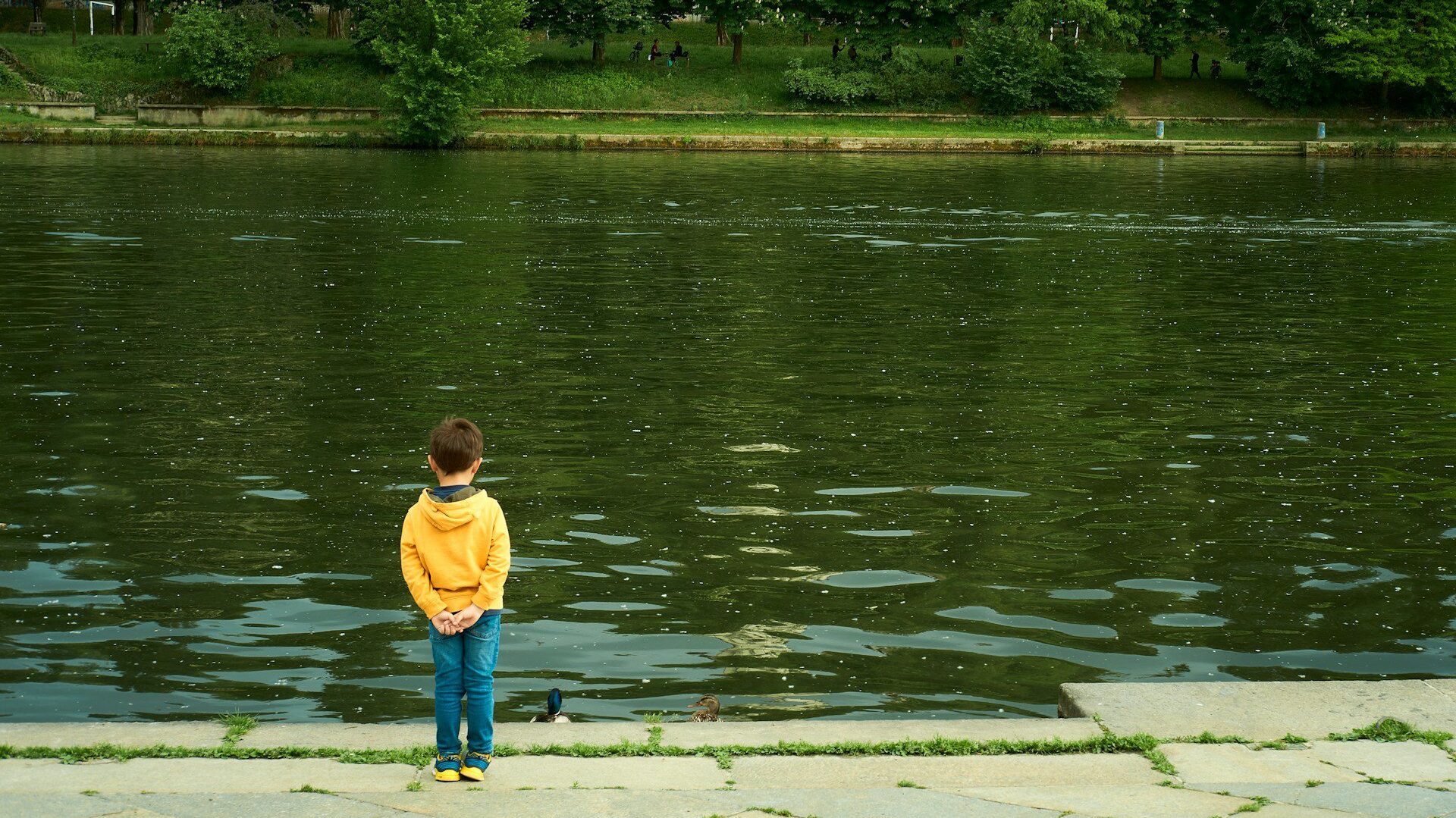
“…runners, families, rowers on the Po — the whole city taking its passeggiata before lunch…”
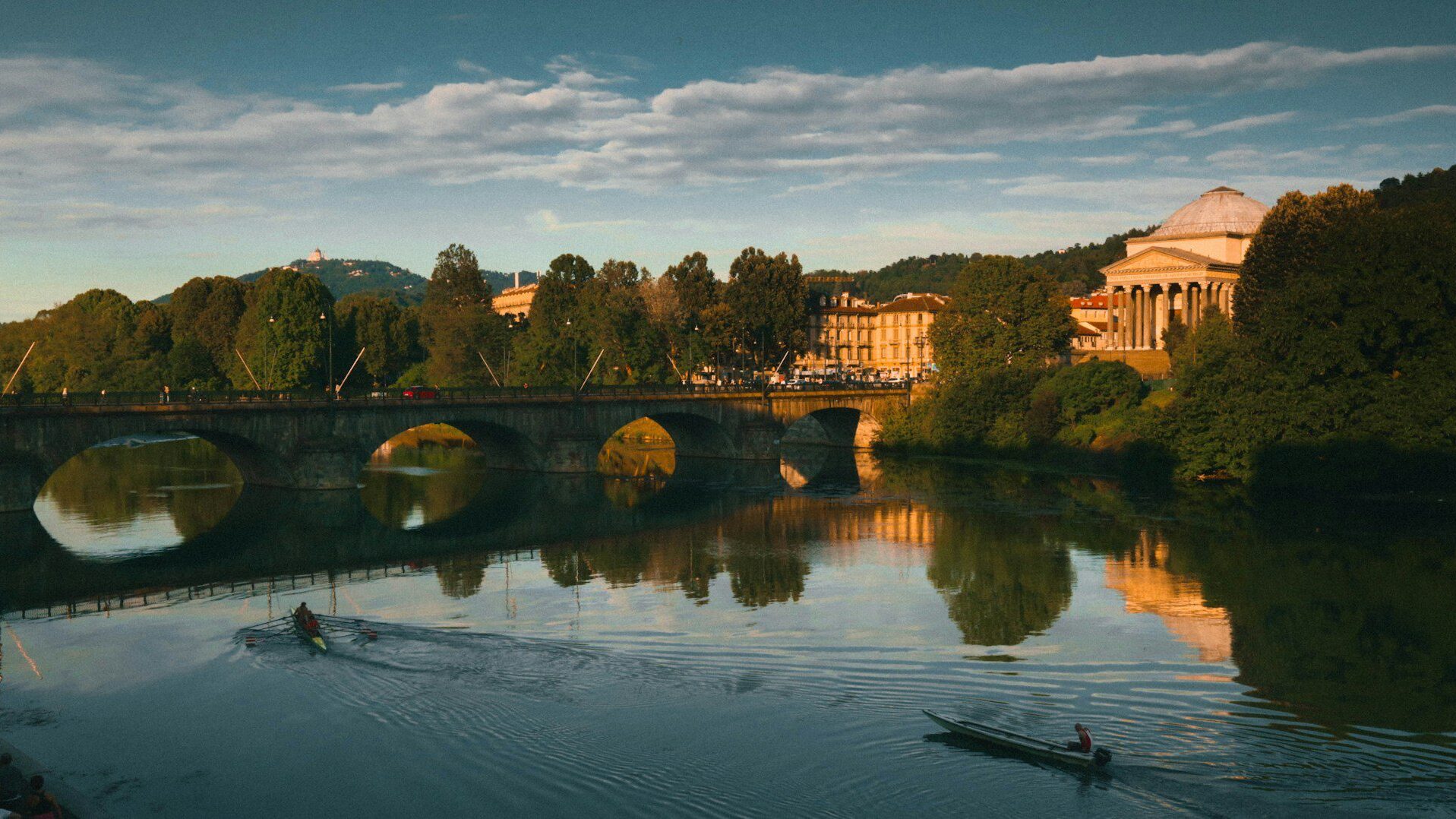
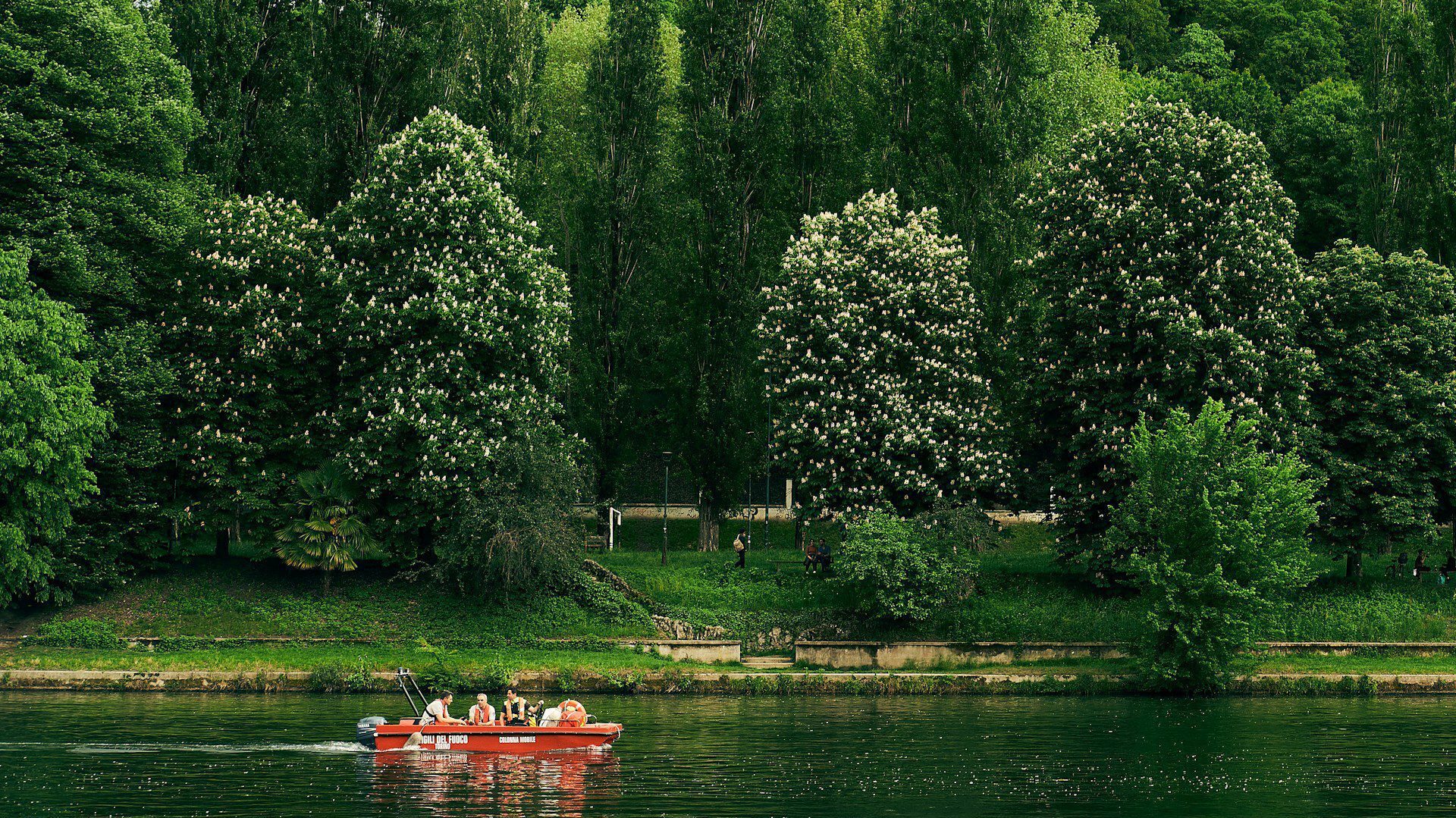
The Valentino is Turin’s main riverside park, sitting along the river Po. I loved this river when we sat there, stuffing ourselves with bite-sized meringues. Disenchanted by the brown and murky waters of my local metropolitan river, the Thames, I was stunned at how bright and colourful it was. It helps to know what you’re looking at: this is Italy’s longest river near the very start of its journey, fresh down from Monviso, the pyramid-shaped peak you can see from the city on a clear day. By the time it reaches the Adriatic it will have crossed the entire width of northern Italy, but here it’s still young and early on its cross-country trip, which might be why its alpine waters are so lovely to look at.
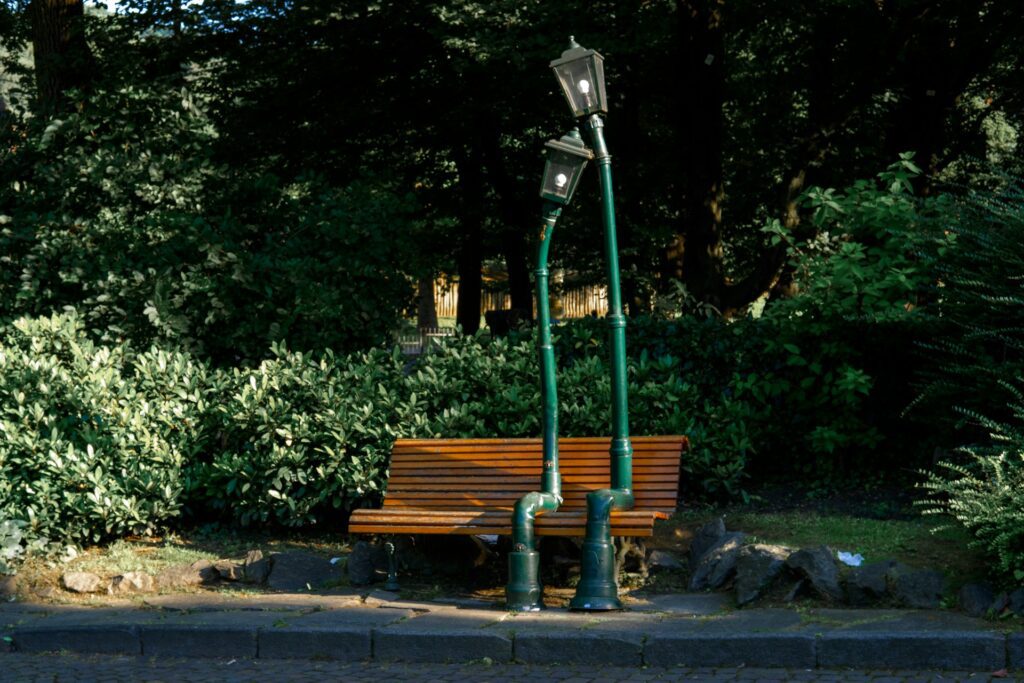
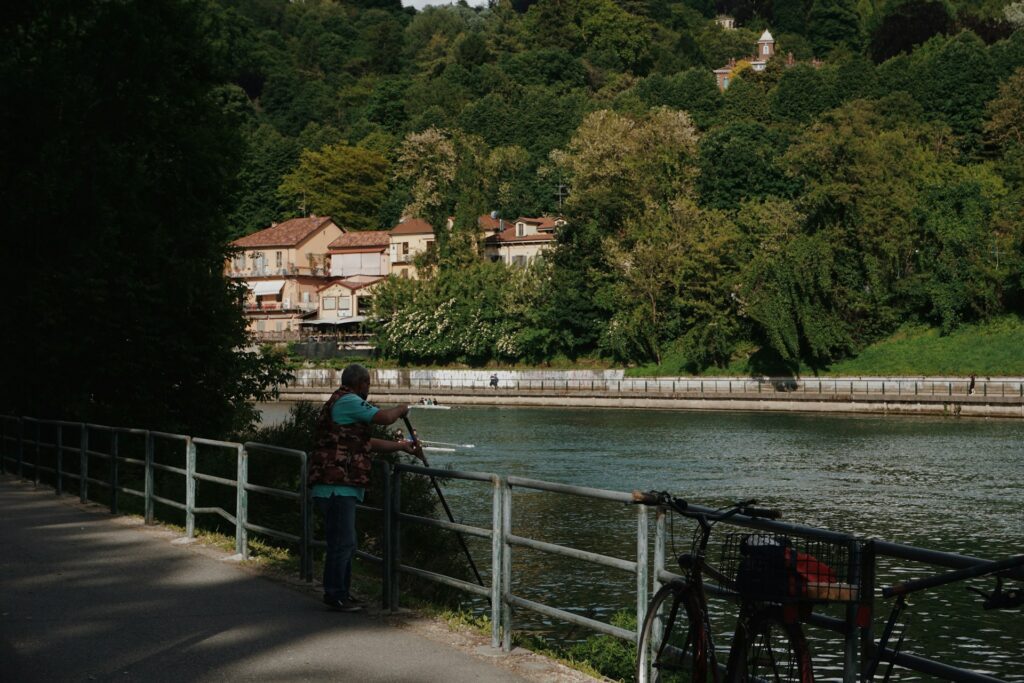
Sunday morning is when the Parco del Valentino is at its best: runners, families, rowers on the Po — the whole city out taking its passeggiata before lunch. The park is Italy’s first public garden and has been Turin’s green lung since it opened in the 1850s. Walk the length of it and you’ll pass the Castello del Valentino, a genuine Savoy residence now belonging to the university.
Next you’ll come across my favourite bit of park furniture anywhere, the Borgo Medievale, an entirely fake medieval village (a bit like Budapest’s Vajdahunyad castle), built for an exhibition in 1884. It’s a folly on a magnificent scale, complete with fortress, drawbridge and artisan workshops, yet somehow it’s the least surprising thing in a city that built the Mole because an architect couldn’t stop adding floors.
“It’s a city of long arcades and longer lunches… of grandmothers with strong opinions about anchovies.”
All these years I’ve plumbed my memories to form an idea of Turin, but my recent trip helped me see the city in a more well-rounded light. What I came to find was this: it is Italy as its truest, most modern, and most authentic. Don’t get me wrong, I will never tire of Florence’s Renaissance allure, Rome’s ancient roots, or the pure magic of Venice. But these are places that have shaped themselves in the eye of the beholder — Turin does not need to do this dance. It exists solely for itself and for its inhabitants who live and work there.
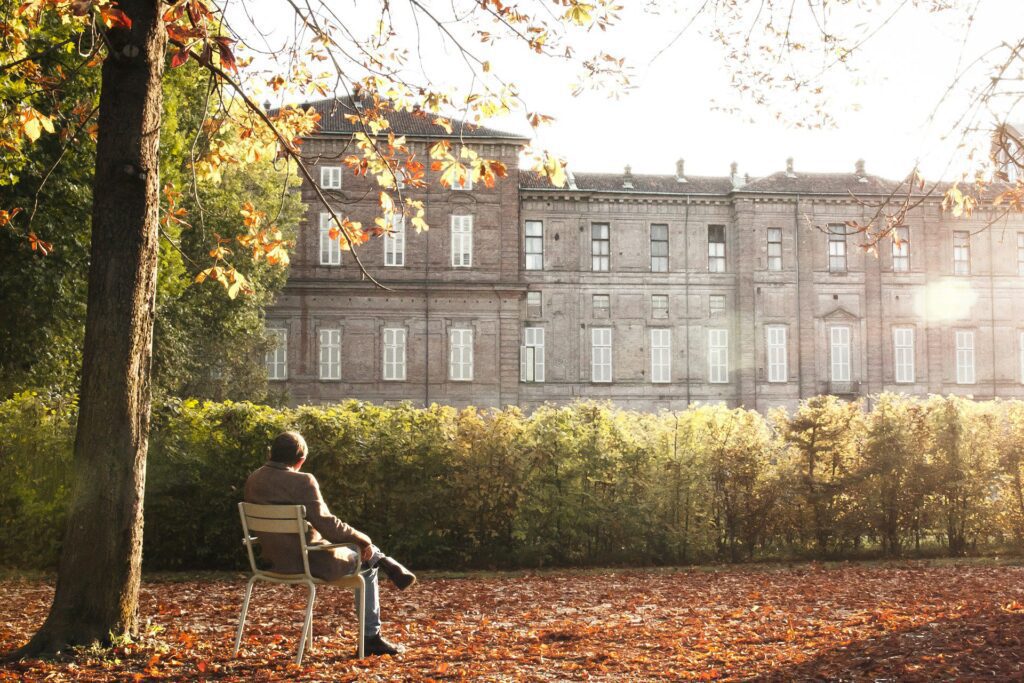
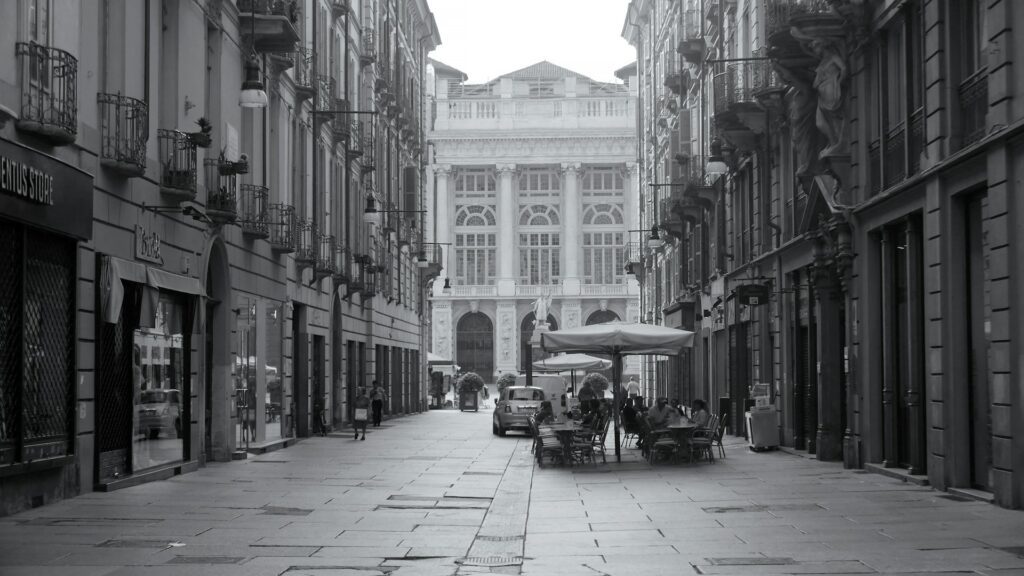
Despite all these lovely things about Turin, it isn’t in-your-face about it. It’s wealthy (like much of Northern Italy), elegant, decadent, even regal at times, but all of this is done with subtlety and humble self-assuredness. Turin doesn’t perform for visitors, because it’s never had to. It’s a city of long arcades and longer lunches, of vermouth at six and football grudges held for seventy years, of grandmothers with strong opinions about anchovies. If you want to not only see what’s promised in postcards and brochures, but also the places that exist behind the veil usually presented to outsiders, you’re going to truly love Turin. I know it’s a place I’ll come back to time and time again to not only see Italy, but to feel it.