



Being well-dressed in Paris is as much a part of the culture as the macarons. “It’s always been about fashion and being a place where people can express themselves,” says Frenchman (and Travel Director) Tim Smith.”People get up, they get dressed, they dress smart casual at all times. That would be the standard.” This guide, built around Tim advice, will help you pack for the the most visited city in the world properly. By season, by occasion, and with the one rule that applies year-round: comfortable feet, always.
1. Before anything else: your shoes
Before the seasons, before anything else, the shoes.
“Throughout all of the seasons, the most important thing I’m going to say is to wear really good footwear,” says Tim. “There are cobblestones everywhere. You’re going to walk a lot in Paris — you’re going to want to see all the different sites. I don’t know if you’ve been to Paris, but it’s the kind of place where you look at your phone at the end of the day and you’ve got 20,000, 30,000 steps. And every one is worth it.”
The cobblestones are beautiful and unforgiving in equal measure. Thin-soled sandals, flip-flops, brand-new shoes broken in nowhere but the airport — all of these are ways to spend your third day in Paris inspecting your blisters rather than the Notre-Dame. What you want is a shoe that passes the French test: looks deliberate, feels like a glove. A well-worn leather sneaker or a low-heeled ankle boot will take you from the Marais to Montmartre and still hold up for dinner.
2. What to wear in Paris in spring
“Spring is a season of layers,” says Tim. “I generally tell my guests to dress like an onion; you need to be able to add layers on and then take them off. It can be sunny and beautiful and 20 degrees one moment, but it’s very, very seasonal and there are lots of different changes, so you need to be prepared for all different weather in Paris in spring.”
He’s not exaggerating. Tim was recently guiding in Paris when clear skies turned to bucketing rain the moment his group arrived at the Moulin Rouge. As well as a stylish umbrella, make sure to pack a base layer you’d be happy to walk around in: a light knit, a cotton shirt, a midi dress, with a trench coat on top. The trench is not optional. It is both the most practical and the most Parisian outer layer you can own, functional against a sudden downpour and sharp enough for anywhere the evening takes you. Pack one you actually like wearing rather than one you’ve been saving for the right trip. This is the right trip.
Spring in Paris: what to see & do
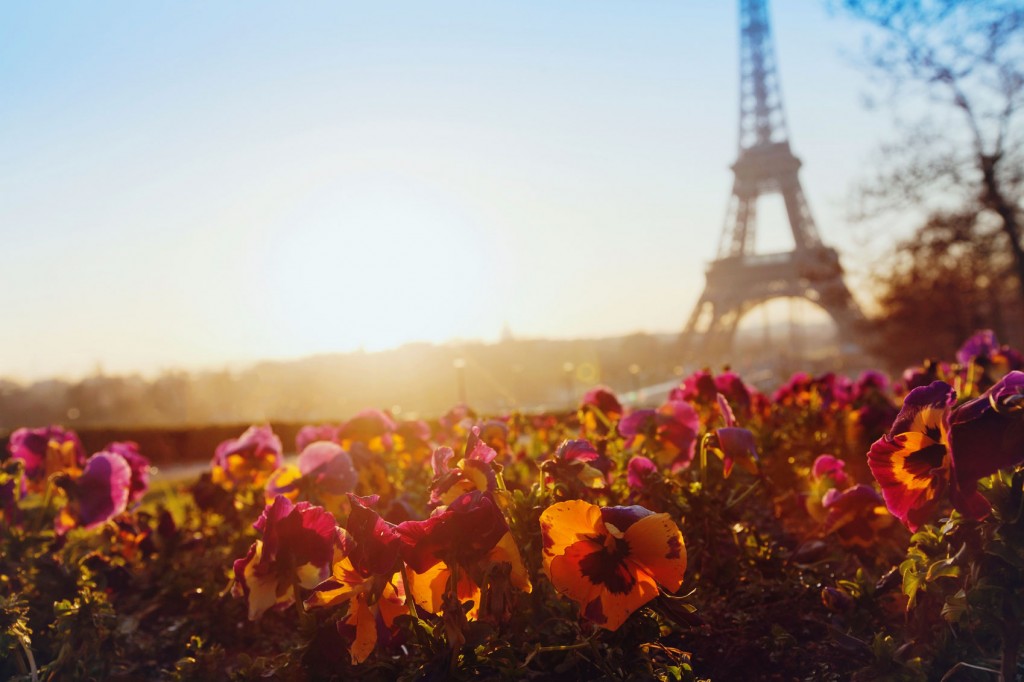
The Jardin du Luxembourg is one of the best spots in the city to see Paris in full spring bloom, with cherry blossoms alongside magnolias and the formal gardens coming back to life around the central fountain. The Jardins du Trocadéro are even more theatrical: late-blooming Kwanzan cherry trees with the Eiffel Tower as a backdrop, at their showstopping best from early to mid-April. For something quieter, the Jardin des Plantes on the Left Bank has some of the largest cherry trees in the city with white and pink blossoms flanking the main street entrance, best explored with a coffee from a nearby café. Bloom season typically runs from March through to late April, though exact timing shifts year to year depending on the weather. As the French proverb has it: “En avril, ne te découvre pas d’un fil”: in April, don’t shed a single layer. Pack accordingly.
Events worth planning around
Nuit des Musées falls on the third Saturday of May each year: a single evening when over 80 museums and monuments open their doors free of charge, often with live concerts in courtyards and special installations running late into the night. The Jazz à Saint-Germain-des-Prés Festival, usually held across a week in mid-May, fills one of Paris’s most storied neighbourhoods with outdoor performances, transforming the Left Bank into one big stage. And in late May, the French Open at Roland Garros brings the Grand Slam clay-court season to Paris, one of the great sporting events to catch if you can secure tickets in advance.
3. What to wear in Paris in summer
“For summer, pack plenty of light clothing”, says Tim. “Definitely linen shirts for men, summer dresses for women, that sort of stuff. Very breathable attire because it can get very, very hot. Again, you’re going to be walking a lot, and taking lots of photos of yourself in iconic places, so wear something that looks good, that’s breathable, functional, and ultimately that you feel comfortable in.”
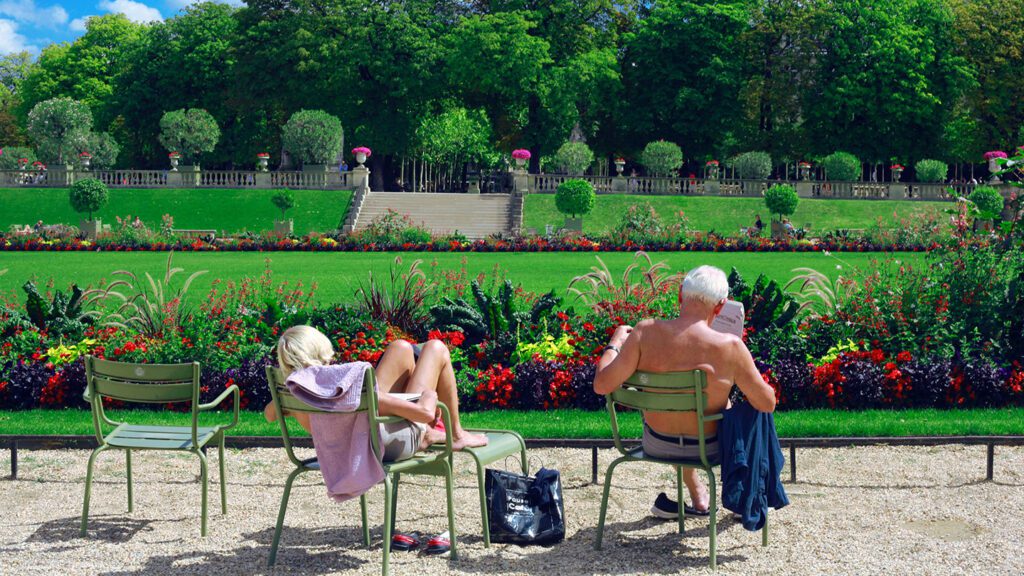
The good news is that Paris handles summer heat better than most European capitals. “There are lots of grand boulevards lined with plane trees, which actually cool down the city,” says Tim. “There are lots of parks, and the culture is what I would describe as ‘terrace culture’, so in summertime in Paris, you’re going to spend most of your time sitting outside on a terrace of some sort.”
Mornings are for the museums and monuments; afternoons are for the banks of the Seine, ideally with a cold drink and picnic. Pack sunglasses worth wearing and a smart hat. A light scarf doubles as sun cover at outdoor sights and a layer once air-conditioned interiors kick in.
Summer in Paris: What to see & do
Paris summers are best lived outdoors, and the river is the place to be. Every summer from early July to the end of August, Paris Plages transforms the banks of the Seine and the Bassin de la Villette into a free urban beach resort — deckchairs, parasols, palm trees, and a full programme of cultural and sporting activities. The headline addition in recent years: you can now actually swim in the Seine. For the first time in a century, officially supervised swimming sites on the river opened in 2025 as part of the lasting legacy of the Paris 2024 Olympic Games, with three dedicated zones in the heart of the city. Canal Saint-Martin also offers free swimming every Sunday from July through September, near Passerelle Bichat. Bring a towel, leave the trainers at the hotel.
Events worth planning around
The Fête de la Musique on 21 June, the summer solstice, is one of the great free festivals in the world: the entire city turns into a stage, with musicians playing in every square, courtyard, and street corner from afternoon into the early hours. Paris in June, with long evenings and music spilling out of every arrondissement, is about as good as it gets.
4. What to Wear in Paris in fall
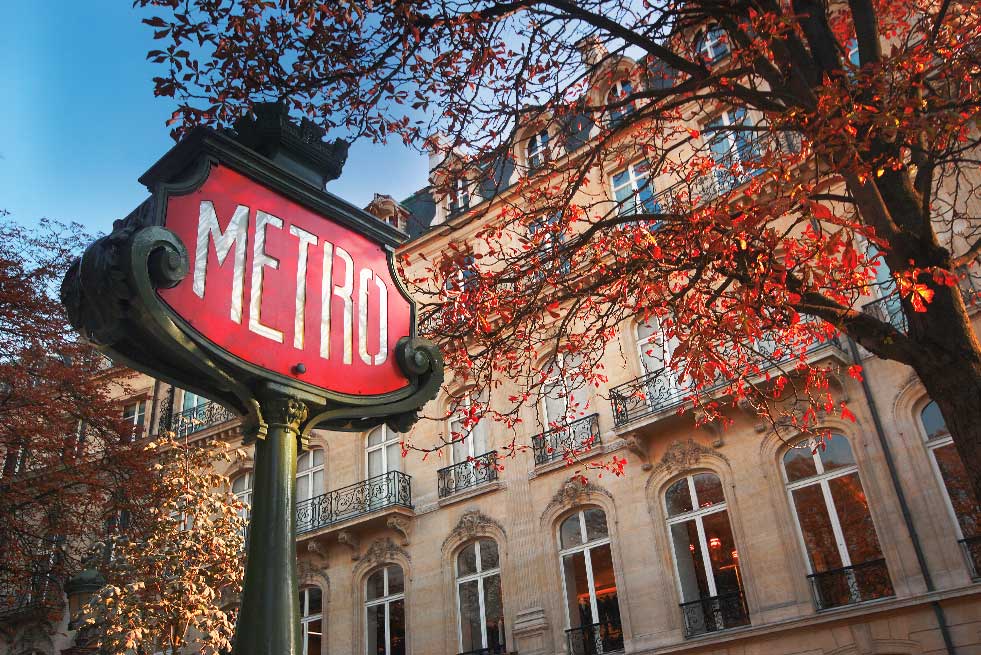
Fall is, by general agreement, Paris at its most cinematic. The plane trees turn amber along the boulevards, the parks go copper and gold, the light drops low and golden in the late afternoon. Tim is direct about it: “Autumn is probably one of the most beautiful seasons to come and visit.”
The dressing brief matches the palette. “Think earthy colors, natural materials. The fashion is layers, comfort and complimentary colors. Temperatures drop at night, so there’ll still be some beautiful long days, but you could be wearing jeans, a chic sweater and a nice coat. If you’re sitting outside on the terrace you might end up taking that coat off and sitting in the sun — it might be 20 degrees during the day — but then in the evening it’s going to be cooler, so you’re going to need to put something else on.”
The formula: mid-weight layers, nothing too precious, anchored in browns, rusts, and camel tones that won’t look out of place against the backdrop of the city in October. A tailored jacket works harder than a hoodie. Jeans are the default; trade them for something smarter when evening calls for it.
Fall in Paris: what to see & do
The parks Tim describes with the plane trees, the earthy colors, and the long golden days are at their absolute peak in October. The Jardin du Luxembourg and the Buttes-Chaumont are both exceptional in fall, the latter a dramatic nineteenth-century romantic park that most visitors never find. For a full day out of the city, the Forest of Fontainebleau — just 45 minutes from Paris by train — is one of the great fall escapes near any European capital: ancient oaks, beeches, and chestnut trees turning amber across 22,000 hectares of marked trails, with boulders and rock formations scattered throughout for those who want to scramble as well as walk. Chestnuts (châtaigne) are a fall fixture in the forest; pick your own, or buy them roasted from street vendors back in the city.
Events worth planning around
The Fête des Vendanges de Montmartre runs for five days in early October each year. It’s a grape harvest festival centered on the neighbourhood’s own working vineyard, with parades, concerts, wine tastings, and food stalls filling the steep streets around Sacré-Cœur. It’s one of those events that is entirely, unmistakably Parisian. And in November, the Fête du Beaujolais Nouveau on the third Thursday of the month sees wine bars and brasseries across the city open their doors for tastings, the evening routinely stretching late into the Parisian night.
5. What to Wear in Paris in winter
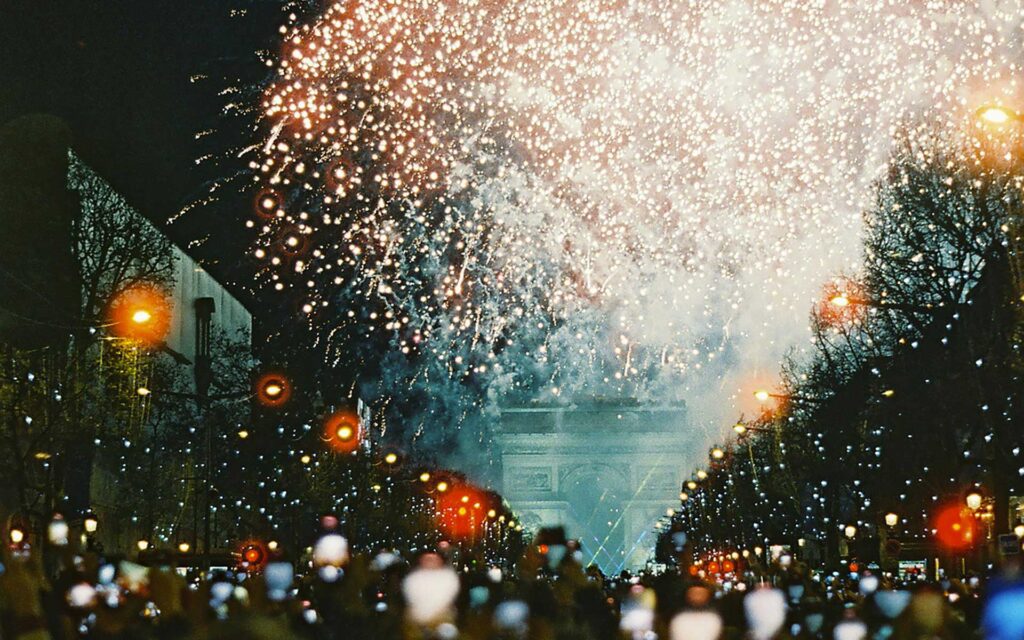
“You need to rug up — and I think a lot of people are maybe a bit surprised by how much time they’re going to be spending outdoors,” says Tim. “Even in winter, a lot of those terraces are open. They’ll have an awning or a plastic wrap, but basically you’re still outside. December is a joy, because you have all the Christmas markets and it’s all beautiful and it’s dark, and the city is lit up with Christmas lights.”
The thing most guests underpack for, Tim says without hesitation: raincoats. “Paris in winter can be (and probably will be) wet. Really wet. Bring an umbrella and a coat that’s fully waterproof.” Then he adds: “But it also has to be fashionable, because it’s still Paris. You can’t go wrong with black, navy blue or a cream.”
You are not being asked to choose between warm and stylish, you are being asked to find both: a proper winter coat, a wool scarf, a waterproof outer layer that you’d be happy to be seen in on the Rue de Rivoli. Pack gloves. Pack thermal under layers for January and February. And remember that Paris in December, with the markets in full swing and the city draped in lights, is worth every layer.
Winter in Paris: What to see & do
At virtually every Parisian Christmas market, the same things await: vin chaud (mulled wine), cidre chaud, hot chocolate, roasted chestnuts, fondue, raclette, crêpes, and enough sweet seasonal confections to make the cold worthwhile. The markets run from mid-November through to early January, and the best are scattered across the city rather than concentrated in one place.
The largest and most spectacular is the Tuileries Garden market: “La Magie de Noël”, the spiritual successor to the famous market once held on the Champs-Élysées, stretching from the Louvre to the Place de la Concorde. For something more intimate, the Saint-Germain-des-Prés market along Boulevard Saint-Germain leans elegant and cozy, with chalets alongside the historic church and legendary cafés like Les Deux Magots and Café de Flore a few steps away for warming up between stalls. Up in Montmartre, the Place des Abbesses market radiates bohemian charm — local artisans, designers, live music, and all the vin chaud and roasted chestnuts you can reasonably consume.
When the markets close and the cold sets in properly in January and February, the museums earn their place. The Musée d’Orsay, the Musée de l’Orangerie (home to Monet’s monumental Water Lilies), and the Palais Royal all offer the kind of slow, warm, beautiful afternoon that winter in a great city is made for.
6. What not to wear in Paris
Tim is Australian with French roots, which gives him a useful outsider’s perspective on what Parisians find quietly baffling about tourist dress. “You compare Paris to the Gold Coast or Sydney, and literally people are living in activewear, they’re going for coffee in activewear. That is not the case in Paris. People in activewear will go for a run, but as soon as they get back, they’re getting changed. They’re going to have a shower, dress in nice clothing, then go to a café. They would never sit in a café in activewear.”
The practical takeaway: leggings, tracksuits, oversized hoodies and sports gear are all fine for your morning run. After that, change. What Parisians wear to a coffee is roughly what most people wear to a business casual meeting — nothing formal, but everything considered.
7. What to wear to dinner in Paris
“I think you want to dress nicely anywhere you are in Paris,” says Tim. For dinner, that baseline simply rises.
Part of what makes this so Parisian is that dressing for dinner is also dressing for the walk to dinner, and for the people-watching that is practically the city’s unofficial sport. “A lot of the time, you are going to be walking to these restaurants. You’re going to sit on the terrace, and all of the chairs are facing the street — you’re going to be watching and judging at the same time. They can pick the tourists, they can pick the locals. You’re kind of being watched when you’re sitting on a terrace in Paris.”
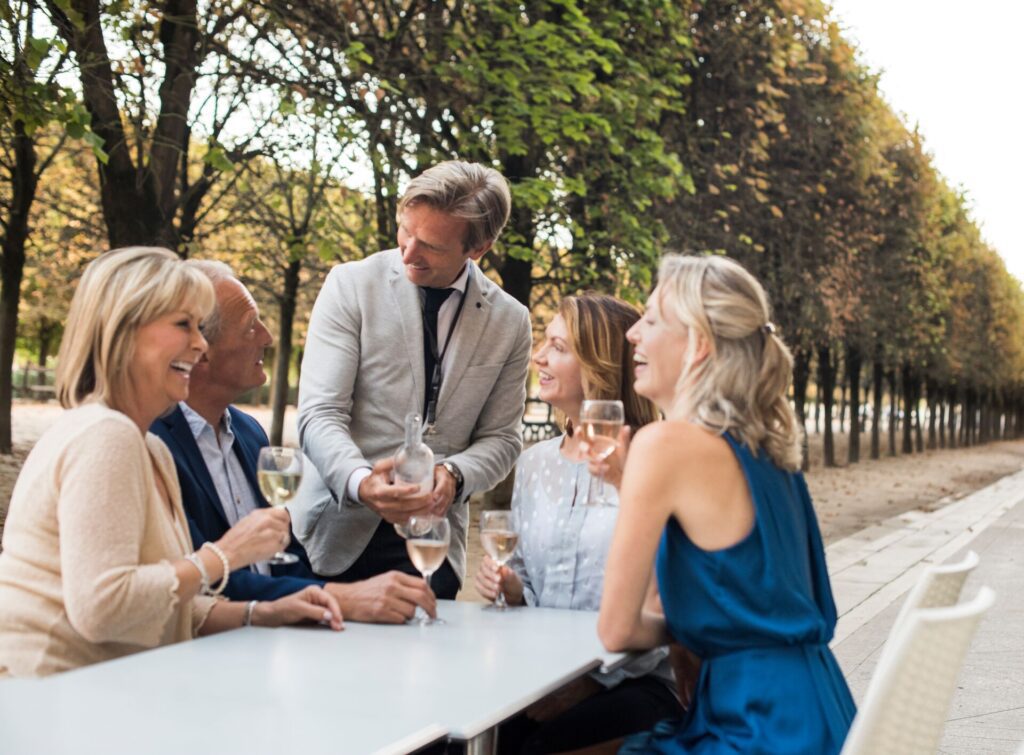
For most restaurants — bistros, brasseries, neighbourhood spots — smart casual is the expectation and the standard: a good pair of trousers or a dress, a decent shirt, shoes that aren’t trainers. For anywhere more formal, dress up properly. “If you were going to a nice restaurant or a show, you’d be dressing up really, really well, dressing the part.” Paris at its best asks something of you, and returns the favor.
Ready to pack for Paris?
The best thing about dressing for Paris is that the rules are fewer than people think and simpler than they fear: wear comfortable shoes you can walk 25,000 steps in, dress with enough care that you’d be happy to be photographed, and pack for weather that will change its mind. The rest is yours.