



Forget the white tablecloth and waiter wearing a beret clichés. Real French cuisine isn’t about stiff etiquette or fancy hats – it’s about the soil, season and pride of the locals. As you journey across the 13 regions of France, from the heights of the Alps to sunny coastal Marseille, you’ll uncover both famous and lesser-known regional dishes that connect to the soul of France.
What is French cuisine?
At its core, French cuisine is the art of transforming humble, local ingredients into something transcendently flavorful. Think a handful of lentils, a knob of fat and a splash of wine. It’s about the terrior and technique – the quality of the produce does the heavy lifting while the chef provides the finesse.
How much does French cuisine vary by region?
Vastly. France is a patchwork of microclimates. In the north, the kitchen is fueled by butter, cream and cider. Head south and (would you believe it!) butter is replaced by olive oil, tomatoes and wild herbs. Coastal regions draw on seafood from the Atlantic or Mediterranean, while the mountainous interior offers hearty cheeses and cured meats.
What makes modern French cuisine different from classical French cuisine?
Classical French cuisine, as we know it, was built on heavy mother sauces and rules. It’s a cuisine designed for royalty and grand hotels. Modern French cooking, or nouvelle cuisine, is leaner and more spontaneous. It prioritizes shorter cooking times, seasonal freshness and global influences. Think less stuffy with a focus on letting nature’s flavors shine.
In this article we’ll be focused on traditional French cuisine, highlighting dishes with a long history connected to the land.
Traditional French dishes from Île-de-France (Paris Region)
Paris is the culinary crossroads of the world, but the surrounding Île-de-France has its own delicious roots. Between snaps of the Eiffel Tower and the Gothic grandeur of Notre Dame, step into a bistro for a taste of what fueled the city’s working class for centuries.
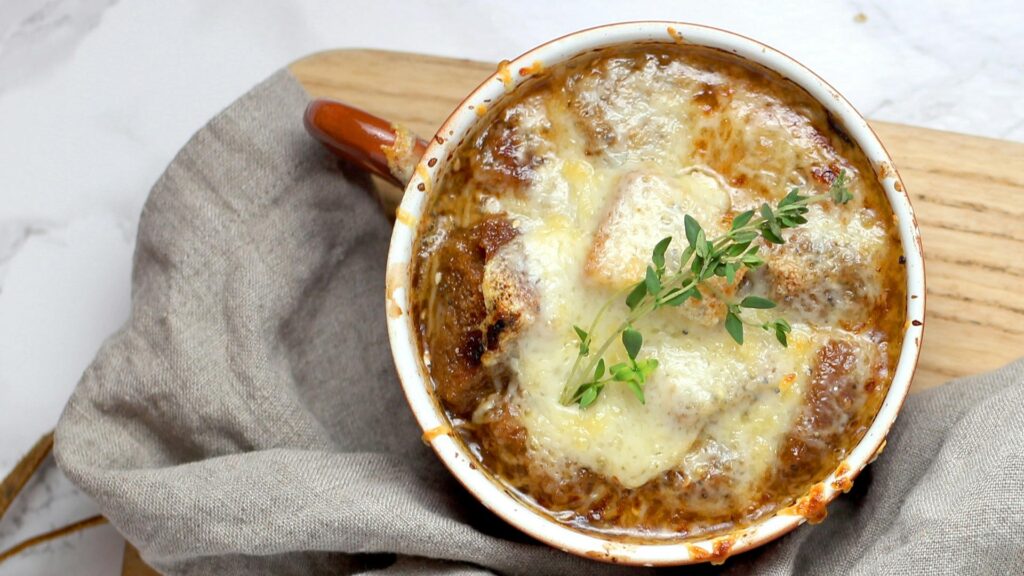
Soupe à l’Oignon Gratinée
Slowly caramelized onions create a dark, savory broth seasoned with a hint of sherry or wine. The onion soup is served “gratinée” – with a thick crust of toasted bread and melted Gruyère cheese. It was originally breakfast for hard-working men at the Les Halles markets.
Croque Monsieur
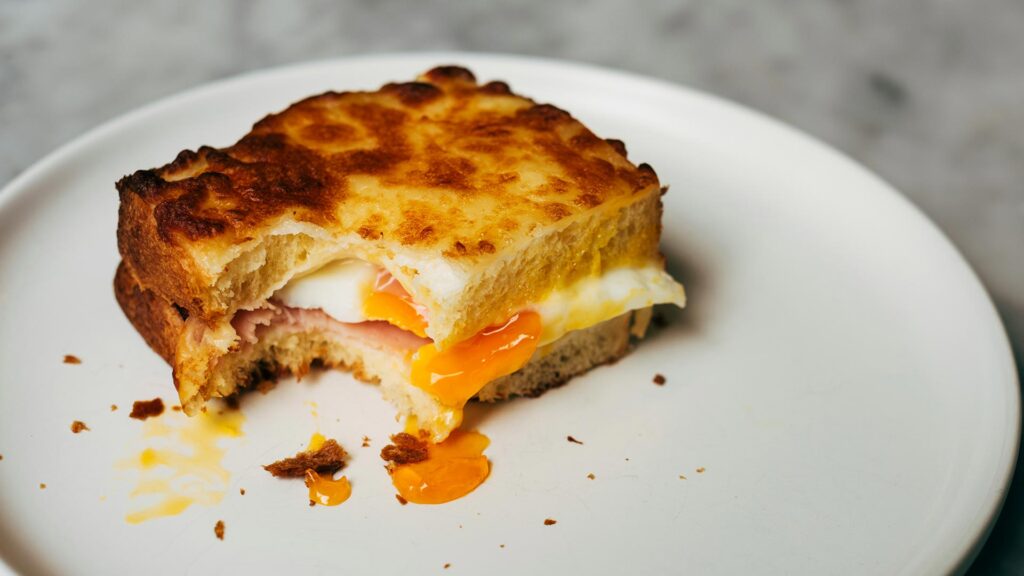
The world’s most sophisticated grilled cheese! The croque monsieur first appeared on Paris menus in 1910. Two slices of bread are stuffed with ham and melted Emmental or Gruyère cheese with a smear of creamy Béchamel sauce, often gratinéed, on top.
READ NEXT: The fascinating French history behind every croissant
Traditional French dishes from Provence-Alpes-Côte d’Azur (The Riviera)
Provence is where France meets the Mediterranean, and the southern region’s food reflects the coastal feeling.
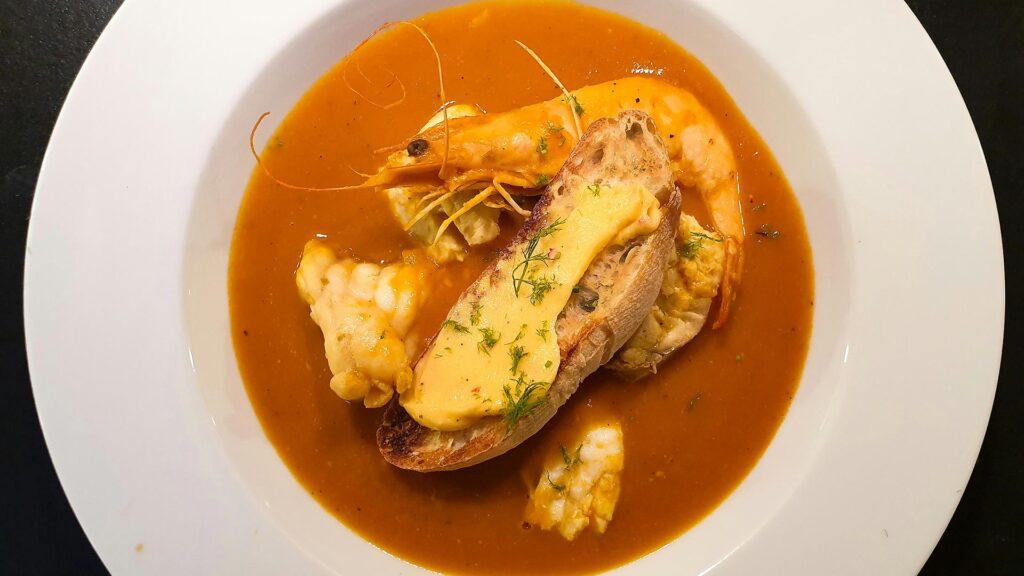
Bouillabaisse
Bouillabaisse was once a humble stew made by Marseille fishermen using the bony rockfish they couldn’t sell. Now the saffron-scented broth is know around the world. It’s served in two stages: first the liquid with rouille (a spicy garlic mayo) on croutons, then the poached fish. True Bouillabaisse must include specific local fish like rascasse to be authentic.
Salade Niçoise
Forget the versions with potatoes or steamed beans – a true Niçoise is crunchy and raw. This dish from Nice typically features tomatoes, hard-boiled eggs, Niçoise olives and anchovies or tuna, drizzled in olive oil. It’s the taste of the French Riviera in a bowl.
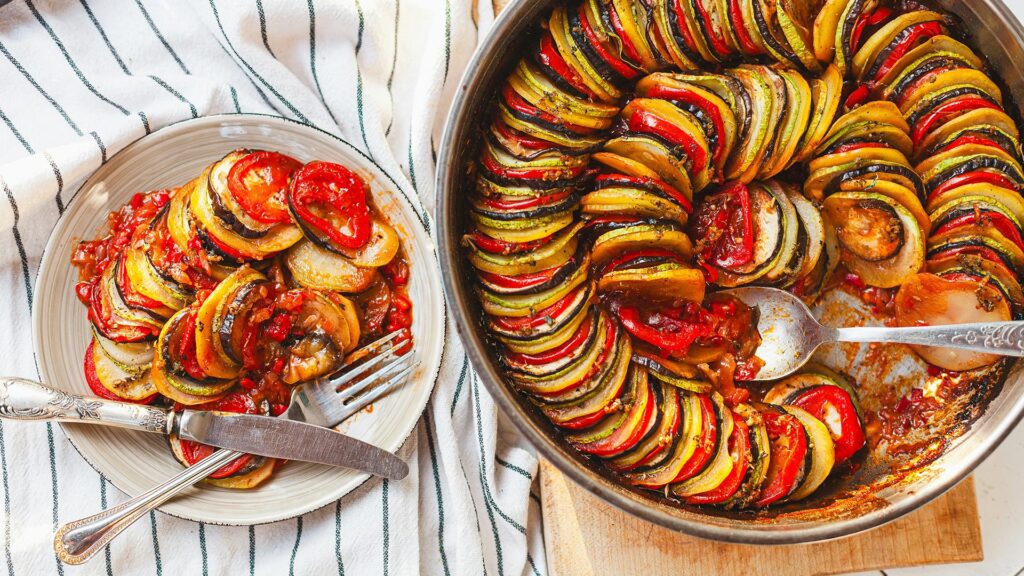
Ratatouille
Also hailing from Nice, Ratatouille is a slow-cooked vegetable medley of eggplant, zucchini, peppers, onions and tomatoes. The trick is to sauté each vegetable separately before simmering them together. It’s a rustic dish that captures the essence of a Provençal summer and can be served hot or at room temperature.
Traditional French cuisine from Auvergne-Rhône-Alpes (The Alps & Lyon)
This region is the heart of French comfort food, from jagged the French Alps to the gastronomic city of Lyon.
Tartiflette
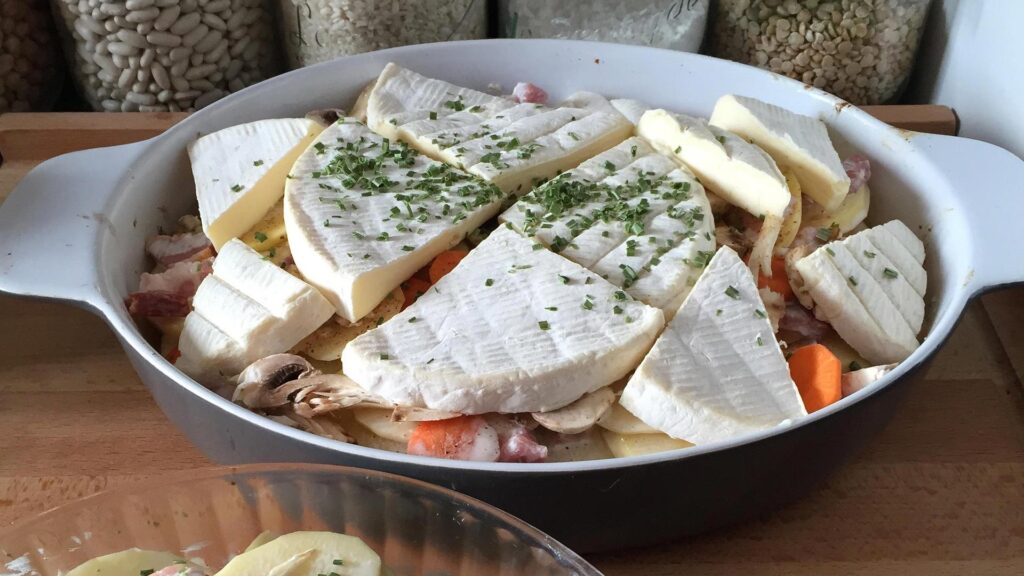
If you need to recover from a day skiing or hiking in the Alps, tartiflette is the answer. It’s a decadent mountain dish made of sliced potatoes, lardons (bacon bits) and onions, all smothered in an entire wheel of Reblochon cheese. It was popularized in the 1980s to boost Reblochon sales!
Quenelles de Brochet
Lyon is sometimes claled the gastronomic capital of the world, and this is its specialty dish – delicate and light football-shaped dumplings. Made from creamed pike (a freshwater fish), egg and flour, they are poached and usually served swimming in a rich, pink Sauce Nantua (a crayfish-based cream sauce).
Traditional French dishes from Bourgogne-Franche-Comté (Burgundy)
This is the land of “slow and low.” Between the rolling vineyards of the Côte d’Or and the timbered houses of Dijon, Burgundy food is as deep and complex as the prestigious wines produced in the local limestone soil.
Boeuf Bourguignon
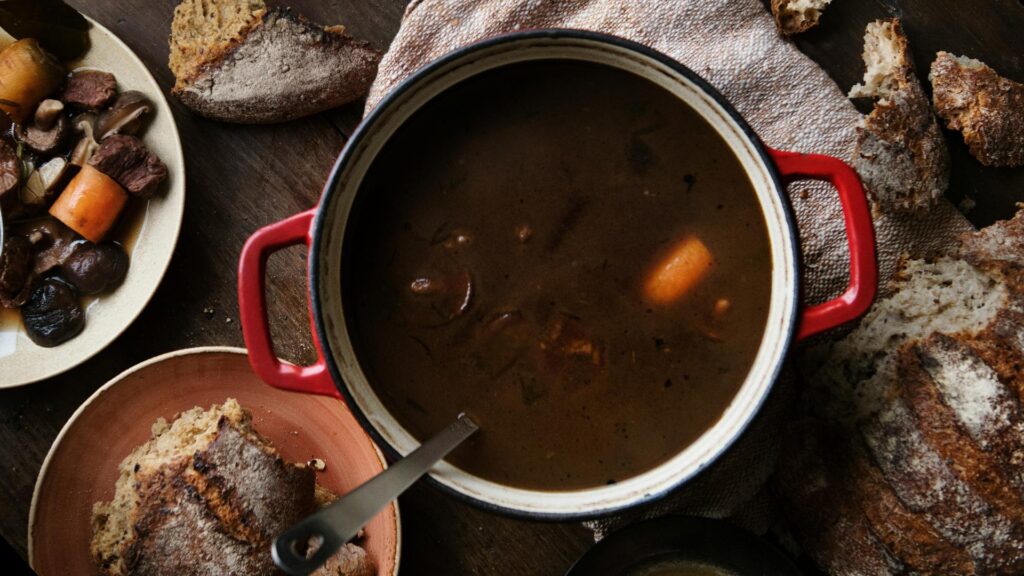
Originally a peasant dish, this involves tough cuts of beef simmered for hours in a full bottle of Burgundy red. Combine the meat with pearl onions, mushrooms and salty lardons. Serve with buttery mashed potatoes.
Escargot
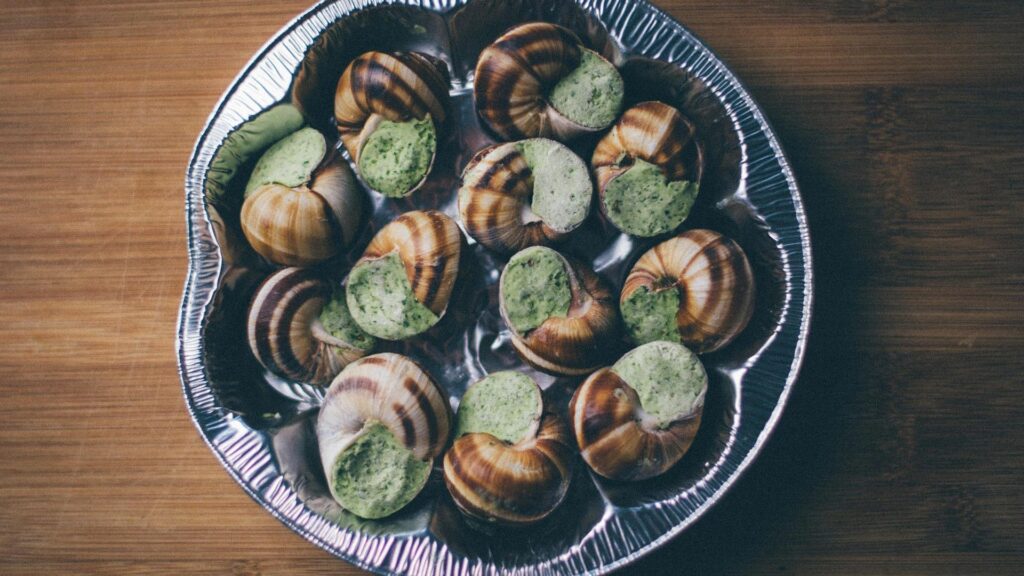
If you’re going to try French snails anywhere, let it be here. Escargots de Bourgogne are land snails purged and cooked in a flavorful bouillon, then stuffed back into their shells with a generous amount of “beurre d’escargot” (butter, garlic and flat-leaf parsley).
Coq au Vin
Legend says this dish dates back to Julius Caesar, but it was the Burgundians who perfected it. It’s a rustic stew of rooster (or chicken) braised with wine, lardons, and button mushrooms. The wine acidity cuts through the richness of the meat, creating a dark, glossy sauce that is the benchmark of French country cooking.
Traditional French cuisine from Grand Est (Alsace & Lorraine)
Strasbourg and Colmar feel like they’ve been lifted straight from a fairy tale and the food here has a heavy Germanic influence, thanks to the proximity to the border.
Choucroute Garnie
This dish is Alsace on a plate. A mountain of sauerkraut (cabbage fermented in wine) is topped with sausages, salt pork and boiled potatoes. It’s salty, sour and very filling. Pair your meal with a brisk walk along the Rhine!
Quiche Lorraine
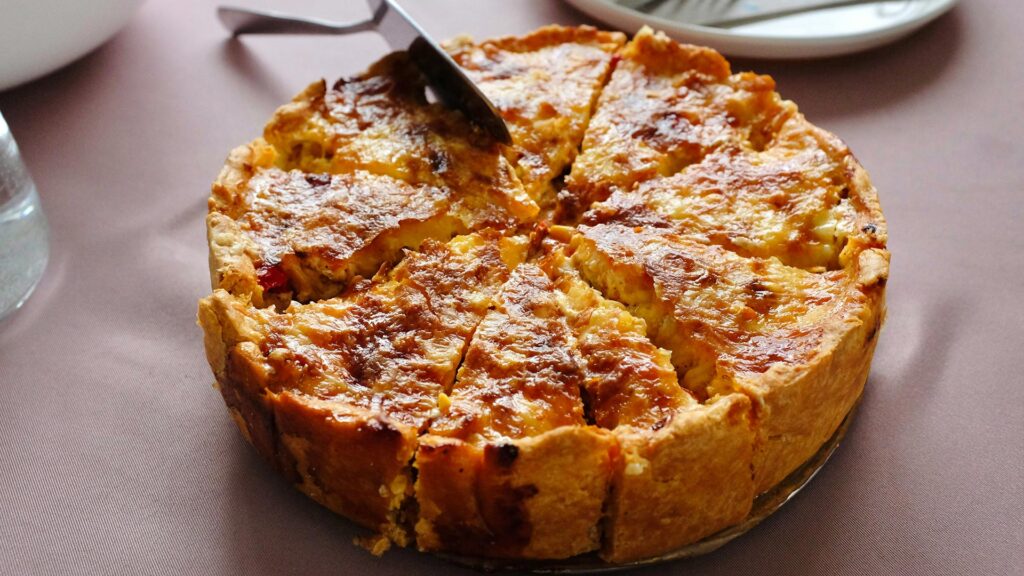
A true Quiche Lorraine is a simple masterpiece – just a buttery, shortcrust pastry filled with a rich custard of heavy cream, eggs and smoked bacon. No cheese, no onions, no rogue spinach or soggy vegetables.
READ NEXT: 5 French Experiences You’ll Love on Our New Seine River Cruise
Traditional French dishes from Normandy (North Coast & Camembert)
Normandy is the land of cider, camembert and cream. Watch the mist swirl around Mont Saint-Michel, then tuck into a dish of mussels!
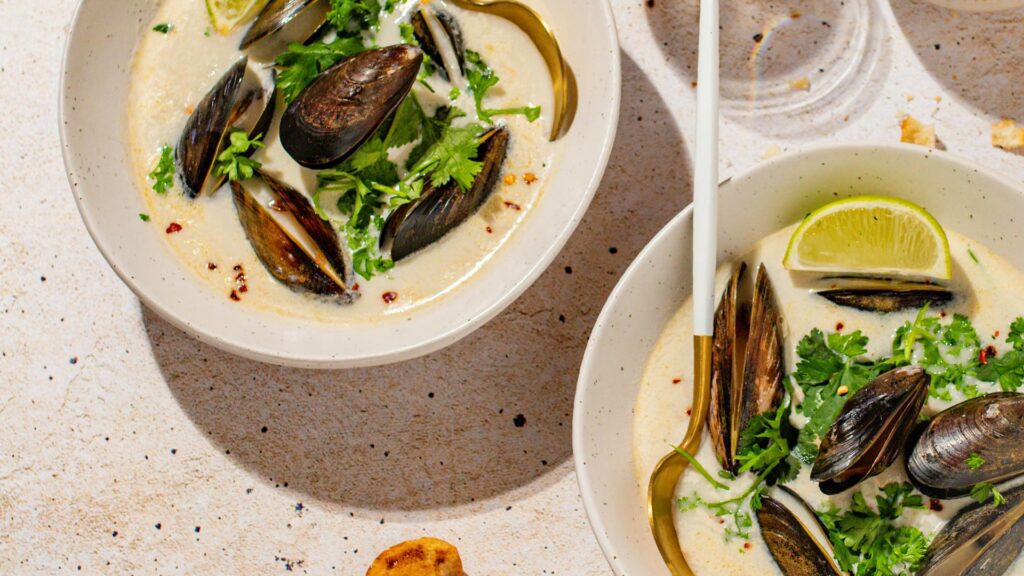
Moules à la Crème
While the rest of France might cook mussels in wine and garlic, Normandy adds a thick swirl of crème fraîche. Mussels harvested from the cold Atlantic waters are steamed with cider, shallots and parsley, then finished with cream.
Tarte Tatin
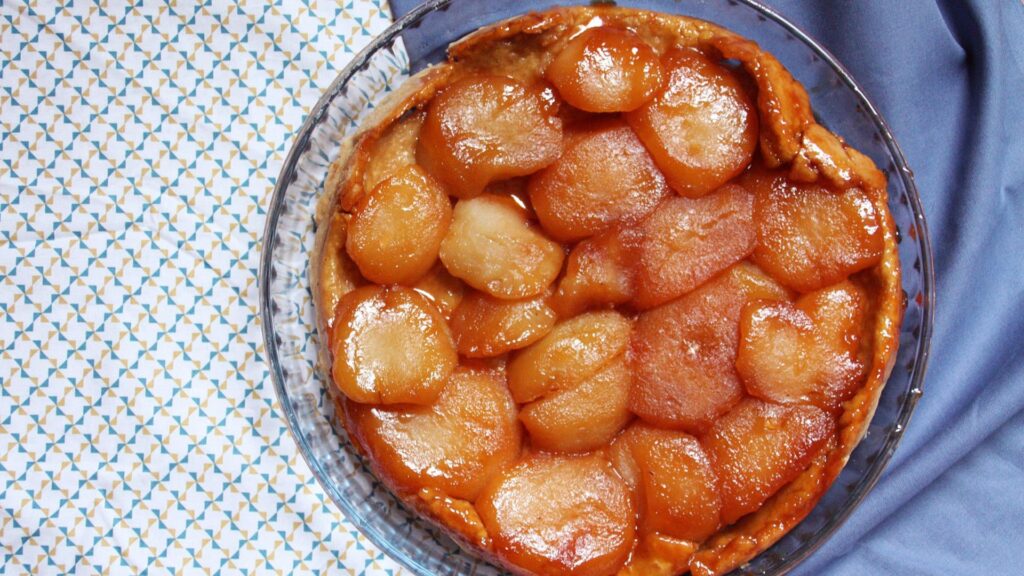
France’s famous apple tart was a happy accident by the Tatin sisters in 1898. They overcooked the apples in butter and sugar and, in a panic, threw the pastry on top before baking. The result is a caramelized, jammy heaven. It’s best served warm, showcasing the tartness of the local Reine des Reinettes apples against a dark, buttery toffee.
Traditional French cuisine from Brittany (North-West)
Brittany, in the far north-west, is a rugged, salt-sprayed peninsula with Celtic roots and wild Atlantic. Step through Saint-Malo and you’ll see buckwheat and salted caramel butter in almost every window!
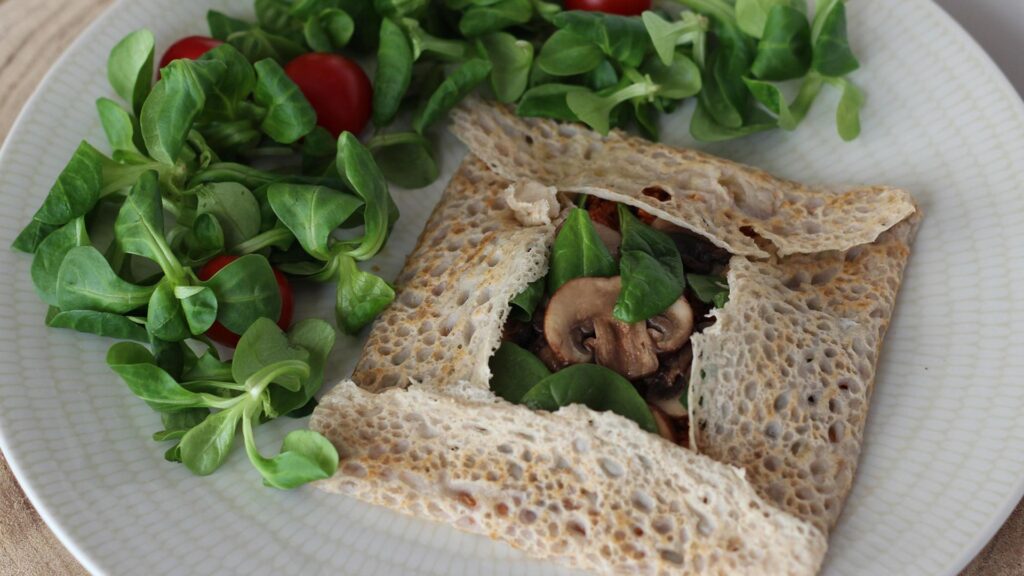
Galettes Bretonnes
Unlike the sweet crêpe, the Galette is made with buckwheat flour, giving it a nutty flavor and a darker, lacy texture. The classic Galette Complète comes folded with an egg, ham and Emmental cheese. It’s a great, cheap street food.
Kouign-amann
This sweet was invented in 1860 by a baker in Douarnenez who was having a terrible day with a bread dough that wouldn’t rise. He decided to fold in obscene amounts of butter and sugar instead. The result is a caramelized, multi-layered sweet masterpiece.
Traditional French cuisine from Occitanie (The South West/Pyrenees)
Occitanie is a rugged, sun-baked region stretching from the Pyrenees to the Mediterranean. Between the fairy-tale turrets of Carcassonne and the pink-hued streets of Toulouse, the food is garlicky, heavy on the duck fat and built for people who work the land.
Cassoulet
Legend says Cassoulet was invented during the Siege of Castelnaudary in the 14th century, where the townsfolk threw every remaining scrap of food – beans, pork, sausage and duck – into a cauldron to fuel their soldiers. This slow-simmered, crusty-topped stew is ultimate French comfort food.
Brandade de Morue
This specialty of Nîmes is a silky emulsion of salt cod, olive oil and occasionally mashed potatoes. It’s usually served warm with crusty bread or crostini.
Traditional French dishes from Nouvelle-Aquitaine (Bordeaux & Basque Country)
From Bordeaux to Biarritz, this coastal region is the land of heavy red wines, truffles, walnuts and some of the finest brandy on the planet.
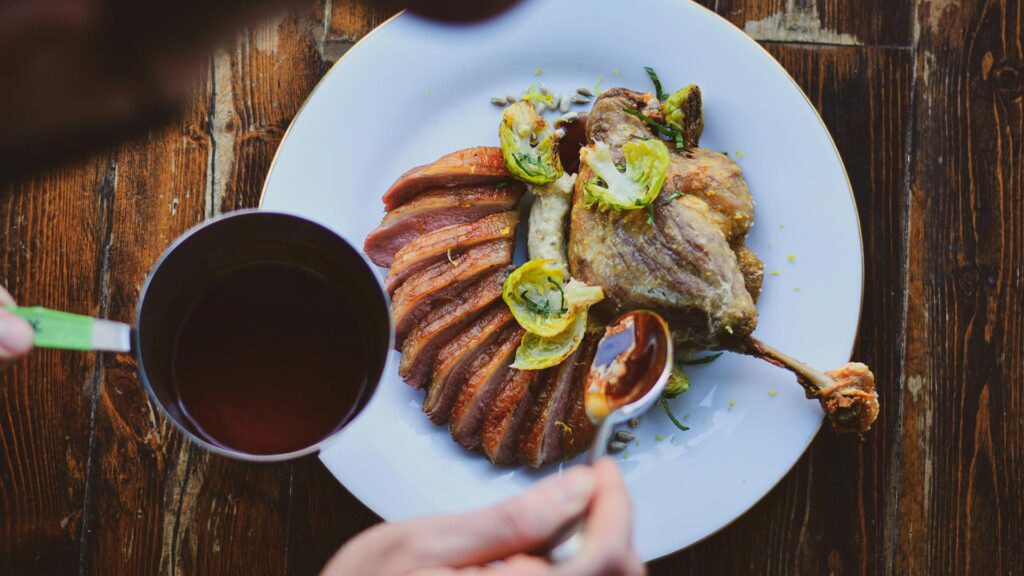
Confit de Canard
Before refrigeration, the French mastered the art of confit – which involves salting meat and slow-cooking it in its own fat to preserve it. We still eat it today because it’s so delicious. The duck leg is cured with salt, garlic, and herbs, then poached until the meat is tender and the skin is shatteringly crisp.
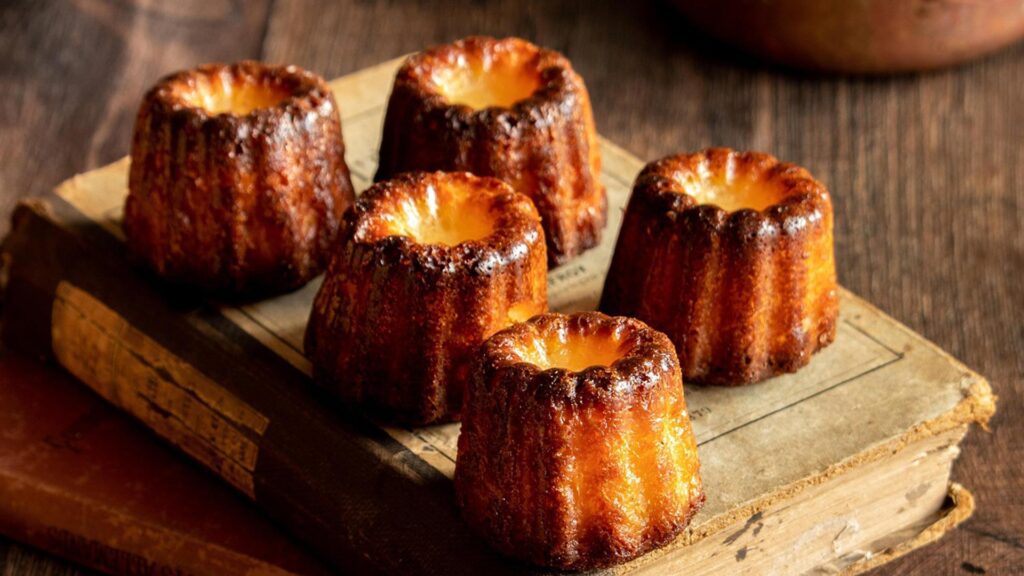
Canelés
In the 18th century, winemakers used egg whites to clarify their wine. Leftover yolks were given to local nuns, who combined them with rum and vanilla to create these small, fluted cakes. Bordeaux’s signature pastry has a dark, caramelized, almost burnt-sugar exterior and a soft, custardy heart.
Poulet Basquaise
This dish represents the Basque soul of the region’s southern tip. It’s a colorful stew of chicken, tomatoes, onions and piperade (a mix of sautéed peppers, specifically the mildly spicy Espelette pepper).
Traditional French cuisine from Hauts-de-France (North)
Up on the Belgian border in France’s industrial heartland, wine disappears and beer takes over. The food here is hearty and designed to be shared in a lively estaminet (traditional tavern) in Lille or Arras.
Carbonnade Flamande
This is a rich beef stew braised in dark beer, often sweetened with a touch of gingerbread or brown sugar. The bitterness of the hops balances the sweetness of the onions, creating a thick, dark sauce.
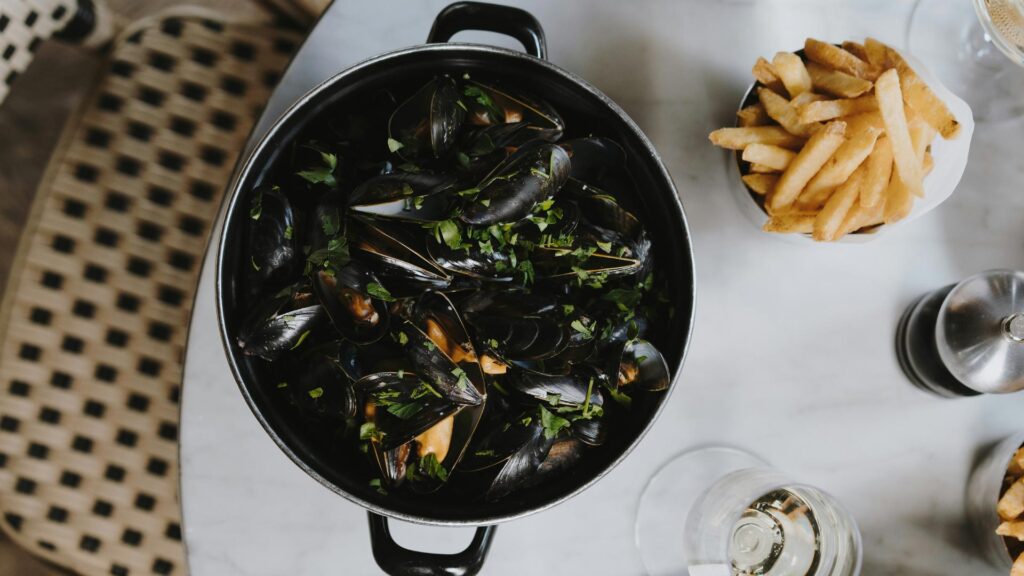
Moules-Frites
While you can find mussels and fries across France, they are a way of life in the north. The mussels are usually steamed in white wine, shallots and parsley, served in big black pots with a side of crispy, double-fried potatoes. Pair it with a cold local blonde ale.
Traditional French dishes from Pays de la Loire (Lower Loire)
Venture from the mechanical Elephant on the docks of Nantes to the grand fortress of Angers and find the food in the Pays de la Loire leans on rich pork products, river fish and white wine.
Rillauds d’Anjou
The Loire Valley loves its pork. Rillauds are thick cubes of pork belly brined and slowly poached in lard until they are tender and golden. They are traditionally eaten warm or cold, often tucked into a crusty roll.
READ NEXT: 21 French customs and traditions you need to know about before your next trip
Traditional French cuisine from Centre-Val de Loire (Loire Valley)
The garden of France is famous for the staggering Châteaux of Chenonceau and Chambord, and the food here is elegant to match! The fertile valley soil, goat cheese and wild game meats make this area exciting.
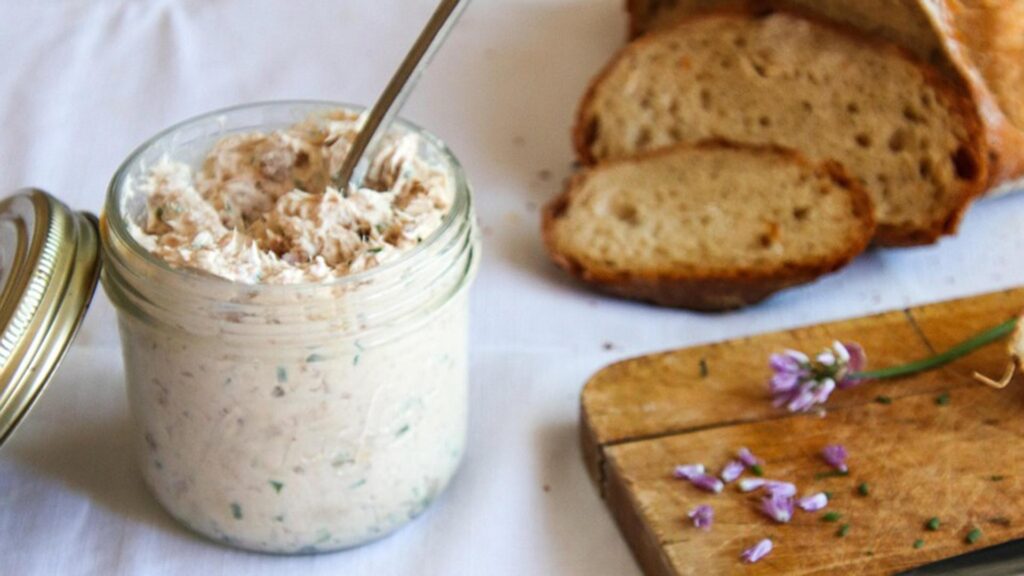
Rillettes de Porc
Pork is slow-cooked in its own fat until it literally falls apart, then shredded and chilled into a spreadable meat paste. This rustic dish from Tours is designed to be smeared thickly onto a baguette, making it the ultimate picnic food.
Traditional French cuisine from Corsica Island
The French island of Corsica is a rugged, mountainous rock in the Mediterranean.
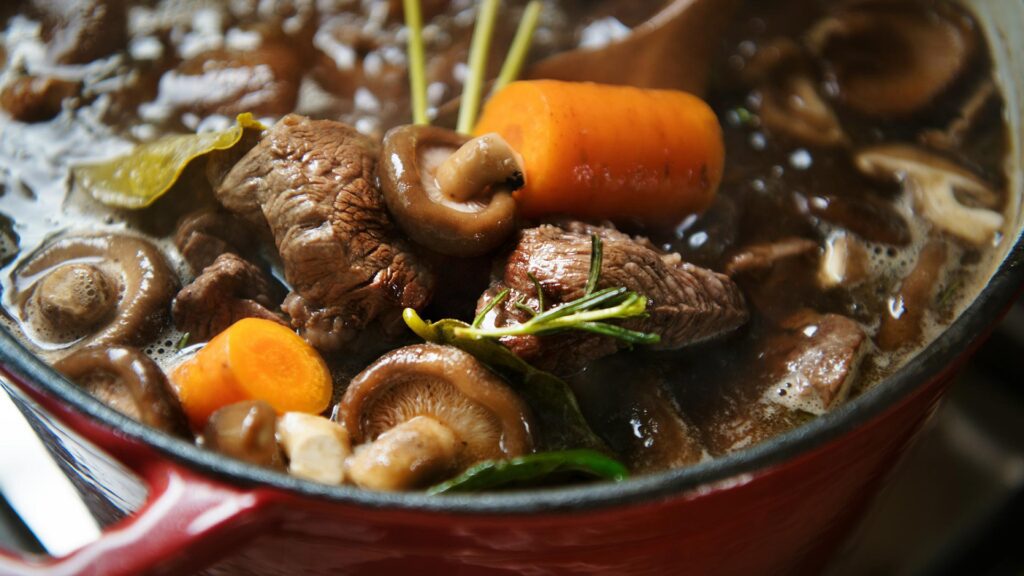
Civet de Sanglier
Wild boar is widely used in Corsica. This gamey stew marinates the meat with local herbs like myrtle and thyme, then slow-cooks it with carrots, onions and chestnuts. It’s best eaten in a mountain village after a day of navigating the island’s hairpin turns!
Fiadone
Fiadone is a cheesecake with a Mediterranean twist. It’s light, citrusy, and crustless, made with Brocciu (a fresh sheep or goat milk cheese unique to the island), sugar, eggs and plenty of lemon zest. A light end to any meal.
That’s our guide to the best traditional and regional dishes from French cuisine. What’s your favorite? Leave us a comment….