

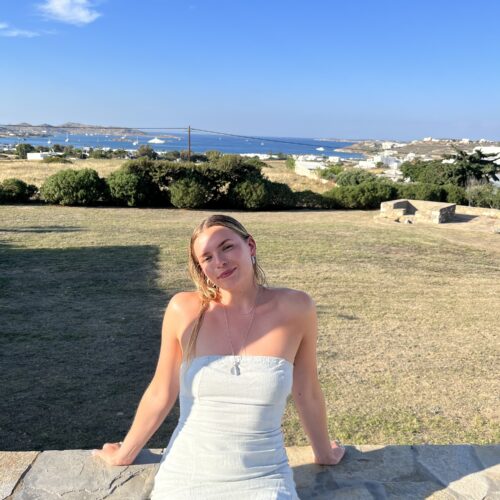
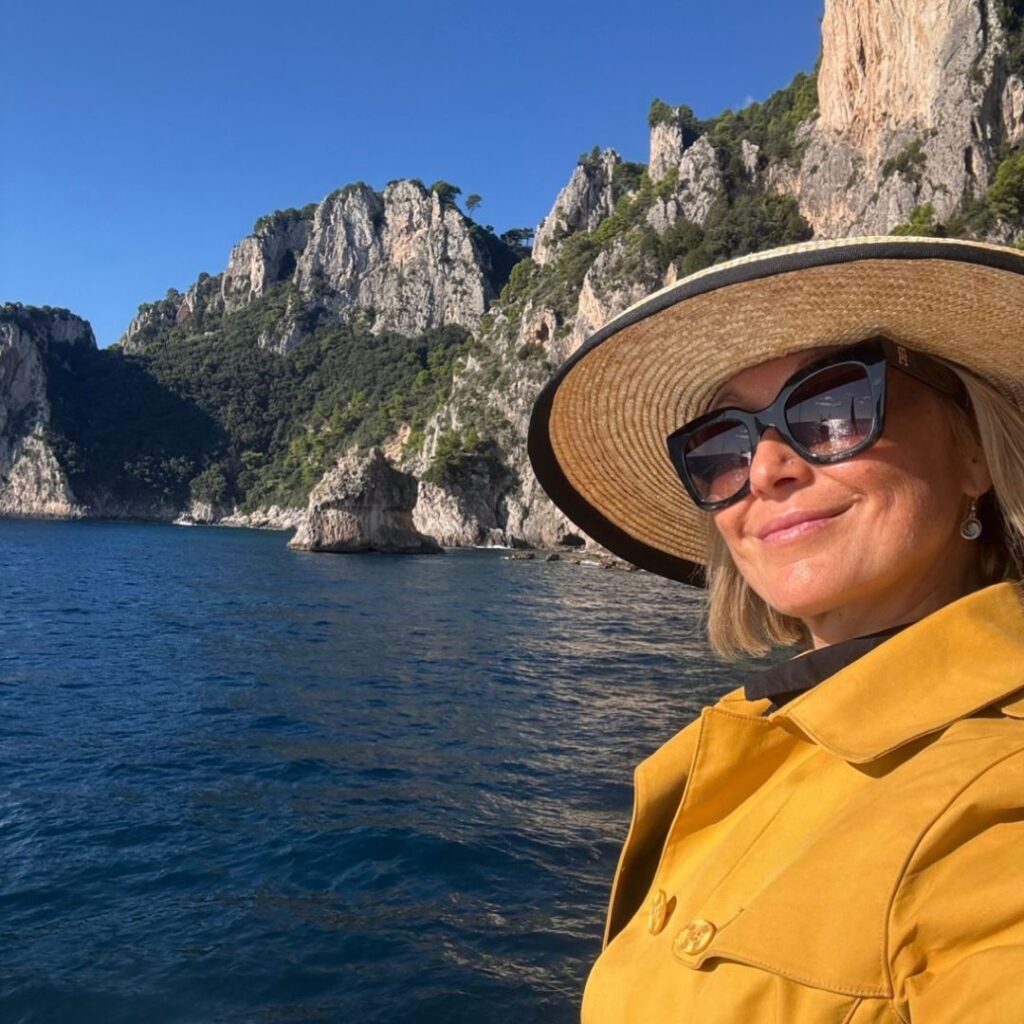
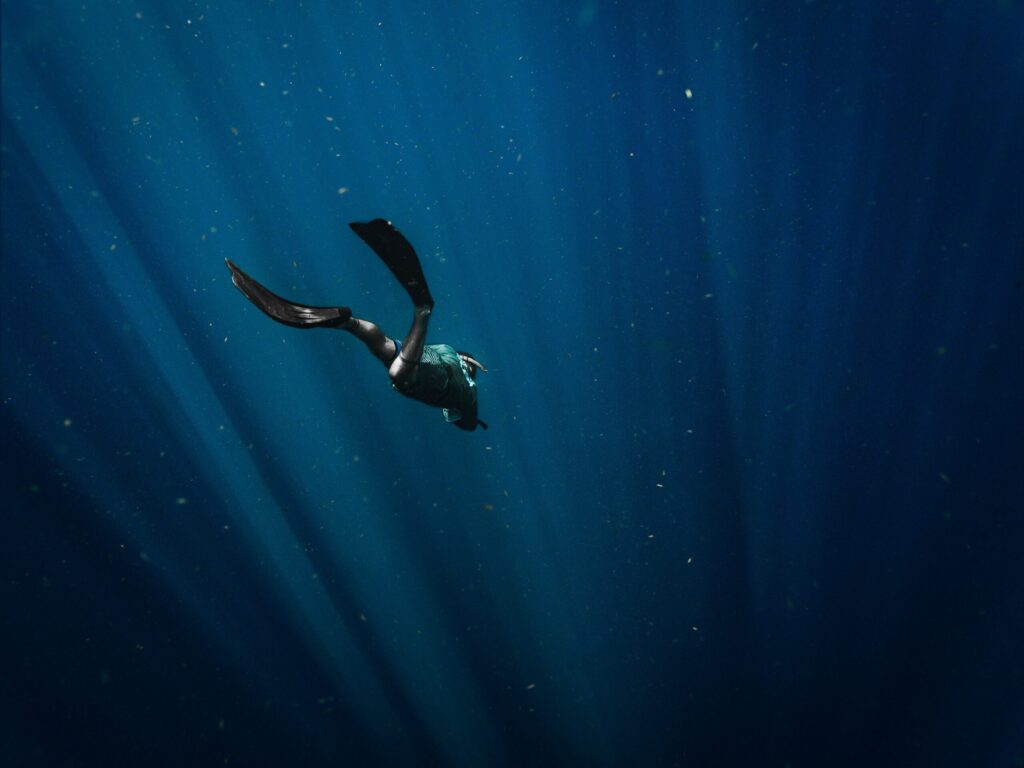
When you think of meditating, you’re probably sitting down, perhaps on a mat, taking deep breaths and feeling the ground beneath you. But for Trafalgar Travel Director Sarah Rose, her meditation is when she’s 60 meters under the sea, with just one breath of air in her lungs. “Whenever I tell people on tour that I dive 60 meters on one breath, we talk about it for the whole rest of the tour,” she says.
A far cry from her work as a Travel Director traversing the landscapes and cultural hubs of Greece and Italy while on tour, freediving came into her life during 2020 — an uncertain time for everyone, but particularly for those in the travel industry. But this unique passion ended up informing her life above the water line too; it’s not surprising that anyone who can keep a cool head 60 meters down below is going to easily deal with the bustle of group travel.
So, what is it about the deep blue that keeps bringing Sarah Rose back?
“Stuck in London, I felt suffocated”
Though there’s archaeological evidence that humans have been freediving for some 10,000 years — mainly to to collect food, sponges or pearls — it’s seen a recent surge in popularity as a sport in the last few decades.
“This popularity began in the late ‘80s with a French movie called Le Grand Bleu (The Big Blue), filmed in Sicily and Greece. It was the first time this idea of going underwater on one breath had been shown publicly, and it became very famous,” Sarah Rose explains.
However, her own journey into freediving began with a lockdown. “When COVID hit in 2020 and I was stuck in a London apartment with no work, I felt suffocated. As soon as the borders opened I hightailed it out of there, with no clear idea where I was going.”
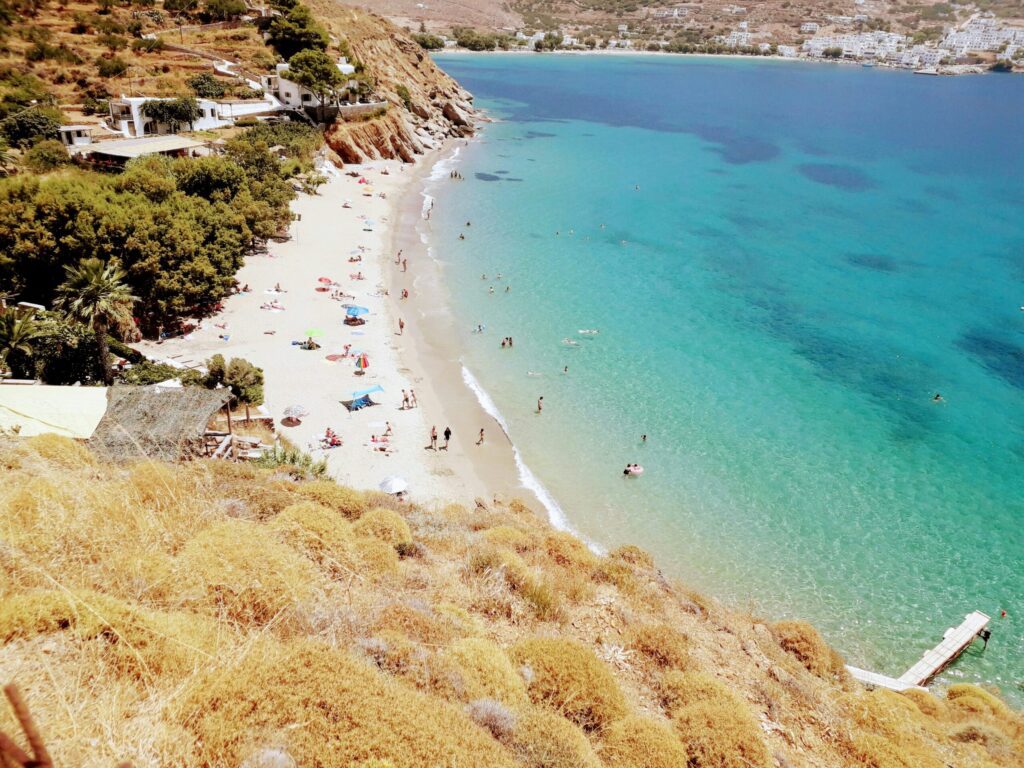
“I jumped from one Greek island to another and found myself on Amorgos, where Le Grand Bleu was filmed. I’ve been a swimmer my whole life and a scuba diver since 2009 — but it was in Greece doing my advanced open water certification in scuba diving that my instructor mentioned freediving, and I first discovered what it was.”
For Sarah Rose, freediving came naturally. “Within two weeks I already was at Level 2, diving 28 meters underwater. Being a yoga instructor really helped me, because freediving is a wonderful combination of breathwork and flexibility. It’s all about working with your body as well as your mind, which is telling you to breathe.”
“There is so much mental work in keeping yourself really calm. I sometimes call it a Jedi power control, because you’re working with yourself in such a deep, intimate way; almost like underwater meditation.”
“I found a talent I didn’t know I had”
“COVID was a huge punch in the face for me. I lost my own business, traveling with Trafalgar, relationship failures, all at once,” Sarah Rose recalls. “Freediving somehow gave my life a breath of fresh air, even though I was under water.”
“It was finding a talent that I didn’t know I had within myself, working with myself to the point where I could confidently say I’m okay. It was a very meditative process that gave me a lot of inner peace.”
The power she found within herself in the water has rippled into her life above ground, too. “When you’re on the road as Travel Director, anything can happen that might not be part of the plan — but then it becomes part of the experience, because that’s life. The skills I learned with freediving were just keeping myself calm, and knowing everything is going to be okay because I can still breathe.”
“I go deeper, simply because I know I can”
While there is a well-established competitive side to freediving, where divers challenge each other on depth and time, Sarah Rose prefers to keep things more personal. “Everyone is going to have their own angle from which they approach their relationship with themselves. As a competitive swimmer I burned myself out — I don’t want that again, so I’ve refused to do official freediving competitions,” she says. “This sport, for me, has never been about competition. I can’t wait to get back in the water and try to go deeper, simply because I know I can.”
In the same vein, she doesn’t get in the water with a pre-determined goal. “I don’t believe in pushing myself too far. If something doesn’t feel right when I go down, then I’m coming right back up again. I’m also an assistant instructor; you can tell when someone’s goal is just to get as deep as possible, and they get frustrated. I find it sad, because freediving can offer so much more than that.”
“The beauty around you can be a distraction”
Freediving is a high-pressure experience in more ways than one, but the crushing pressure of descending into the depths of the sea is the most important to overcome.
“The biggest thing freedivers work on is equalization. Umberto Pelizzari, one of the older and best equalizing masters, wrote my favorite book on this,” Sarah Rose explains. “It’s all about working with the air within your body to keep your eustachian tubes (connecting the middle ear to the back of the throat and nasal cavity) open — if you can do that, it’s a smooth, calm experience.”
“The aim is to float down with awareness, managing the air, managing your calm level. You’re talking to yourself, thinking happy thoughts. There are some freedivers that use that technique of sleeping with your eyes open. I’ve actually found that when I close my eyes I can do much better dives, because I’m not focused on where I am but just in my own space.”
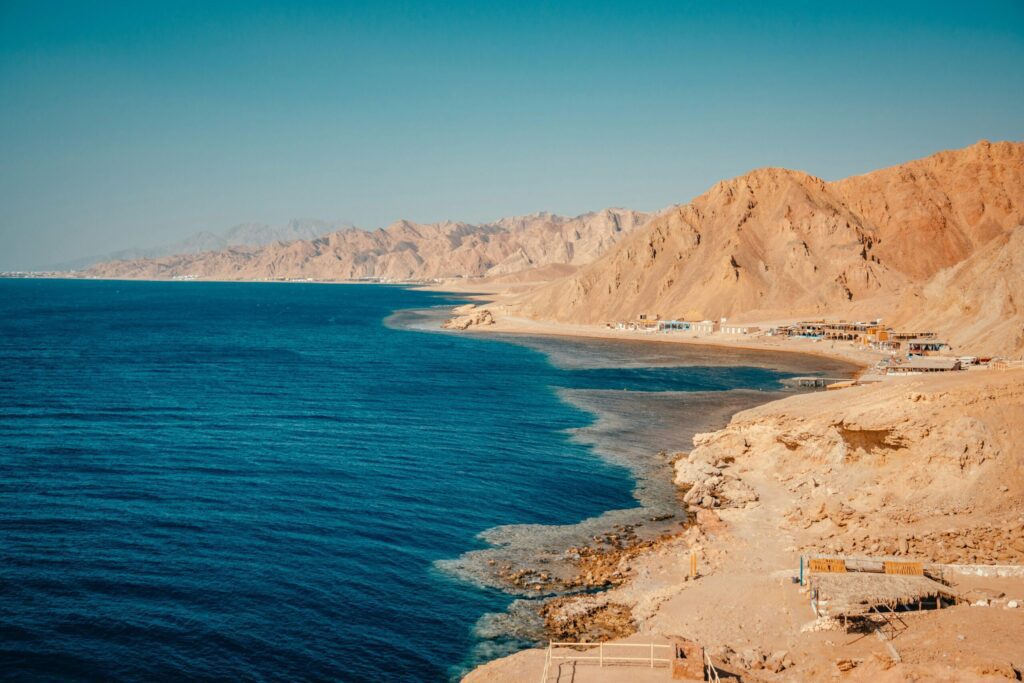
But focus can come from other areas, too. “Sometimes the beauty of what’s around you is a distraction against the impulse to breathe — like the Blue Hole in Dahab, Egypt, where I frequently go to train. It’s one of the top places in the world for freediving, it’s a hole over 90 meters deep, with coral reefs all around.”
To those of us who choose to stay firmly on land, freediving can seem treacherous — but the training and regulations in place aim to keep everyone safe. “The last 10 meters are the most dangerous, because that’s when your lungs are expanding the fastest as you approach the surface,” she says. “But deaths are very rare — as much as you see this stuff on the internet, it’s a very safe sport because we have safety divers with us. We wear a safety line connecting us to the rope, so if I pass out, my person on top can pull up the rope, give me oxygen and save my life.”
“I don’t go to the beach without bringing trash bags”
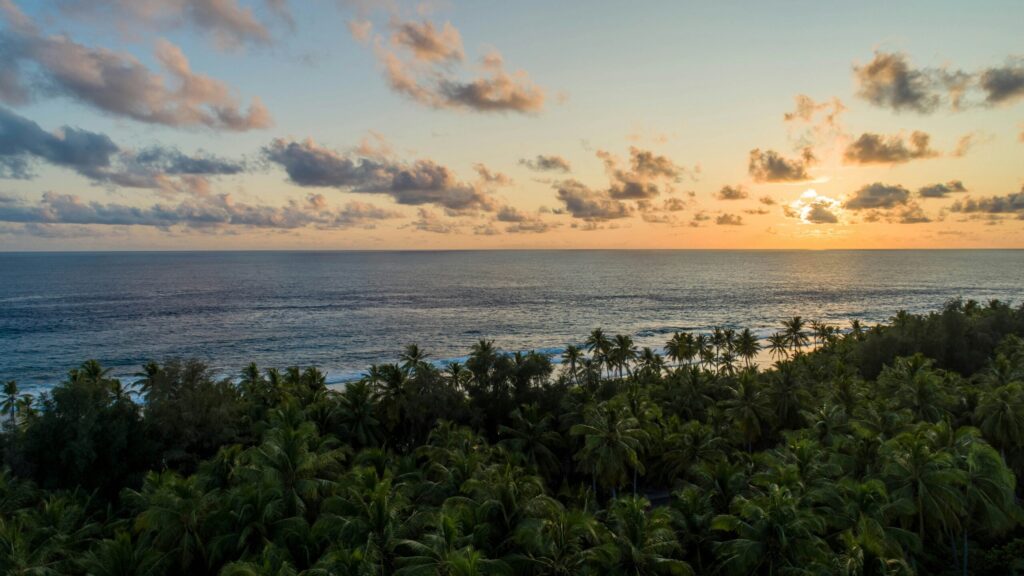
While freediving focuses more on personal achievements, the practice of fun diving applies the same techniques with a different goal: to appreciate nature. “After my first couple of years freediving, I got the chance to go to the Maldives where I did an eight-day fun diving trip with tiger sharks. It was all about underwater photography — something I’m obsessed with.”
“It was a magical experience. The more time you spend with sharks, the more you see they’re curious, smart, incredible creatures. They’re not interested in eating you! We went to an island called Fuvahmulah, before it became a viral hotspot for shark diving.” But these kinds of trips come with a word of warning. “Now, to protect the animals and the reefs, I don’t recommend diving with wildlife unless you’re with a very small group,” Sarah Rose says.
There’s something Sarah Rose can’t ignore on her ocean dives: the pollution that is plaguing coastlines all over the world. “The sad thing is most of the time I use my fun diving to collect rubbish and clean up the sea floor. Last year I was trying to have myself a nice swim, but I went into a cave where I found an entire plastic tarp. I couldn’t help but clean it up, and managed to offload it to a scuba diving boat.”
Unbothered by looking out of place, she hopes that her public efforts will encourage more people to do the same. “I don’t go to the beach without bringing bags for cleaning up rubbish. I get stared at all the time, but I know that one person can inspire others — somebody might see me doing that and then do something too.”