



The Canadian Maritimes—Nova Scotia, New Brunswick, and Prince Edward Island—don’t announce themselves as loudly as some of Canada’s other regions. There are no mountain ranges with the majesty of the Rockies, no major cities like Toronto, no rodeos. What there is, instead, is something quieter and arguably harder to find: a pretty, yet unpolished coastline, fishing villages where the boats still go out before dawn — and a pace of life that slows the pulse, reminds you of what’s important.
“It’s completely underrated,” says Canadian Trafalgar Travel Director Alexis Horz.“It brings in fewer crowds but it has the same amount of beautiful scenery as the US East Coast, or even the west side of Canada. It’s less commercialised, less heavily marketed. But that’s exactly its appeal: fewer crowds, more authenticity, and a sense of discovery that feels personal.”
Here are nine experiences that make the Maritimes worth the journey, according to Alexis.

1. Take the Cabot Trail, Cape Breton Island, Nova Scotia
“Drive the Cabot Trail in Nova Scotia and Cape Breton Island at least once in your life — it’s not just a road, it’s where the ocean, cliffs, and silence remind you how beautiful untouched places can be.”
Cape Breton Island sits at the northern tip of Nova Scotia, connected to the mainland by a causeway but feeling, in every other sense, like a world apart. The Cabot Trail, a 298-kilometre loop road that winds along the island’s rugged coastline and through the Cape Breton Highlands National Park, is considered one of the great scenic drives of the world, and not without reason.
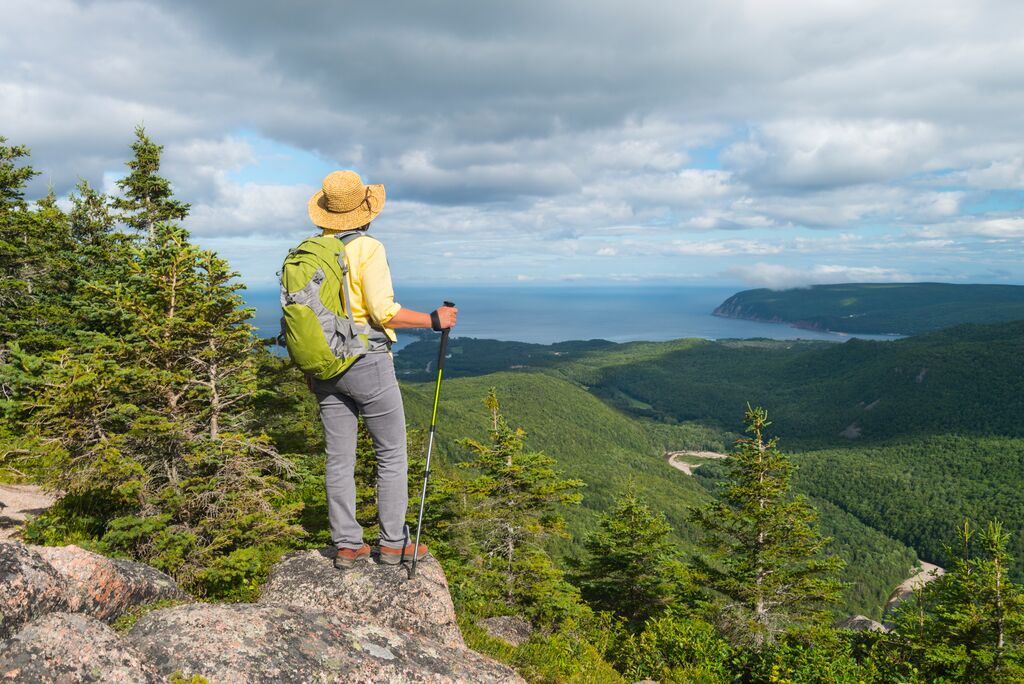
The road climbs and drops through highland terrain, hugging cliff edges above the Atlantic on one side and threading through deep forested valleys on the other. You’ll pass through small Acadian and Gaelic communities (this is one of the last places in the world where Cape Breton Gaelic is still spoken) and pull over constantly, because the views simply demand it. The drive is best done over two days, allowing time to hike the Skyline Trail (where moose sightings are routine at dusk), explore the village of Chéticamp, and stop at the fishing harbours that dot the route.
The ideal time to visit is September and October, when the highland forests ignite in autumnal colour and the summer crowds have cleared. But the Cabot Trail in any season earns its reputation.
2. Witness the Tides at Hopewell Rocks, Bay of Fundy, New Brunswick
“Visit the Bay of Fundy and Hopewell Rocks to witness nature at its most powerful, where the ocean transforms the landscape right before your eyes. It is one of those rare places where you can walk on the ocean floor and come back hours later to see it completely changed.”
The Bay of Fundy holds a world record that sounds impossible until you see it: the highest tidal range on earth. Twice daily, the bay moves more water than all the world’s rivers combined, up to 160 billion tonnes, causing the shoreline to rise and fall by as much as 16 metres. At Hopewell Rocks, on the New Brunswick shore, this spectacle becomes something you can walk through.
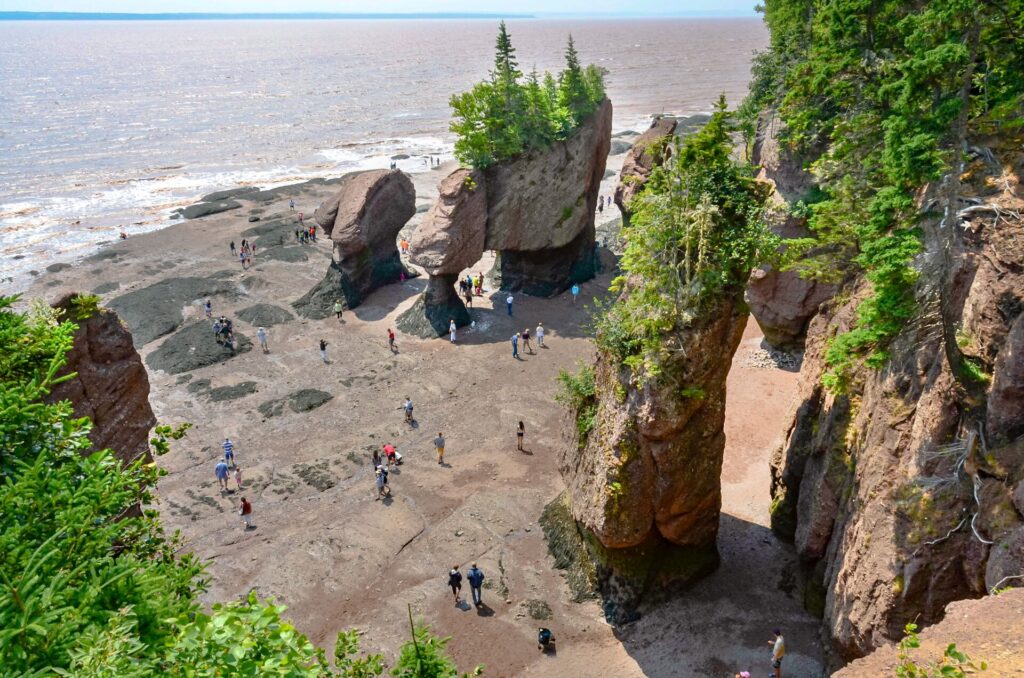
At low tide, the ocean floor is exposed, revealing enormous flowerpot rock formations; pillars of red sandstone that have been carved by millennia of tidal action into bizarre, mushroom-like shapes. You walk between them on the ocean floor, under what will be, in a few hours, seven metres of water. At high tide, those same formations are islands, and kayakers paddle around them at sea level. There are few places on earth where you can have two such completely different experiences of the same landscape within the space of an afternoon.
Tidal schedules are posted on the Hopewell Rocks website.
3. Explore Charlottetown, Prince Edward Island
“Visit Charlottetown for its charm, history, and laid-back coastal feel. It’s the kind of place that’s easy to slow down in. Between the waterfront views and colourful streets, it gives you a glimpse of a simpler, more relaxed side of Canada.”
Prince Edward Island’s capital is, by any reasonable measure, a small city: roughly 40,000 people, a handful of walkable neighbourhoods, a harbour that catches the evening light beautifully. But Charlottetown carries a history disproportionate to its size: it was here, in 1864, that the Fathers of Confederation met to discuss the creation of Canada, earning it the nickname the Birthplace of a Nation.
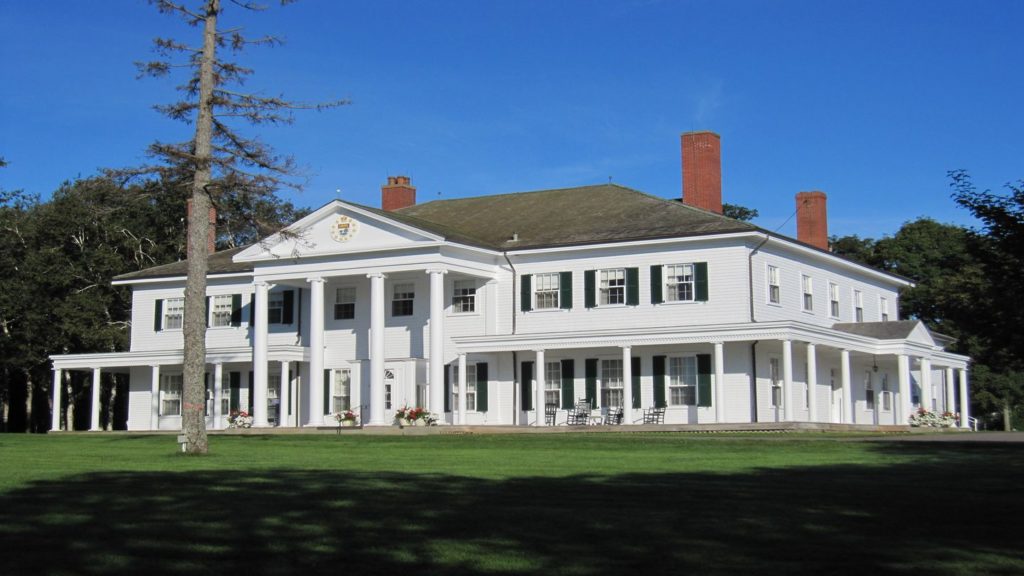
Province House National Historic Site, where those meetings took place, sits at the centre of the city and remains in use as a legislative building and as a rare case of living heritage. Around it, the city has the kind of easy charm that comes with well-maintained Victorian architecture, a waterfront boardwalk, and restaurants that take the island’s extraordinary produce (lobster, mussels, oysters, potatoes) seriously.
Charlottetown is also the best base for exploring the island more broadly: Green Gables is 45 minutes west, the red-sand beaches of the national park are nearby, and the island is small enough to cross in under two hours. The pace here, as with much of PEI, is unhurried and relaxed.
4. Sit Down to a Lobster Supper, New Brunswick
“Travel to New Brunswick for a lobster supper and you’re not just having a meal, you’re experiencing a tradition shaped by the ocean. It’s fresh, simple, and real, the kind of experience that connects you to the place in a way restaurants can’t.”
Lobster fishing in the Maritimes is not a boutique operation. It is an industry that goes back generations, governed by seasonal licences and strict catch limits, and conducted by fishers who are out on the water before most people’s alarm clocks go off. The American lobster, caught in the cold, clean waters of the Bay of Fundy and the Gulf of St. Lawrence, is considered some of the finest in the world, and New Brunswick hauls a significant share of Canada’s annual catch.

A lobster supper is the Maritimes’ answer to the question of what to do with all this bounty: a communal meal, typically served in a church hall, Legion, or dedicated supper house, where whole lobsters arrive with little ceremony and a lot of melted butter. The sides of chowder, fresh rolls, coleslaw, dessert are beside the point. The experience is the point: a table of strangers cracking shells, the smell of the sea still in the air, everyone slightly sticky and entirely satisfied.
Look for supper houses in the St. Martins and Shediac areas of New Brunswick, or cross over to PEI where the tradition is equally strong.
5. Wander Lunenburg, Nova Scotia
“Visit Lunenburg in Nova Scotia for its colourful streets and historic waterfront that feel like stepping into another time. It’s the kind of place where you slow down, wander, and just enjoy the charm of coastal life.”
There is a reason Lunenburg earned UNESCO World Heritage Site status in 1995, and it becomes clear almost immediately on arrival. The town’s Old Town district is one of the best surviving examples of planned British colonial settlement in North America, its grid of streets lined with wooden buildings in every shade of the paint chart, from ochre to crimson, sea-green and cobalt, are unchanged in their essential structure since the 18th century.
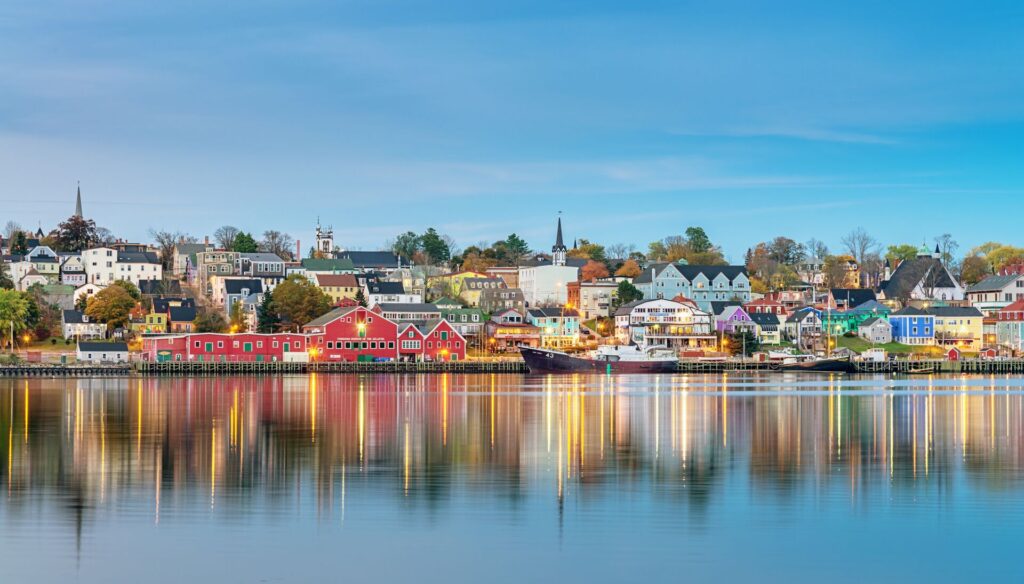
Lunenburg has a working harbor where fishing vessels and schooners sit alongside the wharves, and the Fisheries Museum of the Atlantic sits in a former fish-processing plant on the waterfront. Here, it tells the story of the Grand Banks fishery and the legendary racing schooner Bluenose, which appears on Canada’s ten-cent coin and is closely associated with Lunenburg. The replica, Bluenose II, is sometimes docked here.
Lunenburg is small enough to explore in a morning but rewards a slower pace. There are good restaurants, independent galleries, and the kind of casual waterfront where sitting with a coffee and watching the harbor counts as an activity.
6. Stand at Peggy’s Cove, Nova Scotia
“She made all these different homemade cards, homemade scrapbooks…she’s super talented, anything you could think of she can do..” It’s that kind of place, Alexis says: “Very wholesome, like a farmers market vibe…You’re not going to see many chain places around Peggy’s Cove. It brings a lot of local businesses, and the scenery — she loved working and living by the ocean.”
Peggy’s Cove is photographed more than almost any other spot in Canada, and the photographs never quite capture it. The setting is stark and elemental: a cluster of coloured wooden houses on the edge of a granite peninsula that slides into the Atlantic, and at its tip, the 1915 lighthouse that has become one of the country’s most recognisable images. The rock itself looks like the edge of the world.
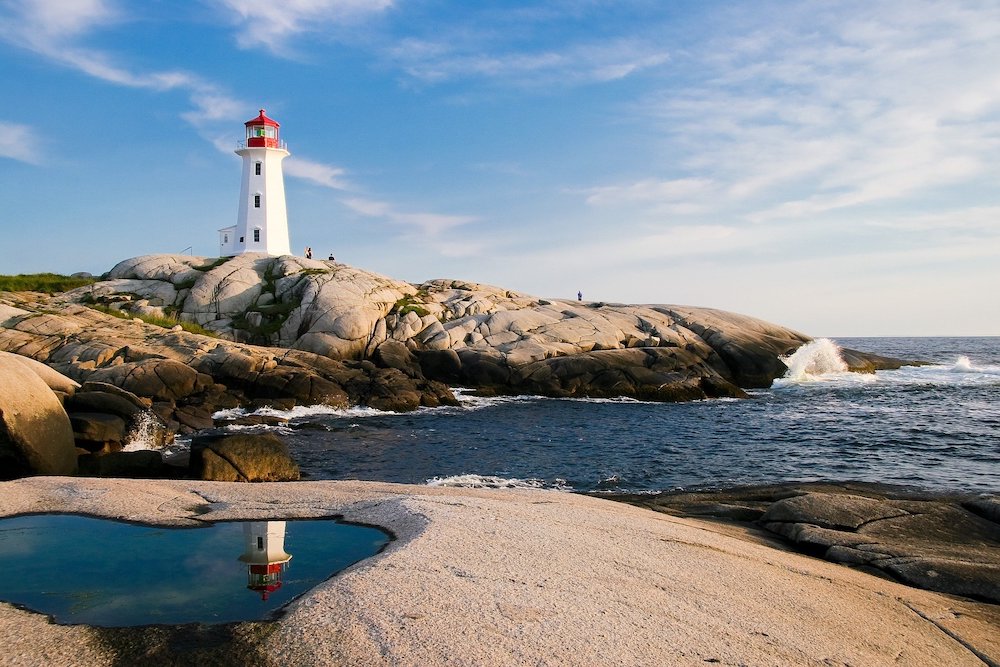
The rocks around the lighthouse are marked with warning signs for good reason: waves here are unpredictable and the granite offers no grip. Stay behind the markers, watch the sea, and give yourself time to simply stare. The tourist coaches come and go; the Atlantic does not.
The village has always been a place of small, independent enterprise. TD Alexis has a personal connection to it: “My grandma used to own a craft store in Peggy’s Cove.”
7. Step into Anne’s World at Green Gables Heritage Place, Prince Edward Island
“Visit Green Gables Heritage Place in Prince Edward Island to step into the world that inspired Anne of Green Gables, where quiet trails and historic charm bring the story to life. It is a place where literature and landscape blend, making it feel both familiar and timeless.”
L.M. Montgomery published Anne of Green Gables in 1908, after it was rejected by several publishers. It went on to sell more than 50 million copies, and its influence on Prince Edward Island’s identity and economy is difficult to overstate. The farmhouse that inspired the fictional Avonlea, on the outskirts of Cavendish, is now a National Historic Site and the island’s most visited attraction, drawing readers (and their children, and their children’s children) from Japan, the UK, and across North America.
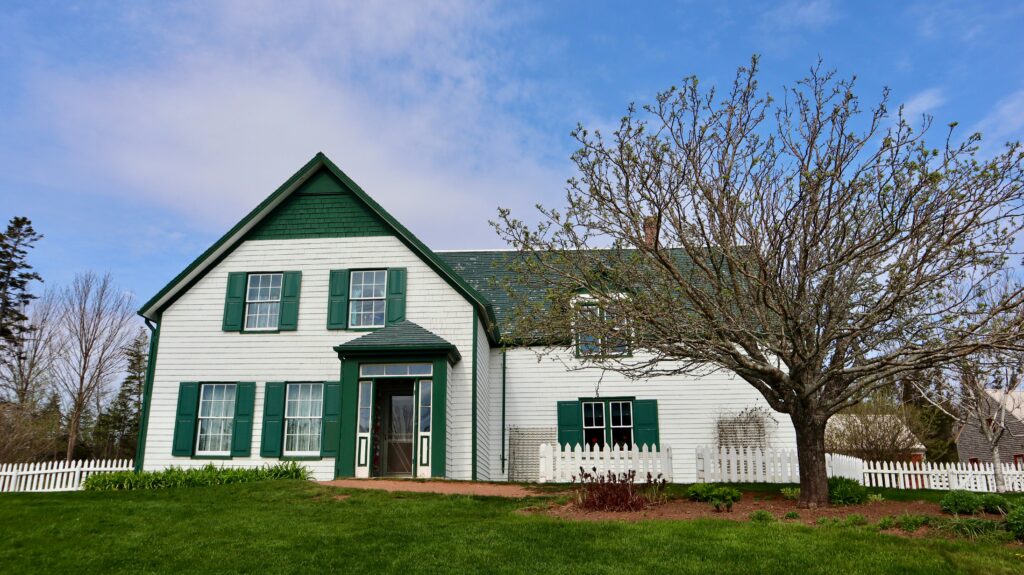
The heritage site is more than a house visit. The surrounding landscape, trails through Haunted Wood, the Lake of Shining Waters, the gardens, has been preserved to reflect the world Montgomery wrote. For those who came to PEI because of the books, it is a genuinely affecting experience; for those who didn’t, it remains a beautifully maintained piece of 19th-century rural life.
The wider Cavendish area sits within Prince Edward Island National Park with access to the island’s famous red-sand beaches, worth combining with a Green Gables visit if the weather cooperates.
8. Discover Alexander Graham Bell National Historic Site, Nova Scotia
“Visit Alexander Graham Bell National Historic Site in Nova Scotia to explore the life of an inventor who changed the world, while standing in a place that inspired his curiosity. It’s a reminder that big ideas often come from quiet, beautiful places.”
Most people know Alexander Graham Bell as the man who invented the telephone. Fewer know that he spent the last 37 years of his life in Baddeck, Cape Breton, and that some of his most ambitious and visionary work—in aviation, marine engineering, and genetics—was done here, on the shores of Bras d’Or Lake.
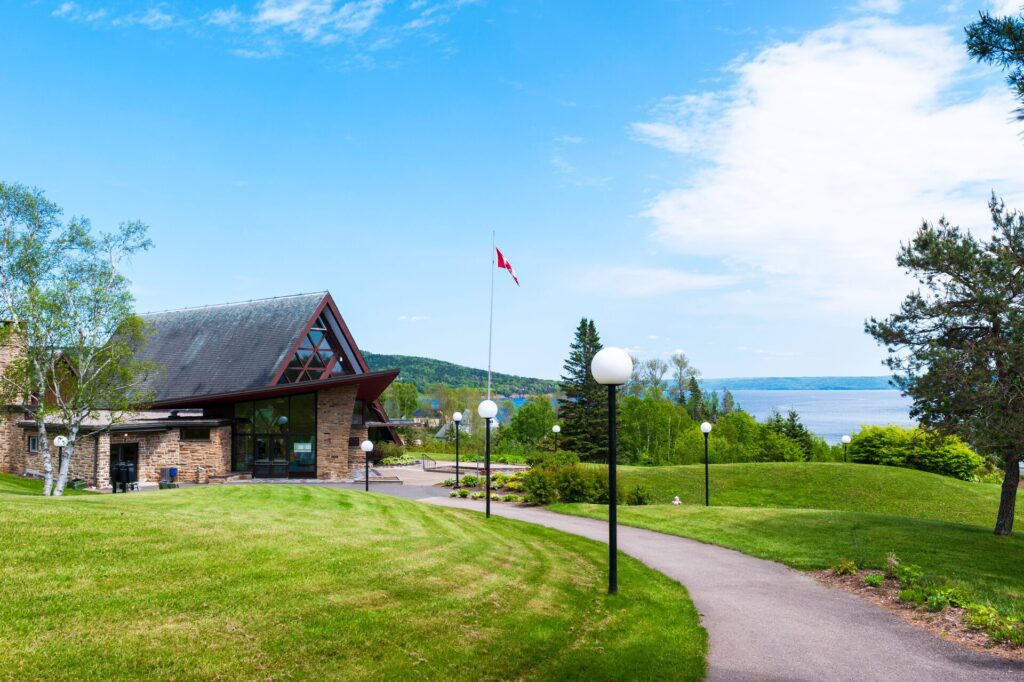
The National Historic Site in Baddeck is a serious museum, thoughtfully designed across multiple floors with original artefacts, working models, and extensive archival material. Bell’s experiments with tetrahedral kites and early aircraft design (his team achieved the first powered flight in Canada in 1909) are covered in detail, alongside his work on hydrofoil boats and his lesser-known contributions to the study of heredity. The lake visible through the museum’s windows is the same one Bell looked out on for four decades.
It is the combination of the man, the ideas, and the landscape that makes this site unusual. Bell didn’t retreat to Cape Breton to retire. He came to think, and the place gave him room to do it.
9. Visit Millbrook Cultural & Heritage Centre, Nova Scotia
“Visit Millbrook Cultural & Heritage center in Nova Scotia to experience the living history and culture of the Mi’kmaq people. It is a place that reminds visitors that the true story of a region is found in its people, traditions, and voice.”
The Mi’kmaq people have inhabited the Maritime region for at least 10,000 years, long before European contact, long before the Confederation of Canada, long before any of the other sites on this list existed. Millbrook Cultural & Heritage Centre, located in the Millbrook First Nation community near Truro, Nova Scotia, is the place to begin understanding that history.
The center’s permanent collection covers Mi’kmaq history, language, material culture, and oral tradition through exhibits that have been developed in close consultation with the community. This is not heritage at a distance: the center is operated by the Millbrook First Nation, and the knowledge it shares is living knowledge; practices and traditions that continue today, not artefacts of a vanished world.
A visit here changes the frame through which you see the rest of the Maritimes. The coastline, the tides, the forests…all of it has a human history that runs far deeper than the colonial one, and Millbrook is where that story is told with authority and care.