



The most valuable thing you can pack for Japan? Well, besides a power adapter and data roaming – it might be basic Japanese phrases. When you step into the neon-pulsing labyrinth of Shinjuku, listen to train announcements and try to order at a restaurant, having some simple phrases or Japanese vocabulary up your sleeve will be a quiet power move.
The good news? You don’t need a semester of intensive linguistics to navigate Japan gracefully. In a culture deeply rooted in omotenashi (the distinct philosophy of hospitality and mutual respect) making a genuine effort to speak even a few easy Japanese words will change your experience of the country. Here are the top 25 basic Japanese phrases to know and master before you land.
1. When should I use formal vs. informal Japanese phrases as a traveler?
If you’ve tried any Japanese language apps, you’ve likely encountered complex explanations of keigo (honorific speech) and various levels of formality. As a traveler, you get to bypass the stress of mastering the country’s intricate social hierarchies. You will always default to the polite, formal form.
Why? When you are interacting with hotel staff, ordering from a busy chef at an izakaya, asking a train conductor for assistance, or buying an egg salad sandwich from a convenience store cashier – you are a guest speaking to a local professional. Using informal language can accidentally sound abrupt or overly familiar. Formal language shows you respect the person across the counter from you.
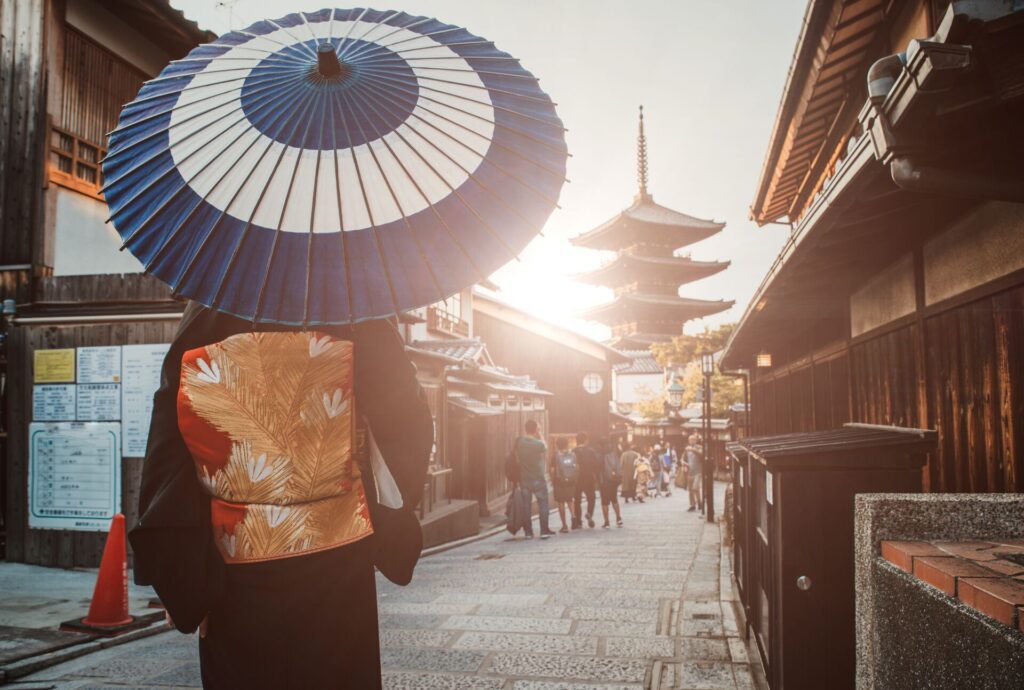
These essential common Japanese phrases and Japanese sentences will help you navigate every encounter from morning to night.
2. Basic Japanese phrases:
Konnichiwa (Kohn-nee-chee-wah) – Hello / Good afternoon
The classic, all-purpose greeting. You can use it from late morning through late afternoon.
Arigatou gozaimasu (Ah-ree-gah-toh goh-zah-ee-mah-suh) – Thank you very much
The single most important phrase! Say it when your bags are taken, when your green tea is refilled, or when someone goes out of their way to point you in the right direction. Pronounce the “suh” at the end very softly.
Gomen nasai (Goh-men nah-sigh) – I’m sorry
For mistakes. Use this if you accidentally step on someone’s foot or block someone’s path.
Hai (High) / Iie (Ee-eh) – Yes / No
Yes and no are essential, simple and direct! Saying no in Japan can feel a bit sharp, so add a soft shake of the head and a polite smile to soften the delivery.
Sumimasen (Soo-mee-mah-sen) – Excuse me / Sorry
If you only memorize one single word for your entire trip, make it this one. Sumimasen is the Swiss Army knife of Japanese communication. The word is polite “excuse me” when you need to navigate through a crowded train platform. You can use it to catch a waiter’s eye. And most beautifully, it can mean “thank you and sorry for the trouble” – for example, if you left something in a shop and the owner ran down the street to return it.
READ NEXT: Tipping in Japan: dos and don’ts

3. How do I ask for directions in Japanese?
…wa doko desu ka? (…wah doh-koh dess kah?) – Where is the…?
Simply insert the place or object you are looking for at the beginning.
Eki (Eh-kee) – Train Station
Combine this with the formula above: Eki wa doko desu ka? (Where is the station?). You might need it to find hidden stations or platforms.
Toire (Toy-reh) – Bathroom
Say Toire wa doko desu ka? And someone will lead you toward one of Japan’s legendary, impeccably clean public facilities.
Kore wa… (Koh-reh wah…) – This is…
Just a helpful phrase. When a local stops to help you look at a map (chizu), these are the directional terms you will hear them use:
Massugu (Mahs-soo-goo) – Straight ahead
Usually accompanied by a direct, pointing gesture down the street.
Migi (Mee-gee) – Right
Turning or looking to the right.
Hidari (Hee-dah-ree) – Left
Turning or looking to the left.
Eigo ga hanasemasu ka? (Ay-goh gah hah-nah-seh-mah-suh kah?) – Can you speak English?
It’s a mouthful! Open with sumimasen then ask this to be polite. It’s more respectful than launching directly into fast English, giving the other person a moment to adjust and see how they can best assist you.
READ NEXT: 17 Fun Facts About Japan
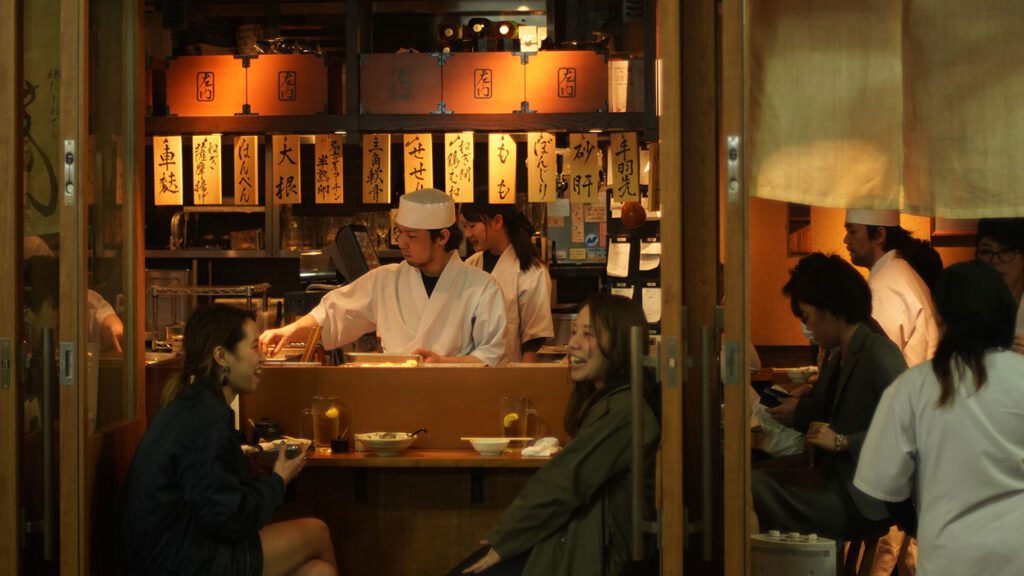
4. Ordering food and dining etiquette:
Kore wo kudasai (Koh-reh woh koo-dah-sigh) – This one, please
Helpful in restaurants – you can point at the hyper-realistic plastic food models in a department store window, or to pictures on a menu. Simply point to your choice and say this phrase.
O-mizu (Oh-mee-zoo) – Water
A polite way to request a glass of water at your table.
Itadakimasu (Ee-tah-dah-kee-mah-suh) – I humbly receive
You can say this softly right before you separate your chopsticks and begin eating. It is an expression of gratitude for the ingredients, the chef and the effort that went into preparing the meal.
Gochisousama deshita (Goh-chee-soh-sah-mah desh-tah) – Thank you for the feast
Say this to the staff or the chef at the counter as you leave.
O-kaikei wo onegai shimasu (Oh-ky-kay woh oh-neh-guy shee-mah-suh) – The bill, please
Use this to cleanly signal the end of your dinner when you are ready to pay.
Oishi desu (Oh-ee-shee dess) – It is delicious
A compliment to pay a chef.
READ NEXT: 12 of the best places to see cherry blossoms in Japan
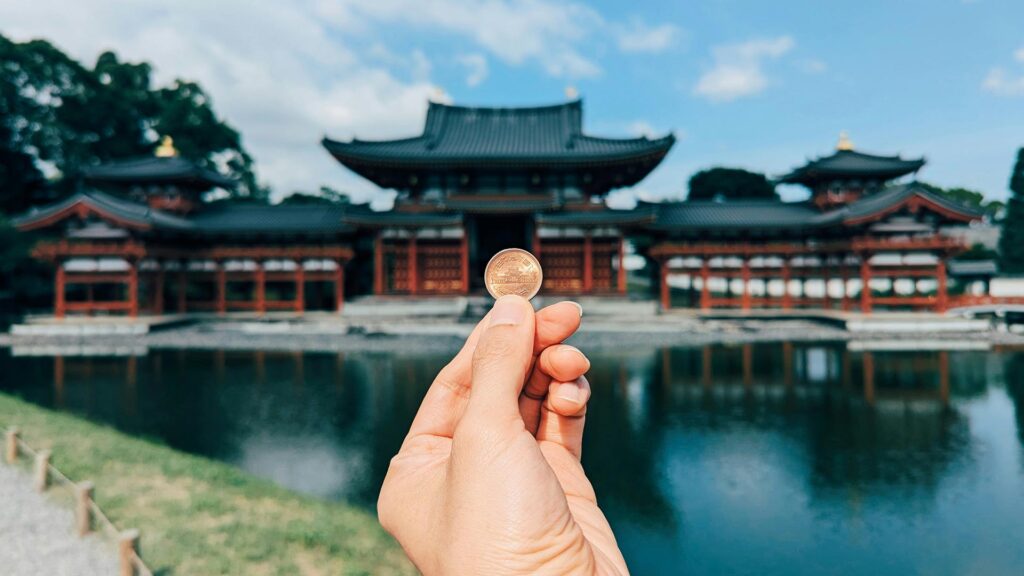
Shopping in Japan:
Ikura desu ka? (Ee-koo-rah dess kah?) – How much is it?
Essential for tracking down the price of handmade ceramics in a Kyoto market or beautiful stationery in a Ginza department store.
En (En) – Yen
The local currency. While we write it with a “Y”, that letter is silent in pronunciation.
Cashless desu ka? (Kyash-less dess kah?) – Do you accept cashless?
Many small, multi-generational shops, temple token booths and rural ramen ticket machines may still require physical coins and bills. It is better to verify before you order.
Emergencies and reassurance:
Tasukete! (Tah-soo-keh-teh!) – Help!
An urgent, clear exclamation to use only in a true emergency scenario.
Daijoubu desu (Die-joe-boo dess) – It’s okay / I’m fine
A versatile phrase. Use it to tell someone that you don’t need assistance or to reassure someone if you slip over.
Wakarimasen (Wah-kah-ree-mah-sen) – I don’t understand
To let someone know that their rapid Japanese explanation has gone a bit past your current vocabulary level!
READ NEXT: When Is The Best Time To Visit Japan?

Bonus: Japanese numbers:
In Japan, you will count using the standard Sino-Japanese numbers for prices, phone numbers, and dates. In restaurants, locals tend to use the traditional native Japanese counting system up to 10.
Standard numbers (1–10):
1. 一 (いち) – Ichi (Ee-chee)
2. 二 (に) – Ni (Nee)
3. 三 (さん) – San (Sahn)
4. 四 (よん) – Yon (Yohn)
5. 五 (ご) – Go (Goh)
6. 六 (ろく) – Roku (Roh-koo)
7. 七 (なな) – Nana (Nah-nah)
8. 八 (はち) – Hachi (Hah-chee)
9. 九 (きゅう) – Kyuu (Kyoo)
10. 十 (じゅう) – Juu (Joo)
Traditional Japanese numbers (for ordering 1–10 Items):
Use these specific characters when ordering objects, food or drinks at a counter.
1 item: 一つ (ひとつ) – Hitotsu (Hee-toh-tsoo)
2 items: 二つ (ふたつ) – Futatsu (Foo-tah-tsoo)
3 items: 三つ (みっつ) – Mitsu (Meet-soo)
4 items: 四つ (よっつ) – Yotsu (Yoht-soo)
5 items: 五つ (いつつ) – Itsutsu (Ee-tsoo-tsoo)
6 items: 六つ (むっつ) – Mutsu (Moot-soo)
7 items: 七つ (ななつ) – Nanatsu (Nah-nah-tsoo)
8 items: 八つ (やっつ) – Yatsu (Yaht-soo)
9 items: 九つ (ここのつ) Kokonotsu (Koh-koh-noh-tsoo)
10 items: 十 (とお) – Too (Tooh)
READ NEXT: Japan in March: Weather, Reasons to Visit & Things to Do
What are the must know Japanese phrases?
If you are boarding a flight tomorrow and only have space left in your memory for a quick emergency survival kit, compress everything down to these five absolute non-negotiables:
Sumimasen
Excuse me / Sorry
Arigatou gozaimasu
Thank you very much
Kore wo kudasai
This one, please
…wa doko desu ka?
Where is the…?
Daijoubu desu
I’m okay
That’s our guide to the top 25 Japanese phrases you should try to nail before your trip. Any others we should add?