


After 144 years in the making, the Sagrada Família is officially complete. Or is it?
A breathtaking combination of faith, art, technology and history, the Sagrada Família has captured the hearts and minds of both locals and visitors to Barcelona, launching its late architect Antoni Gaudí to legendary status. I spoke to Travel Director and Barcelona resident Maddy for a some boots-on-the-ground insight into how locals feel about its latest milestone, and why, although the headlines might tell you it’s finished, it’s not quite there yet.
1. In the beginning, Gaudi
At its core, the Sagrada Família has always been a basilica dedicated to the Holy Family — Mary, Joseph and Jesus. “A lot of people call it a cathedral, but it’s actually a basilica. Barcelona already has a cathedral, which stands in the centre of the old town,” Maddy points out. Construction started in 1882 with architect Francisco de Paula del Villar, who worked on the project for a year before being replaced by Gaudí in 1883, who would then work on the church for over 40 years.
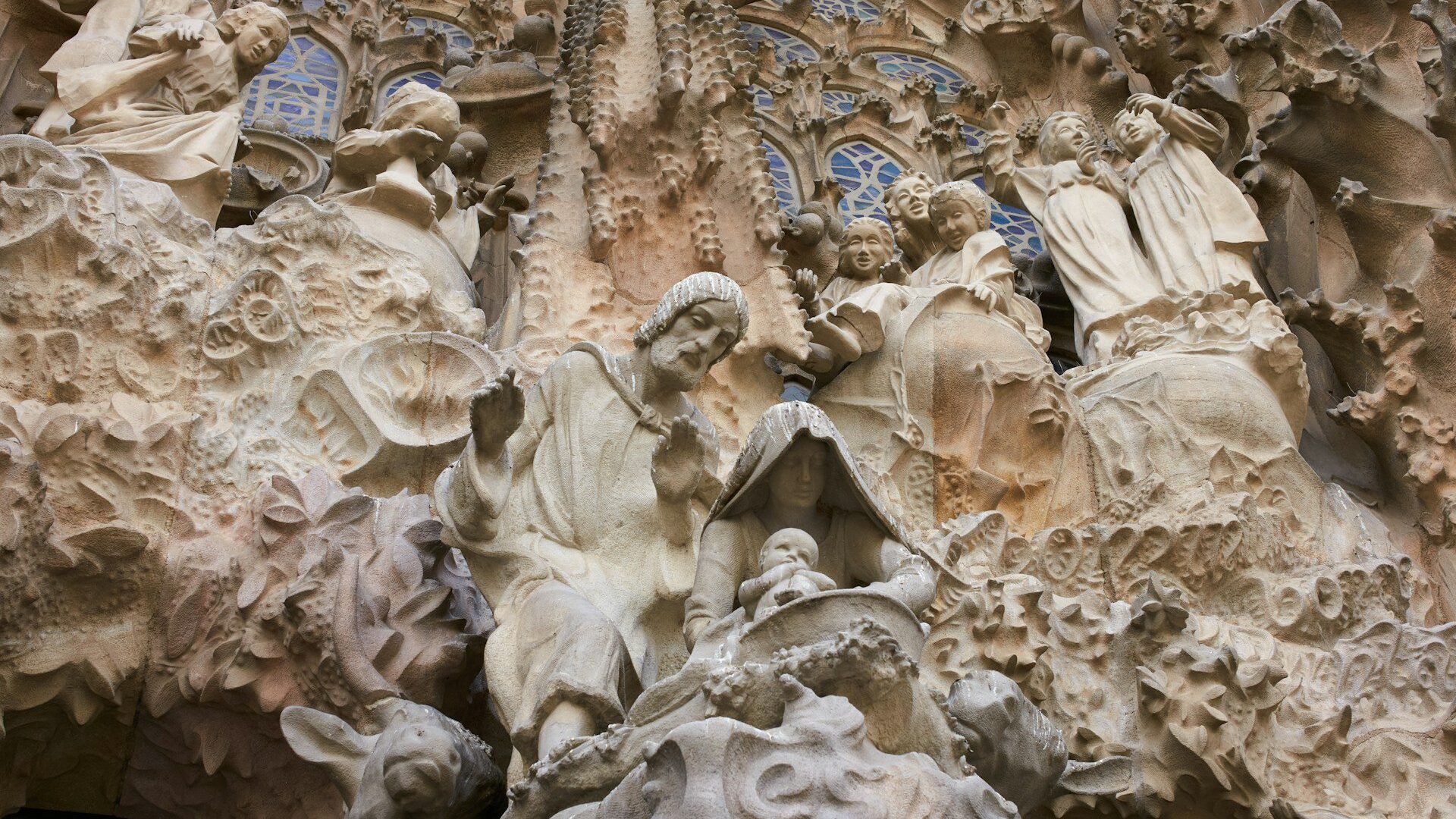
The original plan was to build a typical neo–Gothic church, “the kind that looks like all the other famous cathedrals,” she says. “But Gaudí always worked differently. He kept a little bit of the Gothic in it, but he wanted to incorporate the organic forms that always inspired him, as well as symbolism, which he was always big on. Being from Barcelona, from Catalonia, he also introduced what we now know as Catalan Modernism (a type of Art Nouveau) into the plans.” This materialized in the form of pillars resembling trees, a ceiling akin to a forest canopy, and detailing featuring leaves, roots, snails and tortoises on the outer facades.
“Gaudí was also very mathematical,” explains Maddy. “He wanted 18 towers: 12 for the apostles, four for the evangelists, one for the Virgin Mary, and the tallest one for Jesus Christ, which has just been completed. He also wanted monumental facades on three sides — the Glory Facade at the front, the Passion Facade on one side, and the Nativity Facade on the other. He wanted the whole church to be the Bible expressed in a building.”
2. In the shadow of a genius
At the start, construction was fairly slow for two reasons. “First, it was always intended to be financed by private donations, so the money wasn’t yet there; and second, they didn’t have cranes or modern construction machinery at the time,” says Maddy.
In 1926 Gaudí died after being struck by a tram, but the accident itself wasn’t fatal. “He was brought to hospital, but he had become so obsessed with the project that he had let himself go. It’s said that in the last 10 years of his life, Gaudí lived in the basement of the Sagrada Família — that was the level of his obsession. People assumed he was homeless, so he didn’t receive proper care.”
“That’s why 2026 is such an important year, as it marks the 100th anniversary of his death. People to this day believe he could have survived if those who found him had known who he was.”
Gaudí’s death saw the project handed over to other architects, working from his models and instructions to complete his vision. “But during the Civil War between 1936 and 1939, some of his workshops burned down and drawings were lost,” says Maddy. “They still had two or three of the original models to work from, but as much as people say it’s built completely to his designs, it can’t be. There is a little bit of modernization visible in some of what you see inside today.”
“After the war they resumed with different architects. All of them knew they would never see it finished, and Gaudí knew that too. It was just such a monumental project.”
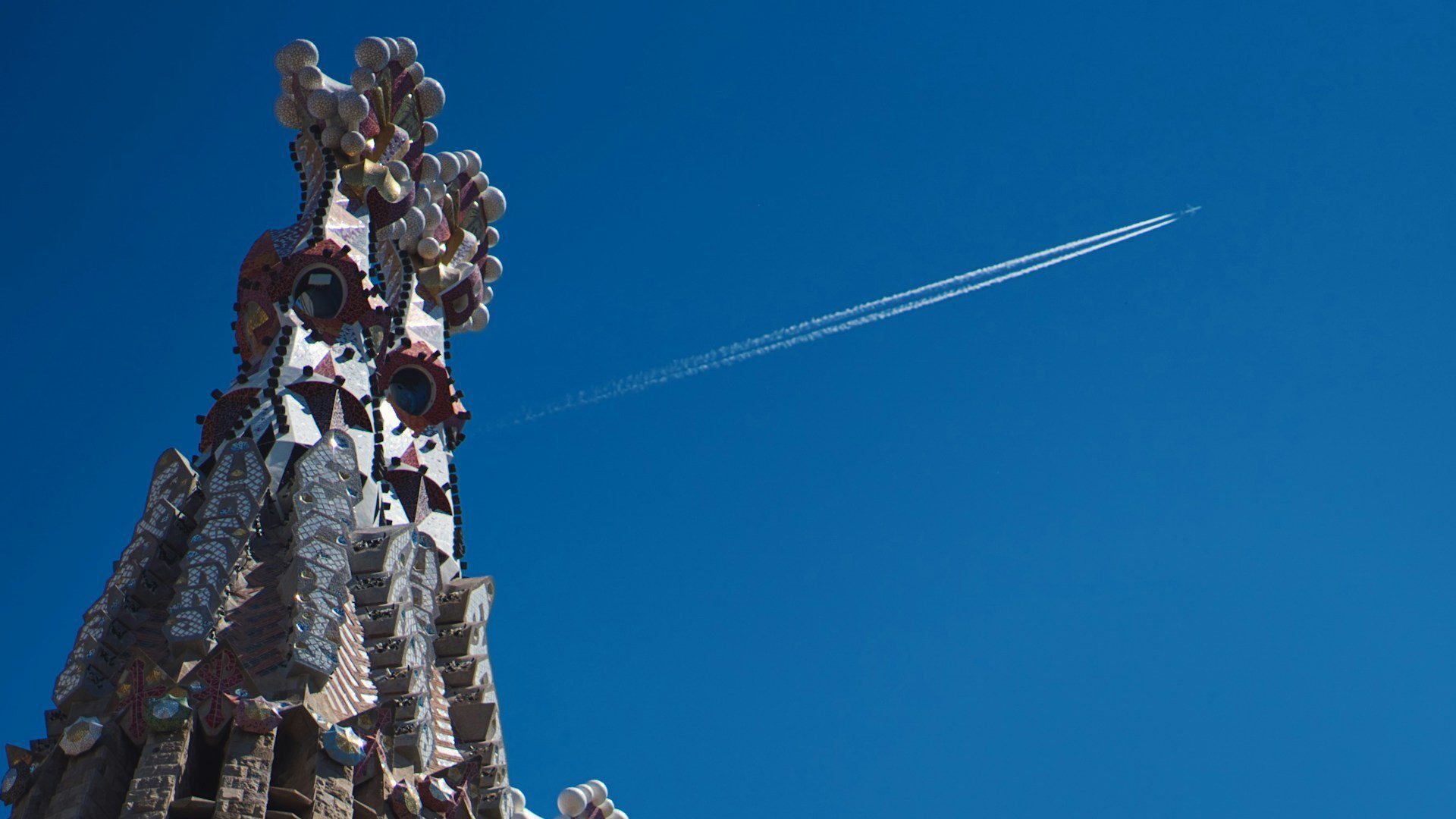
But, despite these setbacks and tragedies, 2026 marks a huge milestone for the Sagrada Família. “This year the Tower of Jesus Christ was completed, becoming the world’s tallest church and Barcelona’s tallest building at 172.5 meters — that’s just half a meter shorter than Montjuïc, the mountain overlooking Barcelona. Gaudí said no man–made building should stand taller than anything God created.”
3. Is the Sagrada Família finished?
“It’s important to note that the Sagrada Família is not actually finished,” Maddy states. “What is being celebrated is the completion of the Tower of Jesus Christ, and with that, many of the cranes on part of the exterior will be gone. But what is still missing is the Glory Facade, which is technically where the main entrance is supposed to be. Where people enter and exit today are the side facades — the Passion and Nativity.”
But the path to finishing the basilica according to Gaudí’s vision isn’t a simple one. “Gaudí wanted the Glory Facade to have a grand square in front of it, with a monumental staircase leading up to the entrance. The problem is that in the 1950s, ‘60s and ‘70s, people built right around the site, where that square was supposed to go,” she says. “Since the ‘70s there have been lawsuits and negotiations over whether those buildings should come down, but doing so would require an entire block to be demolished, displacing over a thousand businesses and families.”
4. What it means to the locals
With such a legendary status around the world, travelers come from far and wide to see Sagrada Família — but how do the locals feel about its latest milestone, and what it will bring for their city? “The Sagrada Família is a powerful symbol for Barcelona, and a lot of people are very proud of it. It represents the city on an international scale, and for Catalans, who are very patriotic and have long sought independence from Spain, having an architect from here is something they treasure. Gaudí put Catalan Modernism on the map.”
“People also have a very personal relationship with the building; they’ve watched it grow while they themselves were growing up. It’s not often that you watch something monumental rise alongside your own life,” Maddy says.
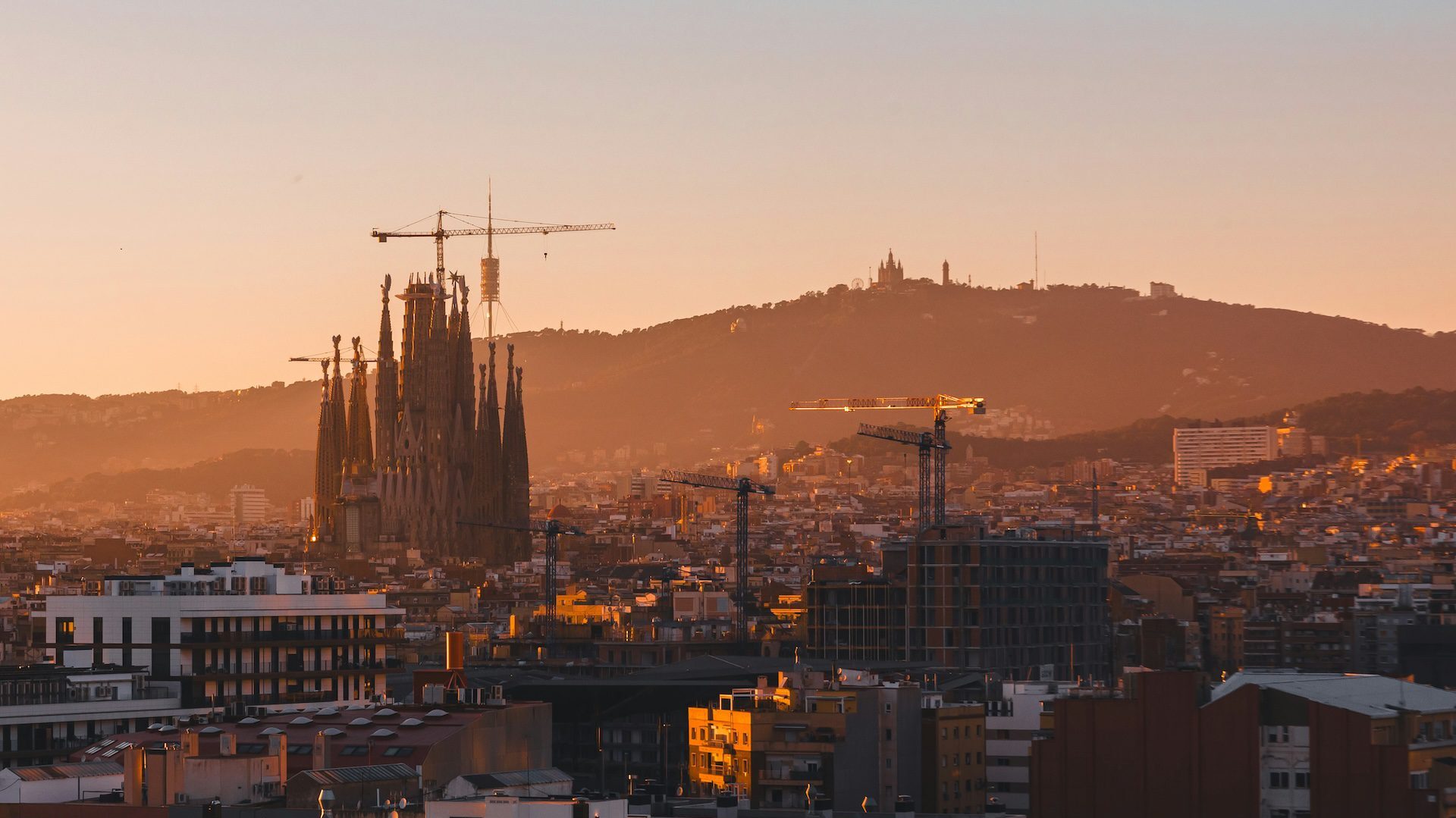
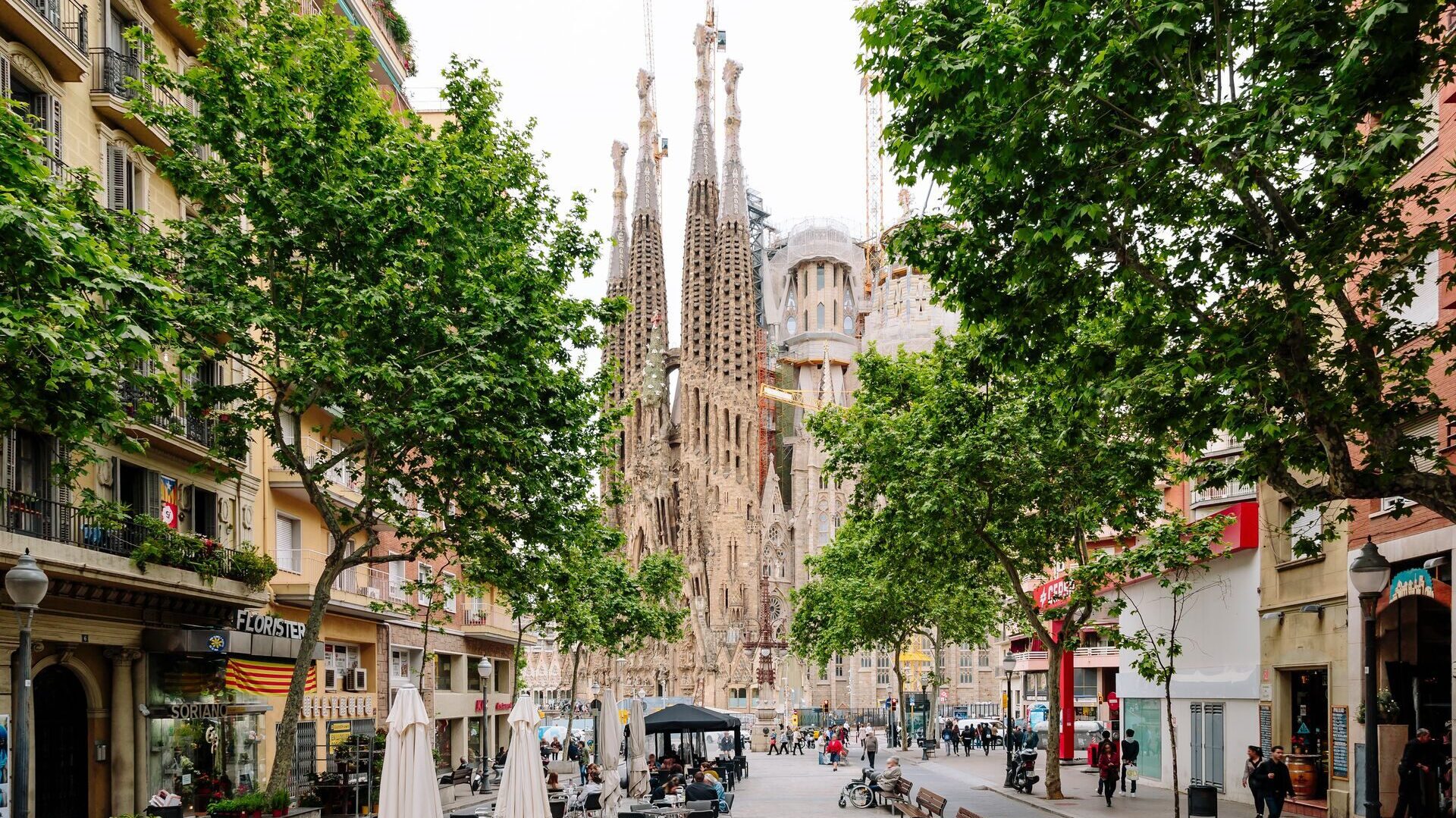
With the final tower complete, locals are seeing their city in a new light. “When you walk through the city, there are several boulevards that lead directly towards it. You often see people crossing the street, catching a glimpse of it, and just stopping for a second to take it in — something they probably haven’t done in a while. Locals I speak to all said the same thing: it’s strange to see, because that final tower hasn’t been there for the last 20 or 30 years that they have lived here.”
“At the same time, there are concern. The displacement of people living around the site is one of the things locals struggle with. The feelings are largely positive, but there is also a sense of uncertainty about what this new chapter brings in an already busy city.”
5. Getting lost in the details
“One of the things visitors don’t really realize until they see it from afar there is the absolute scale of it,” says Maddy. “Then when you get close, it’s very intricate. There’s so much symbolism everywhere, so many little details. You can see everybody just stop and stare, completely in awe. I love watching that. “
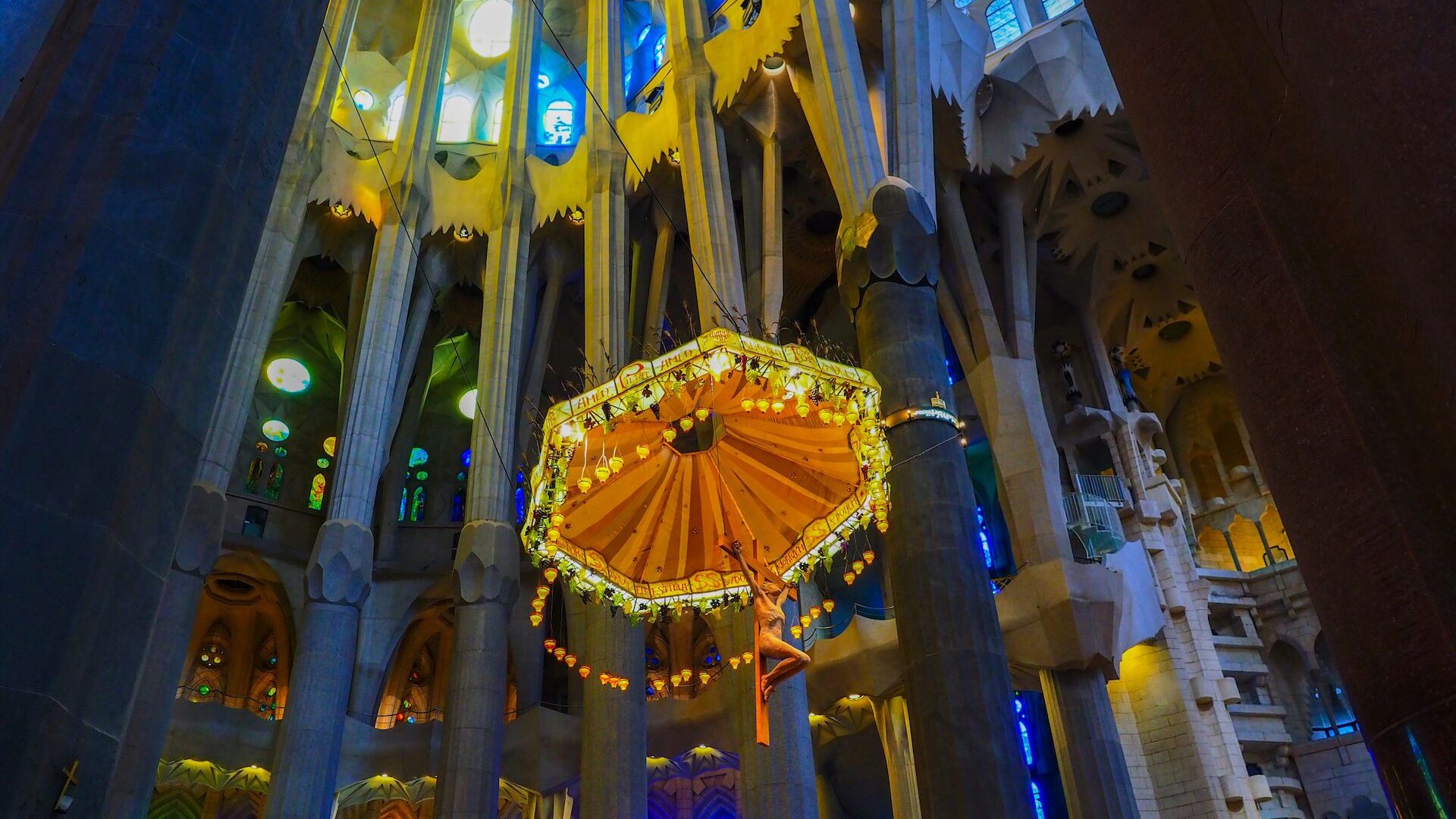
“Inside, when the light comes in people see the interior completely illuminated. Then you can take in just how high it has been built on the inside. You can see people standing there trying to make sense of what they’re looking at. It’s really something.”
“We have so many impressive buildings around the world, but a lot of them aren’t completely unique like the Sagrada Família,” she continues. “Gaudí wanted the inside to feel like a forest; the columns go up and then branch out, and the ceiling becomes the sky. On one side you have greenish, bluish windows because that’s the east side, where the sun rises, and that’s the quality of light the sun gives at dawn. On the other side it’s oranges, reds, and yellows — the colours of the sunset.”
6. Tips for visiting La Sagrada Família
Maddy’s top tips? Go with a guide, see it from afar, don’t miss the museum, and take your time.
“Make sure you have a guide with you, or at least an audio guide, because there are so many details you’ll completely miss otherwise,” she says. “And don’t stress — take your time. Sit down on the benches and just let your eyes wander, you’ll keep finding different things. I’m a big photographer, but I also suggest putting your camera away for a couple of minutes if you can, and just really look at what’s in front of you. It’s usually relatively quiet inside because everybody is just trying to take it all in.”
“When you’re outside, walk to the end of the parks on either side so you can see it from a slight distance. Everything is impressive up close and personal, but from a little further away it gives you a much better sense of just how massive the whole construction is.”
“The last thing I always recommend is don’t miss the museum underneath; that’s where Gaudí’s workshop was. Some of the papers and designs that survived are on display there. He drew so much inspiration from nature, much of it local, and the museum shows you where you can see it in the Sagrada Família’s designs. here is something you can see on this tower, and here is the natural inspiration behind it.”