



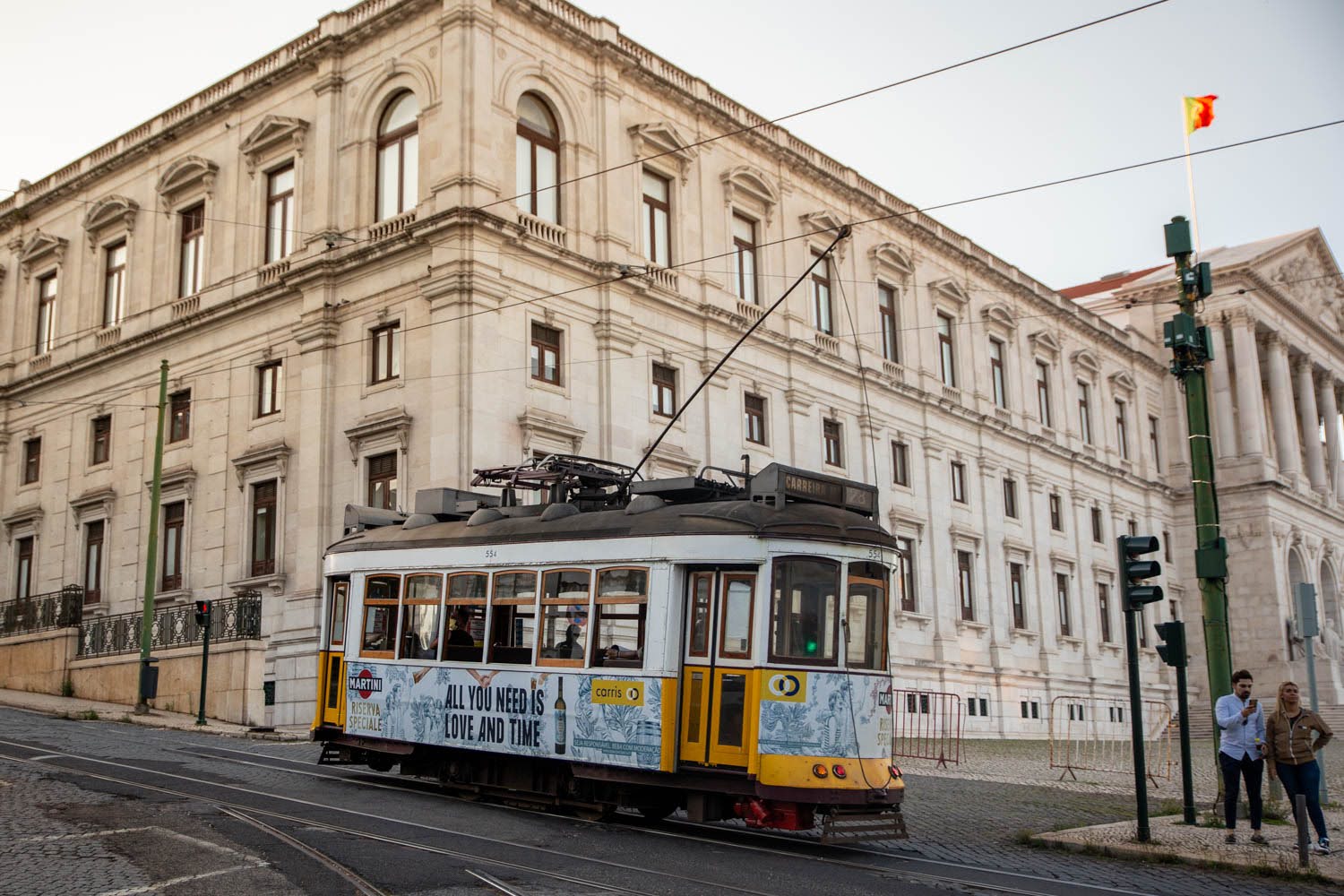
It should have arrived five minutes ago. I look at my watch again as a high-pitched screech rings out. A canary-yellow elétrico grinds around the corner. I throw my arm out to hail it down.
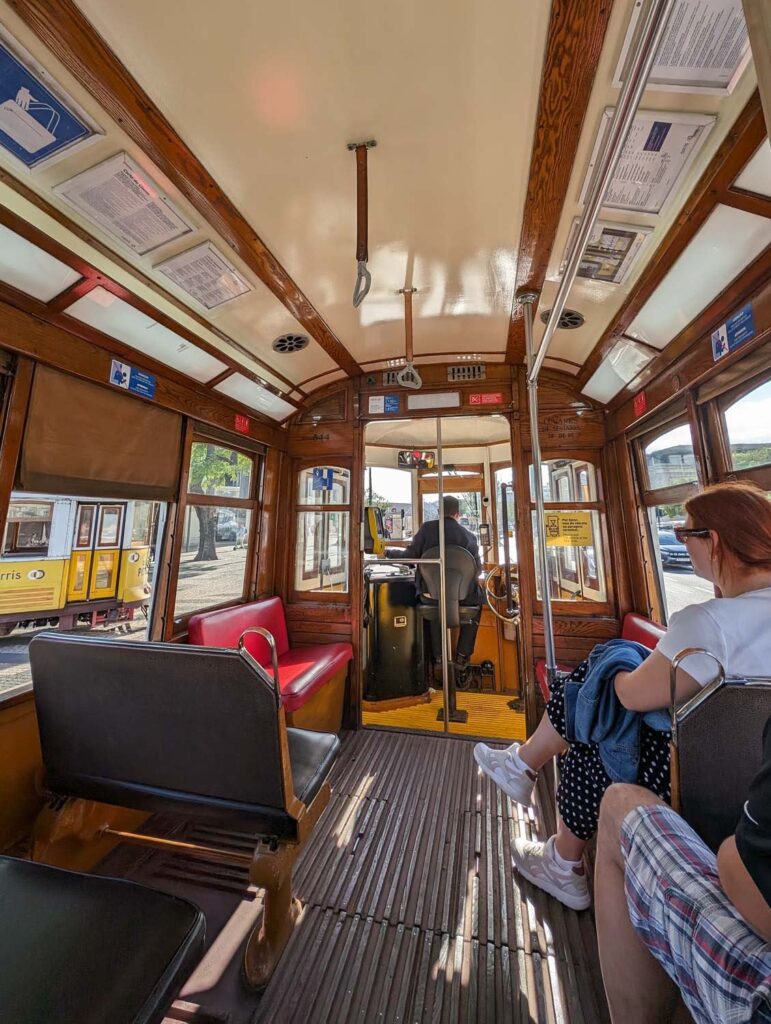
The doors clang open. The guarda-freio and I exchange a cheery “bom dia!” and I climb the wooden steps, tap my card on the reader and claiming one of the single red seats by the window. I lean my head out the window of the half-empty wooden cart as it rattles and shakes its way from the tranquil Ajuda neighborhood to downtown Lisbon’s Cais do Sodré.
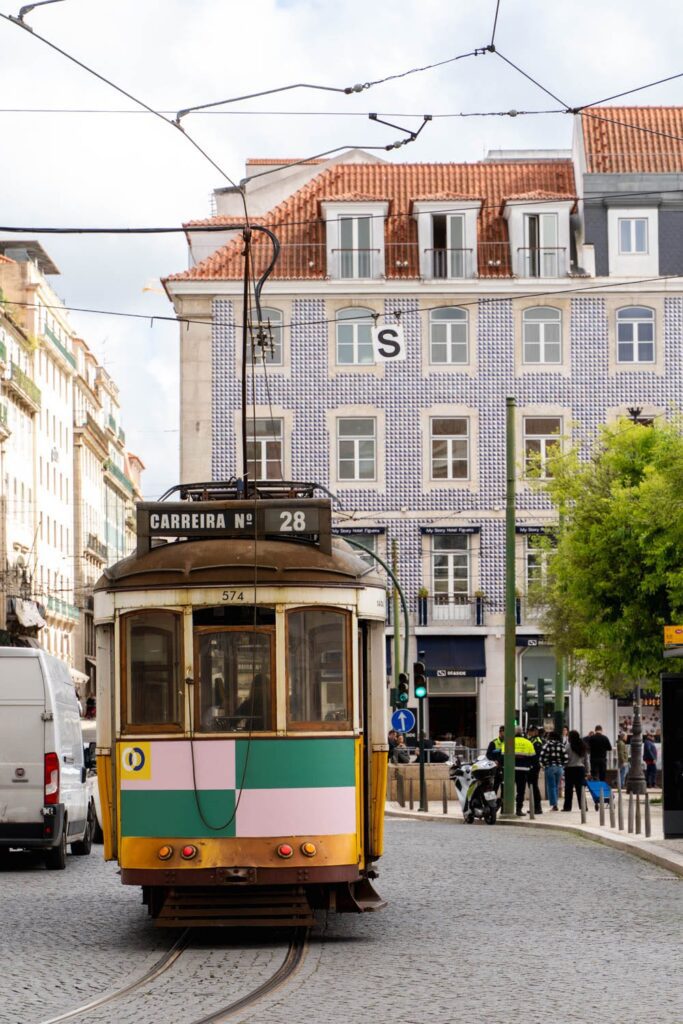
I’m aboard the 18E, one of Lisbon’s six tram lines that’s usually overlooked by visitors who instead choose to jam themselves into the 28E line. But the experience of riding a vintage yellow Lisbon tram is about the feeling.
It’s the time travel of stepping into the wooden box from the early 20th-century, the warm breeze rustling your hair through the large open windows, the subtle creaking as you wind corners, the shrill of the bell as the driver warns a silly pedestrian that jumps out in front. It’s a sensory experience better enjoyed when you’re not jammed together like sardines in the 28E tin.
1. Back to where trams began
Long before they became stars of every visitor’s social feed, Lisbon’s yellow trams were the veins of the city, taking locals to and from work. The story begins back in 1873 when Lisbon introduced horse-drawn railcars – known as carros americanos (a nod to their U.S. origin).
By the summer of 1901, Lisbon had switched to electric power and launched the first electric-powered line along the riverfront between Cais do Sodré and Algés. It’s why trams are called elétricos in Portuguese.
Navigating Lisbon’s steep hills and narrow hairpin alleys on standard tracks wasn’t easy. So local transit company Carris – which still operates today – engineered compact, single-truck trams. In the 1930s, the famous now-vintage models we love today were introduced – built short and sturdy with reliable brakes to handle Lisbon’s steep gradients.
2. Lisbon’s tram lines today
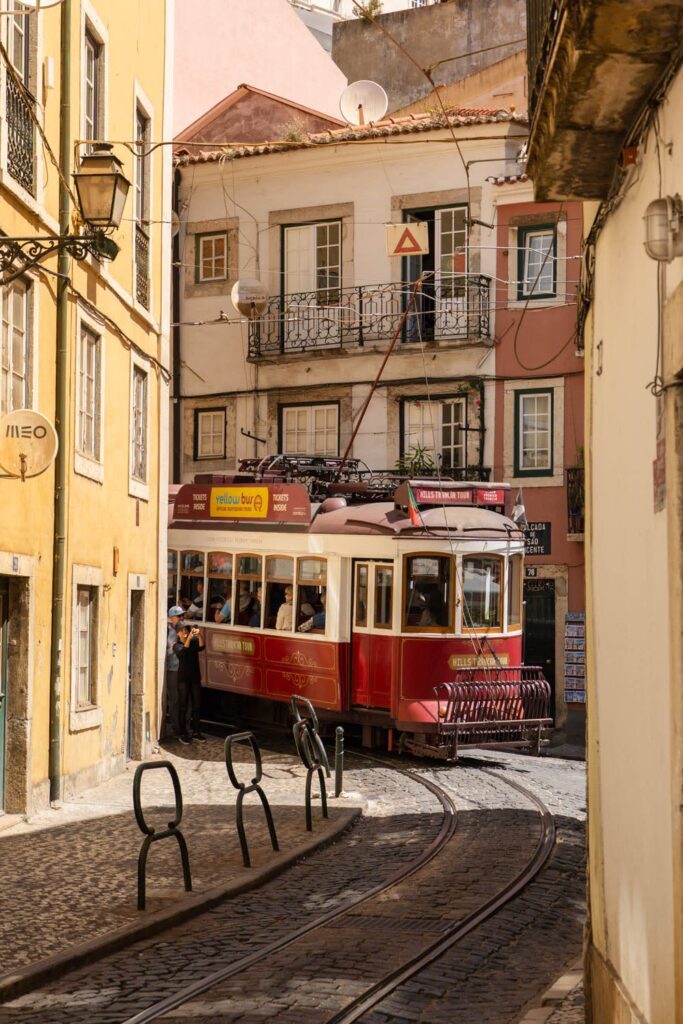
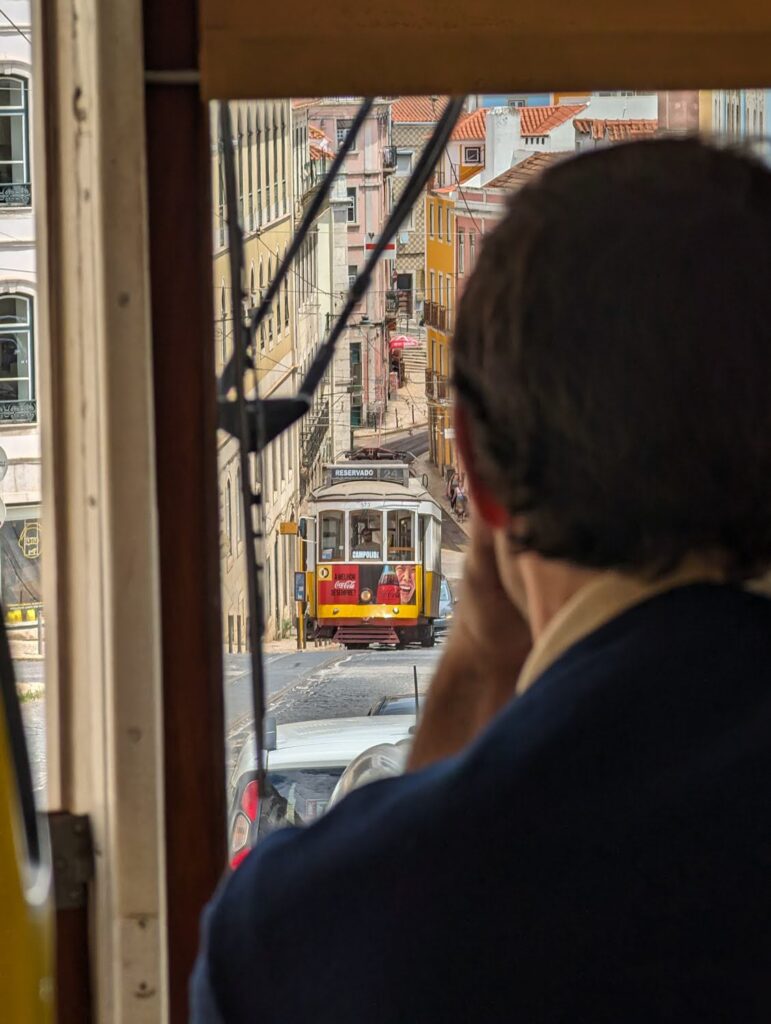
Lisbon’s tram network once had 450 carriages rattle across the city. When the city’s post-war bus routes expanded and the metro arrived in 1959, the tracks were systematically ripped up. Today, just six lines remain operational (12E, 15E, 18E, 24E, 25E, and the famous 28E), run by a fleet of around 55 active trams.
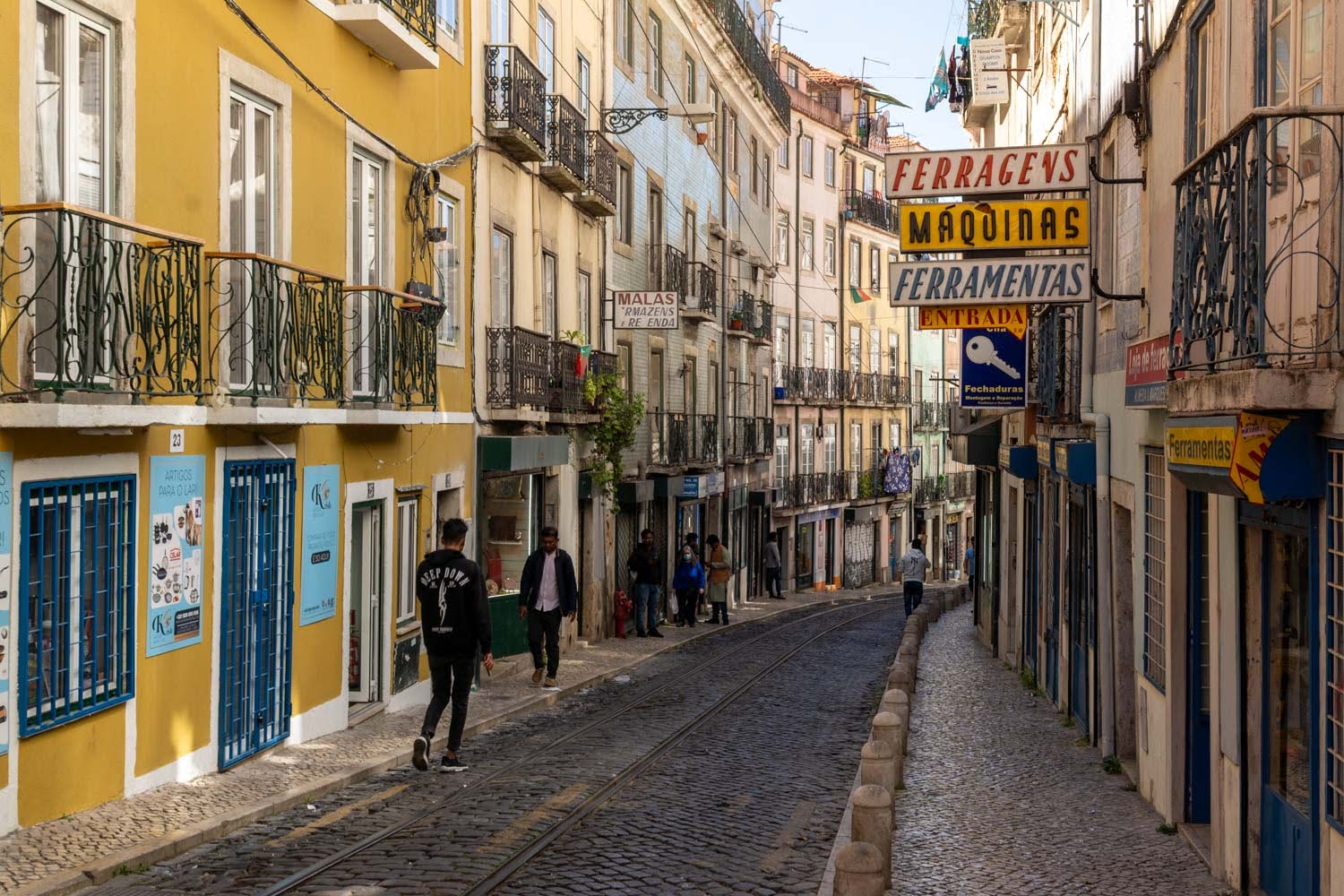
But Lisbon’s clanging yellow elétricos remain the city’s absolute favorite way to travel around. There’s something distinctly nostalgic about settling into the wooden carriages, the short and sweet railcars manage the thin alleyways, blind corners and 13% gradients in a way that any bus would struggle.
Perhaps its golden age isn’t strictly in the past. There’s current talks of expansion plans by the current mayor….
28E: The most famous route climbs Lisbon’s steep gradients and winds through narrow alleyways in Estrela, Lapa, Alfama and Mouraria. It’s best to board at a terminal station – Campo de Ourique or Martim Moniz – to get a seat.
12E: The shortest loop on the map, sweeping through downtown Baixa and up through Alfama to the castle. Ideal for a quick ride without fighting for elbow room.
15E: This line runs new, longer air-conditioned trams and runs from downtown to Belém. Your pilgrimage to fresh, cinnamon-dusted pastéis de nata at the original bakery.
18E: A quieter neighbourhood route rattling from downtown Cais do Sodré along the river and up toward the grand Ajuda National Palace. This is mostly used by commuting locals.
24E: Revived after 20 years! This line climbs from Chiado’s Praça Luis de Camões, along the leafy high street of cool Príncipe Real, and into residential Campolide.
25E: A great alternative to the 28E. This one ventures from downtown Baixa, through charming residential streets, past the baroque Basílica da Estrela and into Campo de Ourique.
3. Catch the Carris Classics Parade in June
If you’re lucky enough to be in town during the first week of June, you can catch the Carris Classics Parade. Once a year, Lisbon’s prized historic fleet – meticulously looked after by the Tram Museum – actually rolls out into the sunshine and back onto active city tracks.
It’s a city-wide celebration of Lisbon’s historic trams and vintage buses, with a dozen or so from the vintage fleet brought out for the occasion. Spectate from the streets as the trams rattle from the depo in Santo Amaro (beneath the red Abril de 25 Bridge) along the river towards Praça da Figueira and back, or get tickets to ride aboard one of the carriages and be part of the story.
If you can’t catch the Desfile dos Classicos in the first week of June, you can always visit the Museu da Carris to see these vintage beauties with their polished brass fittings and original timber benches creak.
When you visit Lisbon will you ride one of the city’s historic trams? As part of the transport network it’s a budget-friendly activity and fun way to see the Portuguese capital.