



Recently updated on March 3rd, 2026 at 01:03 pm
Cruising the Greek islands is every bit as incredible as you’d expect. Every little patch of land has its own personality, with sparkling blue waters connecting each island with the next. It’s a vacation like you’ve never experienced before — which can make it hard to prepare. Here’s the only guide you need to cruising these beautiful islands, from key sites to visit, where to eat and the best things to do.
1. Why should I try cruising the Greek islands?
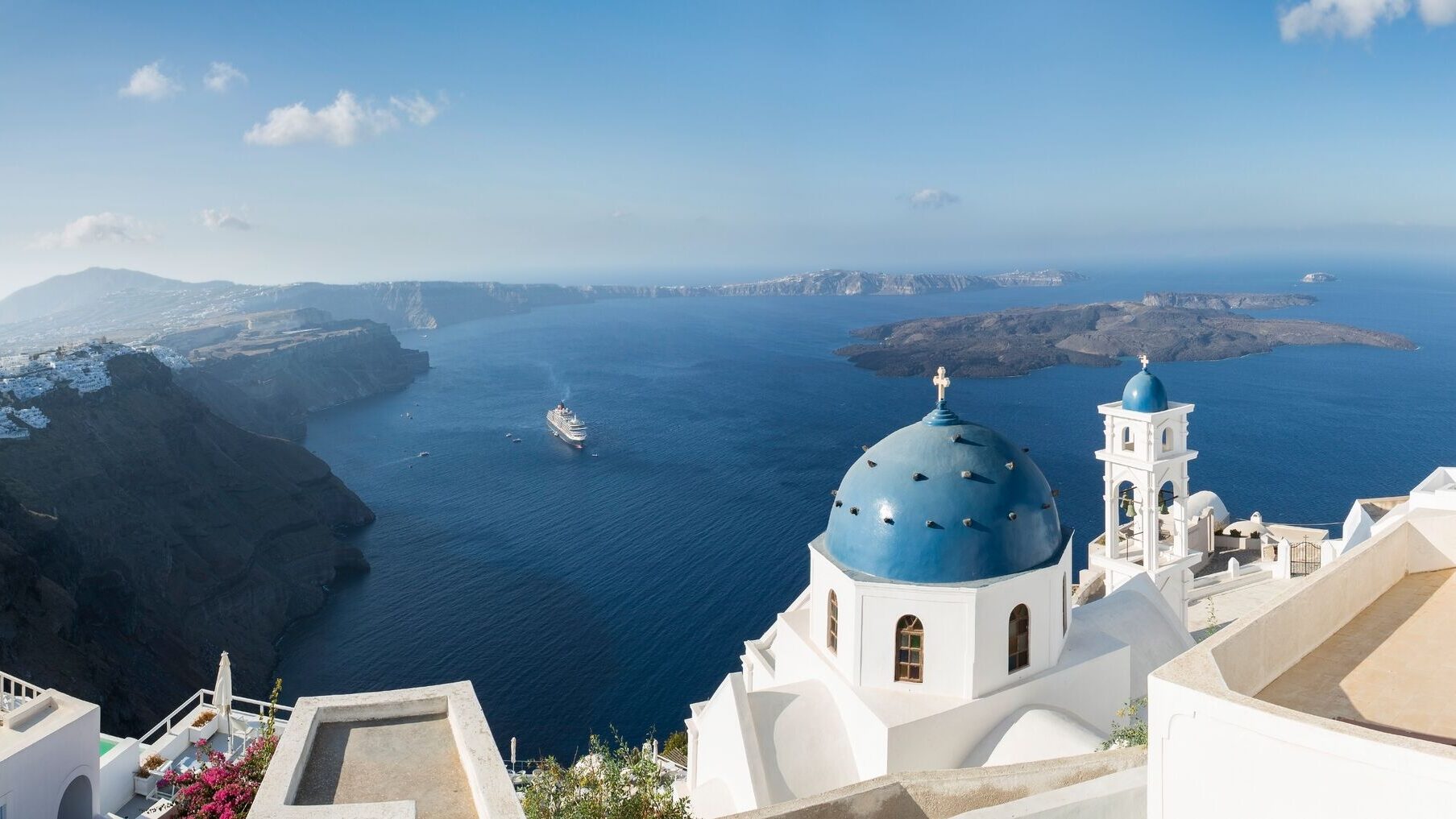
Cruising the Greek islands is the best way to get maximum views with minimum faff. Island-hopping can become stressful, lugging your suitcase from ferry to ferry and trying to get settled somewhere new every day or two. With a cruise you have a comfortable base which you can get to know and feel relaxed in, all while traveling throughout some of the Mediterranean’s most beautiful waters and stopping off at multiple destinations.
If you’re worried about accessing some of the smaller Greek islands when traveling on a cruise ship, then take a look at our 7-day Aegean cruise extension on our Best of Greece tour. We’ve partnered with Celestyal, whose largest ship is still considered ‘medium sized’, meaning it’s small enough to reach destinations and ports that other traditionally larger cruise ships cannot access.
On a cruise, your travel down isn’t lost time. Instead you can enjoy sun-soaked decks, take a dip in the pool and taste fresh and locally-sourced produce in the ship’s restaurants while you embark to your next destination.
2. What are the main Greek island groups?
The Cyclades islands
This is the largest and most well-known group of Greek islands, with around 220 Cyclades islands (though most are uninhabited). Sitting in the southeast of the Aegean Sea, among the most well-known are Naxos (the largest Cycladic island), Mykonos, Santorini, Milos, Paros (and Antiparos), Sifnos, Kythnos, and Ios. The Cyclades are fairly arid and rocky, though many of the picturesque towns are made up of the postcard-worthy white and blue houses.
Mykonos
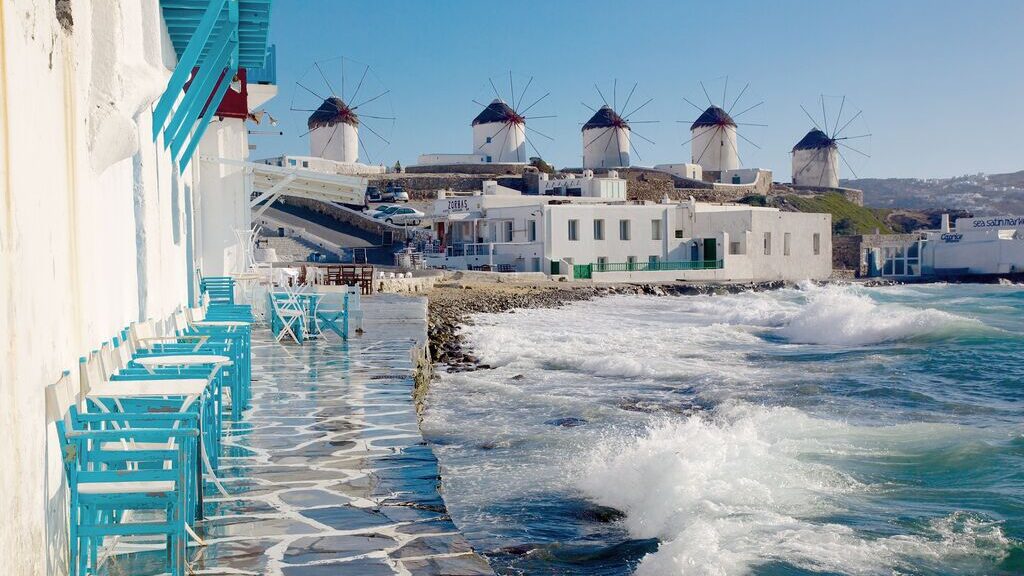
If an Ancient Greek god created Mykonos as the epitome of what an island vacation should be, we’d believe it. You’ll know you’re on holiday immediately when you arrive in Mykonos: if the sun-kissed bodies on the sand don’t lure you over to a beach towel, the bass blaring out of the swanky bars will tempt you to party until sunrise.
Nightlife aside, you’ll have every reason to lose sleep as you pack your day with visits to the stunning Windmills of Kato Mili, pour over the exhibits at the Aegean Maritime and Archaeological Museums, and treat your sweet tooth to melopita pies filled with cheese, cinnamon, and tirovolia. And when all else fails, you’re never more than an arm’s length away from a bottle of ouzo and a few new friends to dance the night away with.
Santorini
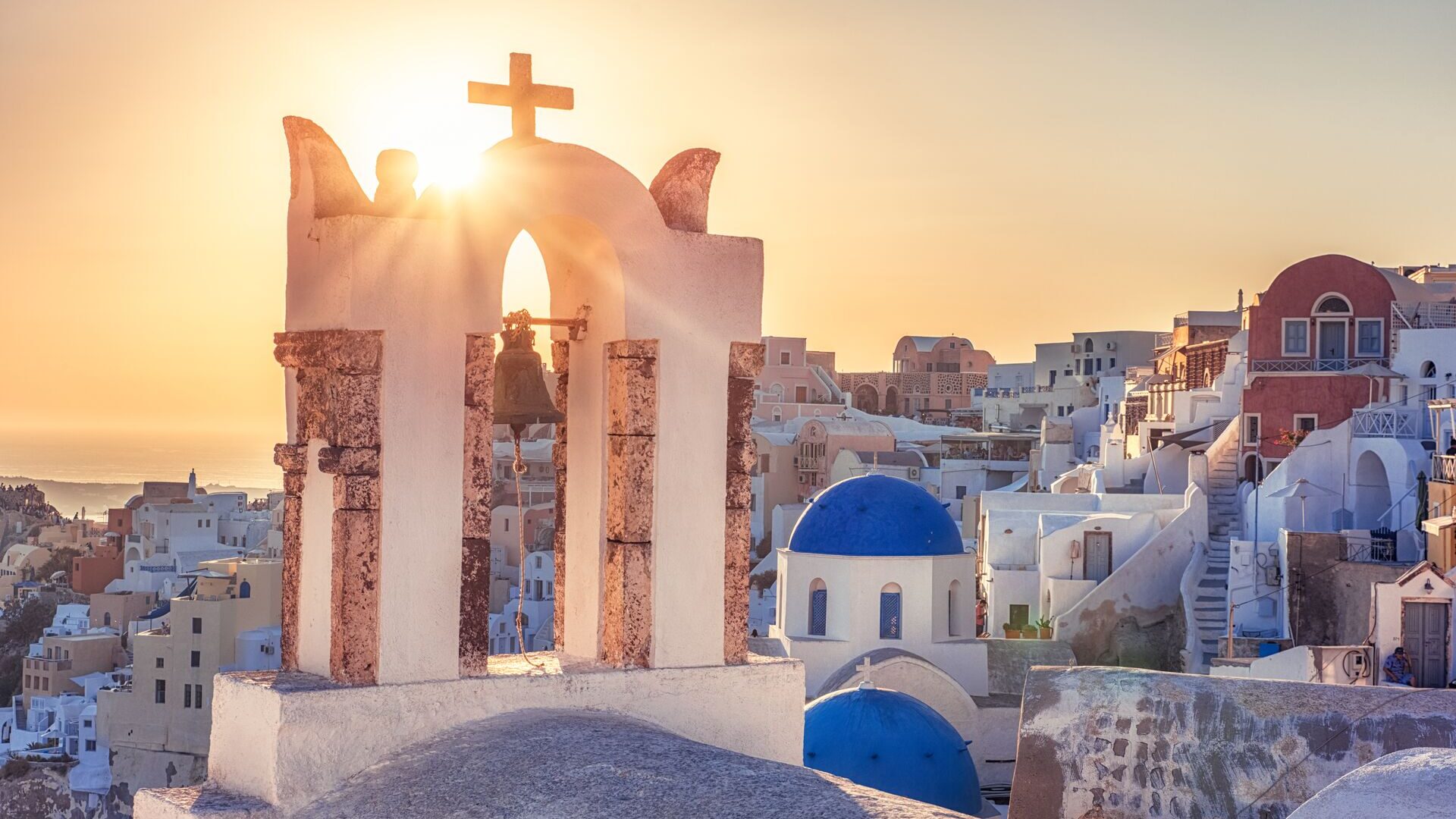
We don’t want to spread rumors, but we heard that even Paris is jealous of Santorini’s romantic prowess. Yes, gazing at the Blue Dome churches and whitewashed buildings are magnificent, particularly at sunset, but you needn’t set foot on the island to fall in love. Once you see the multicolored cliffs rising up from the Aegean, you’ll be smitten with Thira’s rugged yet delicate beauty.
It’s not all seafood, selfies, and suntanning, though. As much as you’ll want to indulge in the laid-back lavishness of the island, there’s more to explore beyond the shops and bars of Fira and Oia. Ancient Thera and the Bronze Age Akrotiri archaeological sites give you a glimpse into the lives of those that called Santorini home as far back as the 16th-century BC.
This volcanic island is exceptionally accessible, giving you options to swim in hot springs by day and hike to unforgettable panoramas for sunsets every evening.
Delos
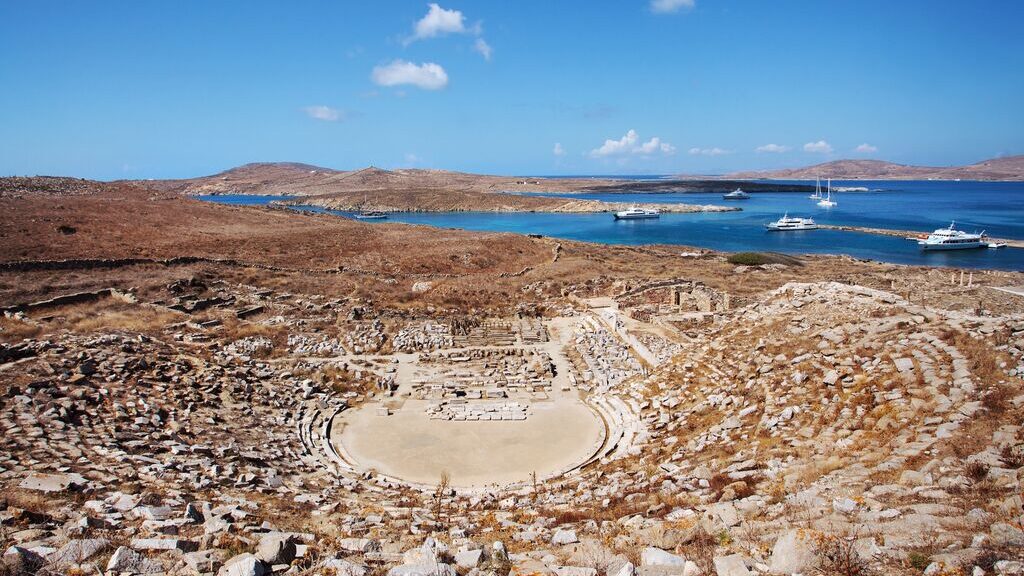
While your social media friends head to Crete, you’ll post pics of Delos and have followers wondering how they missed this cool Cyclades spot. Greek myth says the god Apollo and his sister Artemis were born in Delos.
Surrounded by other ruins the Temple of Apollo is yours to explore, as is the island’s museum which features artifacts from Roman and Hellenistic times. You won’t find hotels on this archaeological site, making it a perfect day trip destination to fill your Greek cruise with another memorable port of call.
The Ionian islands
Ionian islands are located on the western coast of Greece in the Ionian Sea, with its largest and most well-known islands including Zakynthos, Ithaca, Corfu, Kefalonia, Lefkada, Paxi (or Paxos) and Kythira. These islands are known for their lush flora, beautiful beaches, and incredible natural formations like caves, waterfalls and, in some cases, mountains. Thanks to their close proximity to Italy, the Ionian islands also boast unique Venetian architecture with churches, fortresses and other historic monuments.
Corfu
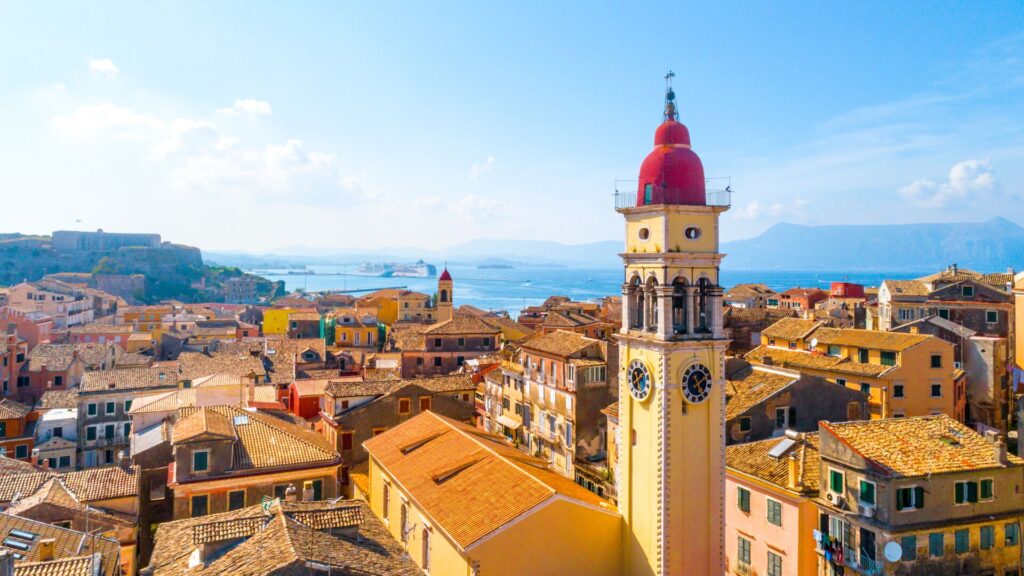
You’ll want to spend hours people-watching in Spianada, one of Greece’s most impressive squares, though you can just as easily fill your day exploring the winding medieval streets of Old Town. Stroll through the arcades and admire the architecture, each colorful townhouse and opulent palace flourished with the British, French, or Venetian aesthetic of its time.
When you’re not roaming through the grand Achilleion Palace and the regal Venetian Castle, sites like the 13th-century Paleokastritsa Monastery balance historic charm and drool-worthy backdrops where the rugged mountains meet the sea.
Zakynthos
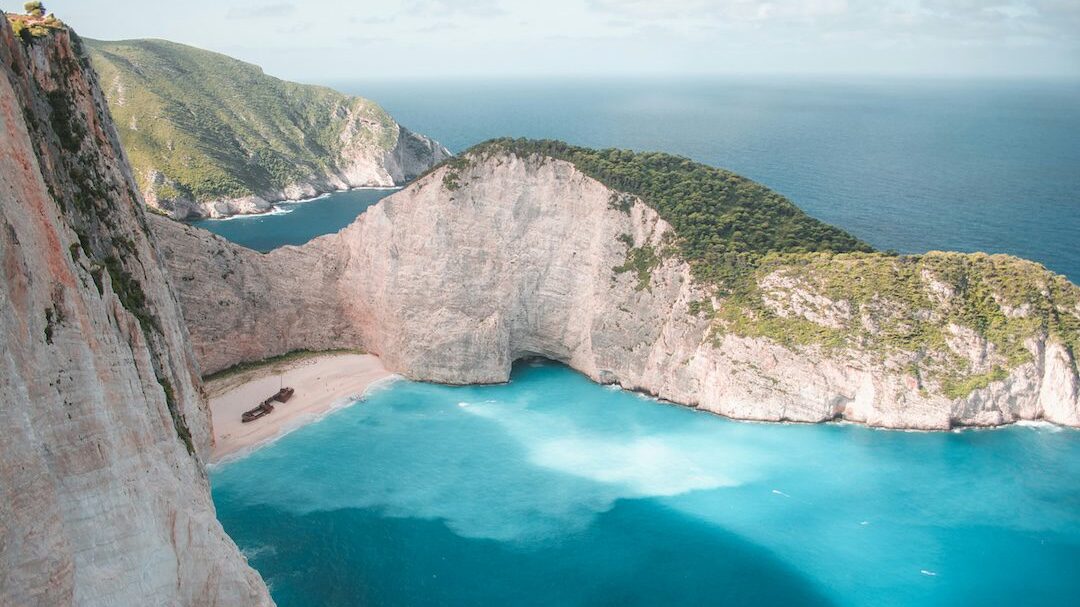
Though a small slice of Zakynthos is known for its lively party lifestyle, this incredibly diverse island is so much more than that. With dramatic limestone cliffs and plenty of hidden coves to explore and swim in, active vacationers can get so much out of a trip here. Take a boat to Navagio Beach (or Shipwreck Beach), visit some of the island’s many olive groves, and spot loggerhead sea turtles (Caretta-caretta) near Marathonisi (known as Turtle Island) in the National Marine Park of Zakynthos.
Scout out a traditional taverna in Zante Town, the vibrant capital of the island, before wandering through its unique Venetian-style architecture and stopping for sundowners in its bustling squares or on the scenic harbor.
The Dodecanese islands
The Dodecanese islands are found in the southeastern Aegean Sea near the coast of Turkey, with Rhodes and Kos the two most well-known out of this group of 15 main islands and over 100 islets. Greece is known for its good weather, but this is the sunniest part of Greece, and Dodecanese islands feature a blend of medieval history, Ottoman influences, and gorgeous coastlines.
Rhodes
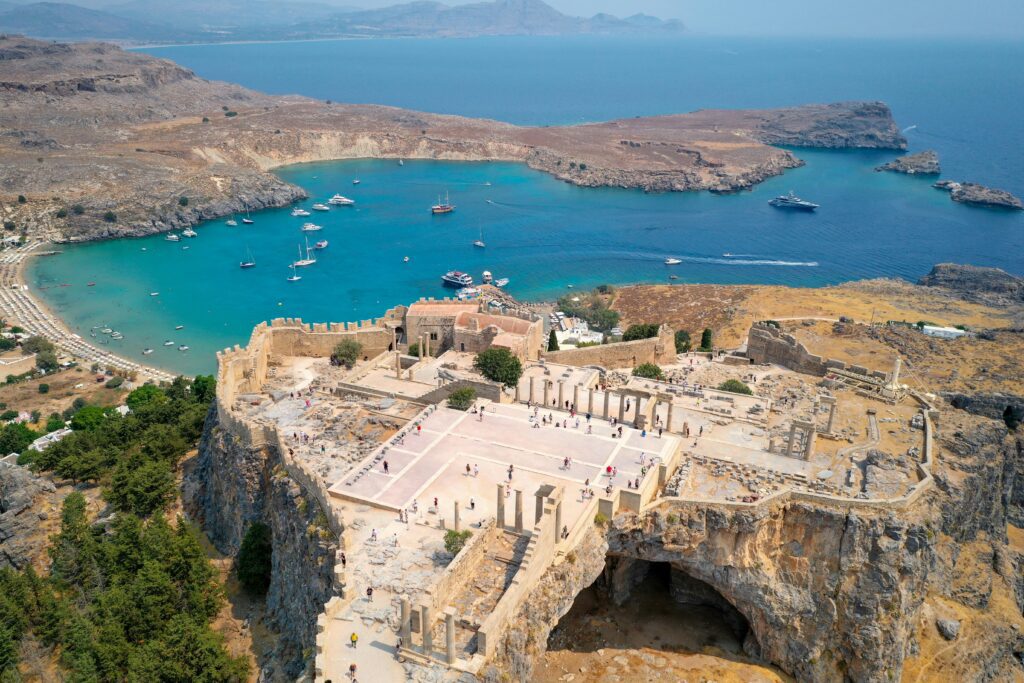
Rhodes is the largest of the Dodecanese islands with plenty of unique things to do. Thanks to its proximity to Turkey it displays a blend of Greek, Ottoman and Italian influences that you can see for yourself while strolling its UNESCO-listed medieval Old Town.
Well-preserved historical sites are around every corner, from the clifftop Acropolis of Lindos to the Archaeological Museum. When you’re not diving into ancient history or enjoying the white sand beaches, head to Valley of the Butterflies (Petaloudes) for a lush, forested escape; from late June to early September this nature park comes alive with butterflies.
Kos
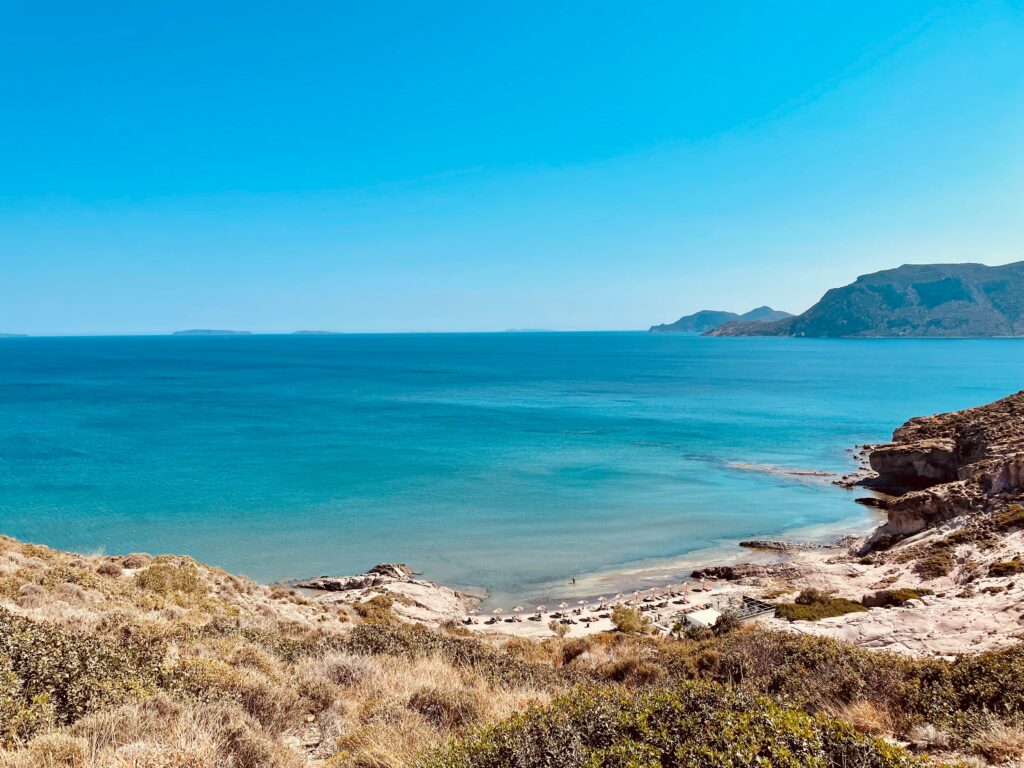
Kos is one of the best islands to visit if you’re after a slower vacation — though that’s not to say there isn’t plenty to do here too. Potter around traditional villages, spend the day on hidden beaches, and make a few day trips out to ancient sites. As Kos is fairly small and flat it’s ideal for cycling around, meaning you can cover more ground (just make sure to avoid the heat of the day). Famous as the birthplace of Hippocrates, it features significant archaeological sites like the Archaeological Museum of Kos and Asclepieion near Kos Town.
The Sporades islands
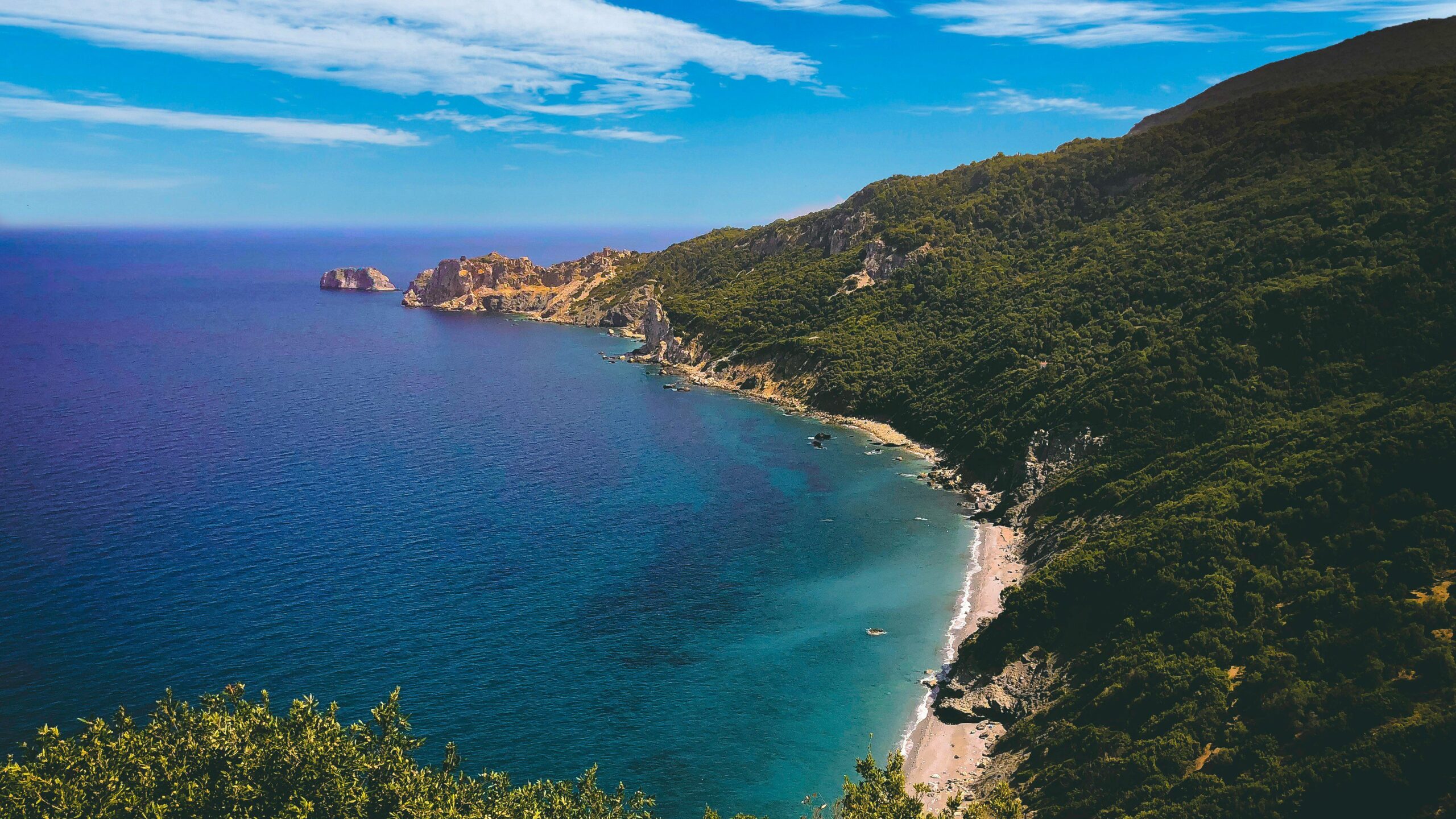
One of the quieter areas of the Greek islands, the Sporades are a group of 24 Aegean islands off Greece’s east coast. You will find sandy beaches here, but these islands including Skiathos, Skopelos, Alonnisos, and Skyros are known for dense pine forests that cover the land. If you’re after a calmer, more authentic depiction of the Aegean (and visiting some of the Mamma Mia! filming locations on Skopelos), head to the Sporades.
3. What are the best things to do in the Greek islands?
The best thing about cruising the Greek islands is that you don’t have to ‘do’ anything — just soak up island life, swim in the sea, wander through traditional villages and eat all the tzatziki you can. Of course most travelers decide to do much more than that, so here’s a guide to some of the best things to plan on your trip.
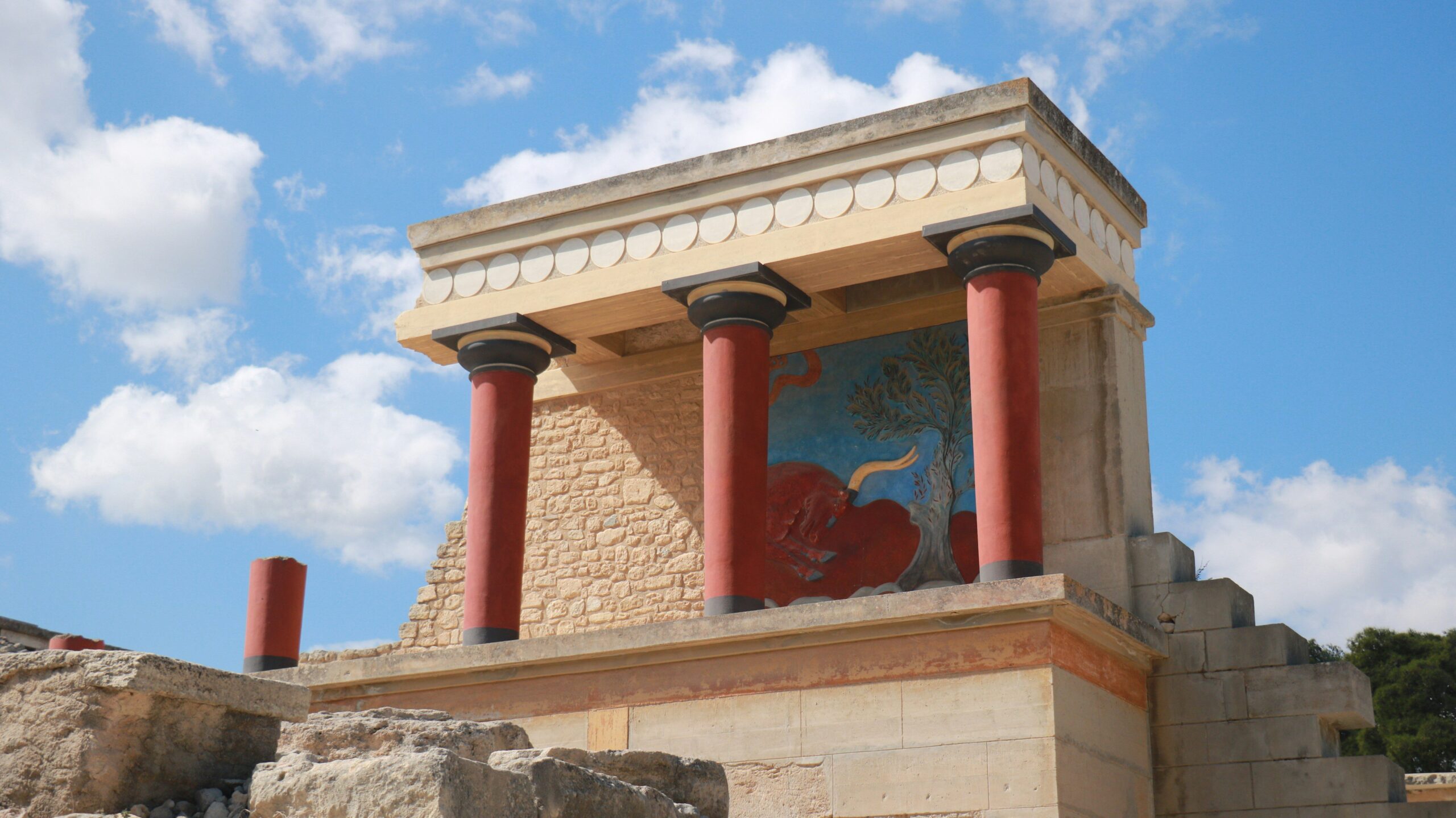
Walking among ancient ruins is one of the most memorable things to do throughout the Greek islands. No matter which island you’re visiting, there’s no shortage of archaeological sites. Step into a legend at the UNESCO-listed Minoan Palace of Knossos (Crete), visit birthplace of Apollo and Artemis on the sacred island of Delos, and see Santorini’s Akrotiri, a Bronze Age city preserved by ash. Other key sites are the acropolis of Lindos on Rhodes, and the towering Temple of Apollo on Naxos — to name just a few.
Planning your day around catching the sunset isn’t a bad idea when you’re on the Greek islands. Watching the sun go down over the Mediterranean is one of the most magical experiences, whether you’re up high among the whitewashed houses of Oia in Santorini, sitting near the historic windmills on Mykonos, or sipping a sundowner with a sea view on the waterfront in Parikia, Paros.
Boat trips are an essential part of any Greek island vacation, whether you’re taking a sunset sail or traveling to smaller, more remote destinations. From Crete you can sail across the Bay of Elounda to the island fortress of Spinalonga, once a Venetian stronghold, while Mykonos is an ideal base to take a boat to ancient, sacred Delos. From Santorini, a boat trip will take you to the volcanic island of Nea Kameni to swim in its glorious hot springs for a different kind of spa day.
4. Where should I eat in the Greek islands?
If you want to try the most authentic Greek food then look for smaller, traditional tavernas when traveling through the Greek islands. It’s hard to go wrong when Greek islands have some of the best fresh produce including seafood, fruits and vegetables, but islands that are particularly known for exceptional food are Crete, Paros, Naxos and Santorini. Generally, Naxos offers more rustic dining options, while Crete grows much of its own produce (olive oil, tomatoes and cheeses), and Paros and Santorini are ideal if you’re after more upmarket dining experiences. Don’t miss out on sampling Greek wine when you’re cruising the Greek islands!
When you travel to Milos with Trafaglar, you’ll have the chance to take a food tour of the ‘Island of Colors’ and sample local delicacies like watermelon pie (karpouzopita).
5. What’s the best time of year for cruising the Greek islands?
The best time for cruising the Greek islands depends on what you prioritize. High season is summer, from June to late August when you can expect long sunny days, clear skies, and warm water temperatures that range from 23°C to 27°C (73°F to 81°F). This is also its busiest time and popular destinations can become crowded, while temperatures can get very hot; although it tends to hover around 30ºC (86ºF), it’s been known to reach above 40ºC (104ºF) in peak summer.
Across the Cyclades and the Aegean Sea, the Meltemi winds bring a strong, dry wind with clear skies and warm temperatures. These winds are at their strongest in July and August, meaning the beaches and towns may be slightly more blustery.
If you’re after milder weather and winds, consider traveling in shoulder season or during early or late summer. In June or September you can also enjoy calmer winds in the Aegean Sea.
Shoulder season in Greece runs in the spring (April to June) and autumn (September to October), when calm seas and clear waters making the perfect conditions for swimming and snorkeling. Daytime temperatures stay around the low-to-mid 20s°C (72–77°F), and you’ll need to bring a jumper for the evenings which can dip to around 15-18ºC (59-64ºF) — but we think it’s worth visiting in shoulder season it for the milder weather, quieter crowds and more authentic side of the islands.
Discover cruising the Greek islands in style with Trafalgar’s Best of Greece Aegean cruise extension.