



It’s about 7AM and I’m standing outside the front of my hotel near Monument Valley, blowing warm air into cupped hands. The sun is due to rise in 20 minutes, and it can’t come soon enough — it’s toe-numbingly cold. Before I can double back to my room to grab another layer, a minivan pulls into the parking lot, ice crystals glittering on the windshield. In the driver’s seat sits my Navajo guide, Carla, who’s wearing fingerless gloves, a shearling-collared bomber jacket and a Patagonia beanie. She’s clearly no stranger to winter in these parts, where overnight temperatures regularly drop well below zero.
She winds her window down. “It’s just you and me this morning”, she calls, flashing me a wide smile. “Hop up here in the cab where it’s warmer”. I gladly take the invite, and have barely got my seatbelt clipped in before Carla’s got the van turned around and we’re speeding down an empty desert road, headlights swinging across the frost-sugared sagebrush.
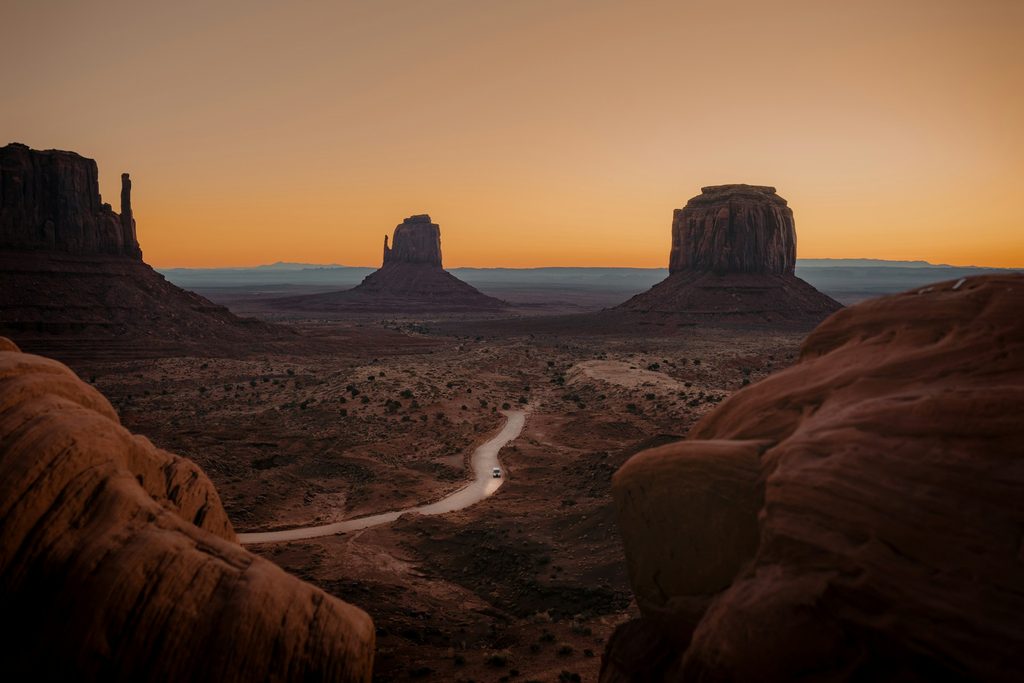
I had arrived in Monument Valley late the previous night, so I haven’t yet set eyes on this iconic landscape of the Southwest. Despite its fame as a setting for a number of classic Henry Ford-directed Westerns (John Wayne regularly stayed at the hotel I was spending the night at), Monument Valley doesn’t have the fanfare or infrastructure of a National Park. “That’s because it’s part of the Navajo Nation’s tribal lands”, Carla explains as she stops the van on the side of a dirt track that descends into the valley proper.
While I knew this before I arrived, having recently been at Capitol Reef, Canyonlands and Arches National Parks, the difference in the visitor experience nevertheless takes me by surprise. Where in the National Parks there is a clear and consistent sense of delineation between where human presence ends and the wilderness begins, here it’s less of a line, more of a fading in and out. “There are Navajo people who live and farm within the canyon walls, and even beyond it”, Carla explains, taking a big sip from her thermos of black coffee. It explains the desert dwellings I spotted the previous day, as I drove into the area — some glinting with reflected sunlight, far off from the main road.
It also explains the unique beauty of this landscape. It is ancient and sacred, wild and unpolished, but somehow also accessible and inviting. It might be the familiarity of the image of Monument Valley that exists in my mind, or the warmness and informality of my conversations with Carla, but I already feel a sense of presence here unlike any National Park I’ve visited.
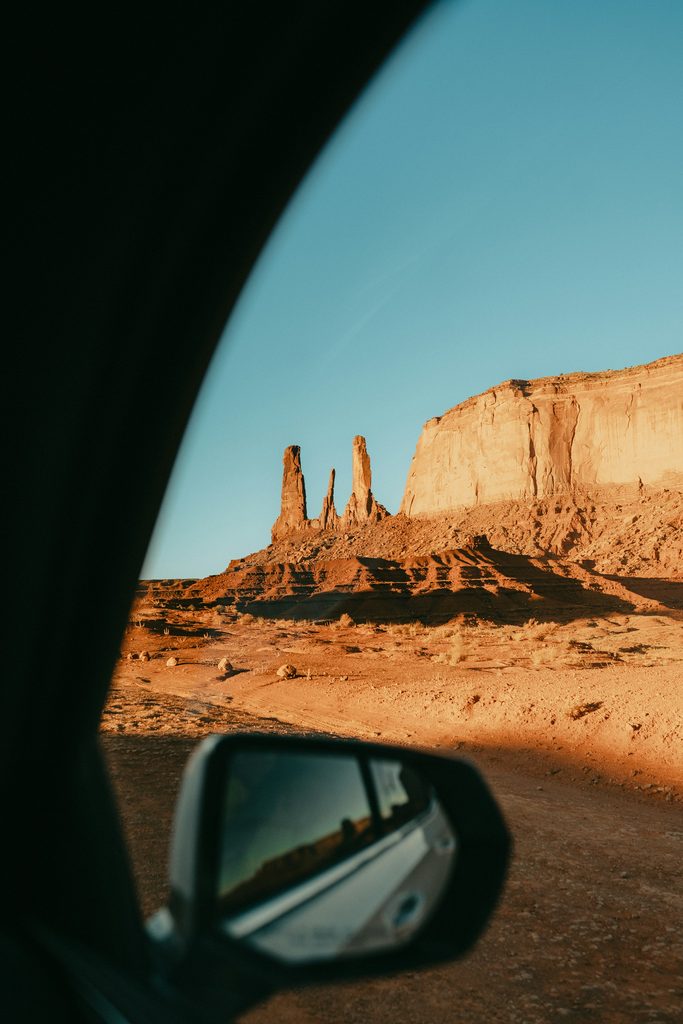
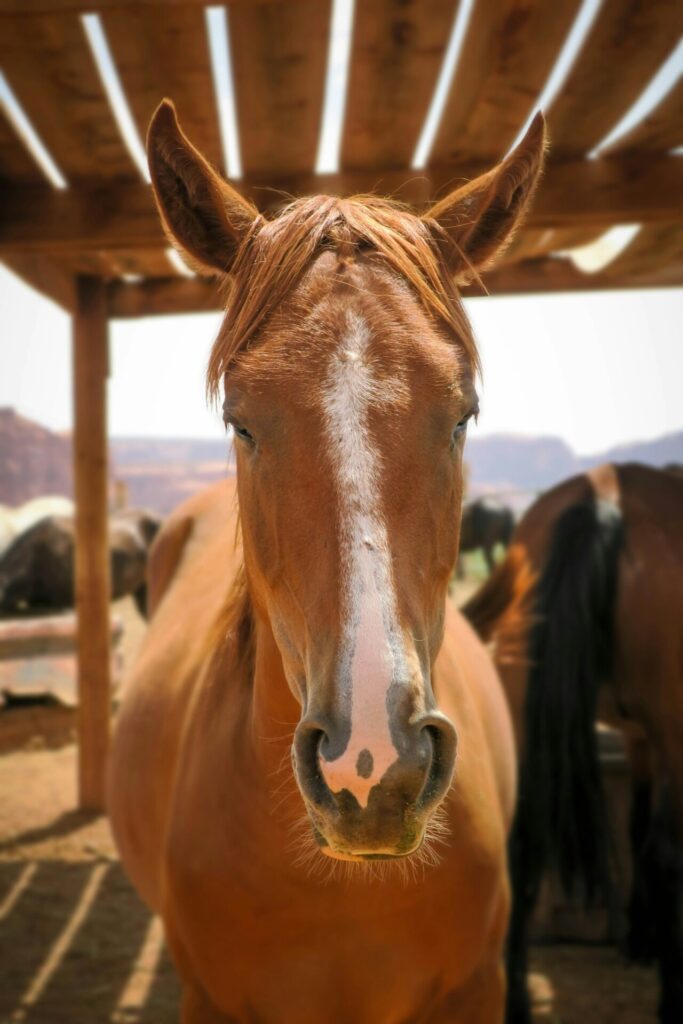
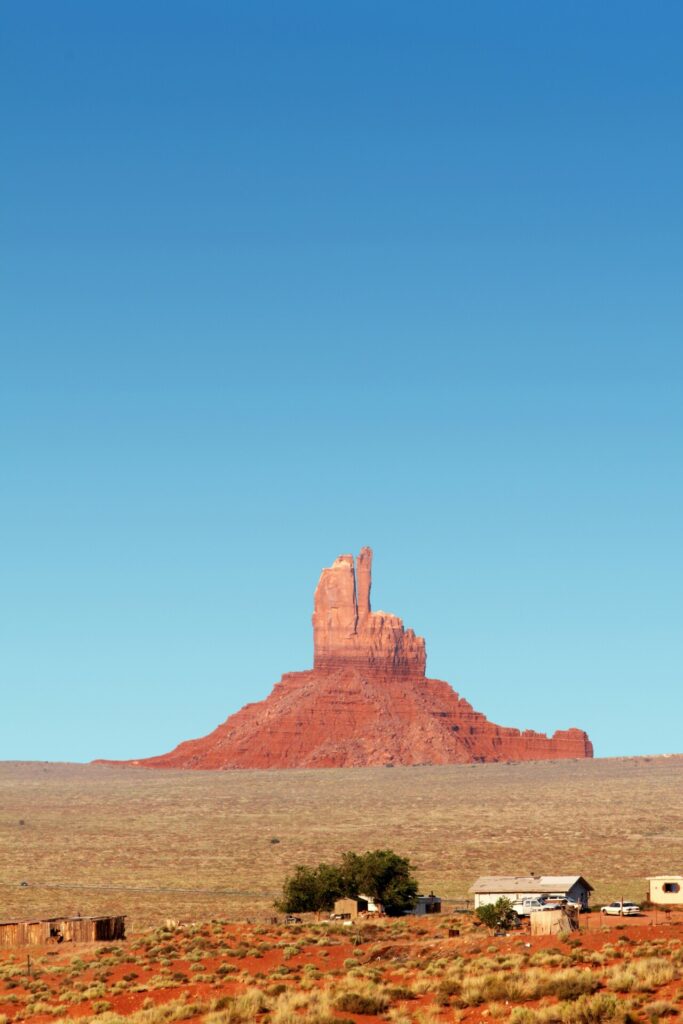
Above us, the deep indigo of the night sky has faded to a dark denim blue, and there’s the first hint of orange on the horizon. We’ve got less than 5 minutes before the first rays start hitting the surrounding clifftops. “Let’s get out”, Carla says suddenly, flipping the collar of her jacket up. I comply, stepping out with an icy crunch onto the rust-red soil. The first thing that hits me isn’t the cold, it’s the silence. Out of earshot of the highway, there is not a single vibration of a sound in the air, at least not that I can hear. This is not necessarily the case for Carla. She seems to have fixed her attention somewhere off to our left, where the top of the rise we’re standing on shelves away, out of sight. “Sounds like someone’s coming this way”, says Carla. I’m unsure what this means, but instinctively, I drop to one knee and raise my camera.
Of course, she is right about the sound of approaching steps — I can hear them now, too. I can also see the source of the noise: a string of about six or seven horses, ranging in coat color from chalk-white to chocolate brown. “Mustangs”, says Carla under her breath, “out on their morning search for water”. Watching them climb, one by one, out of the valley floor and start to walk in our direction leaves me speechless. It’s at this point that I realize the sun has finally come up somewhere behind us to the east, as a band of gold light gilds the tops of the valley’s towering “mittens”.
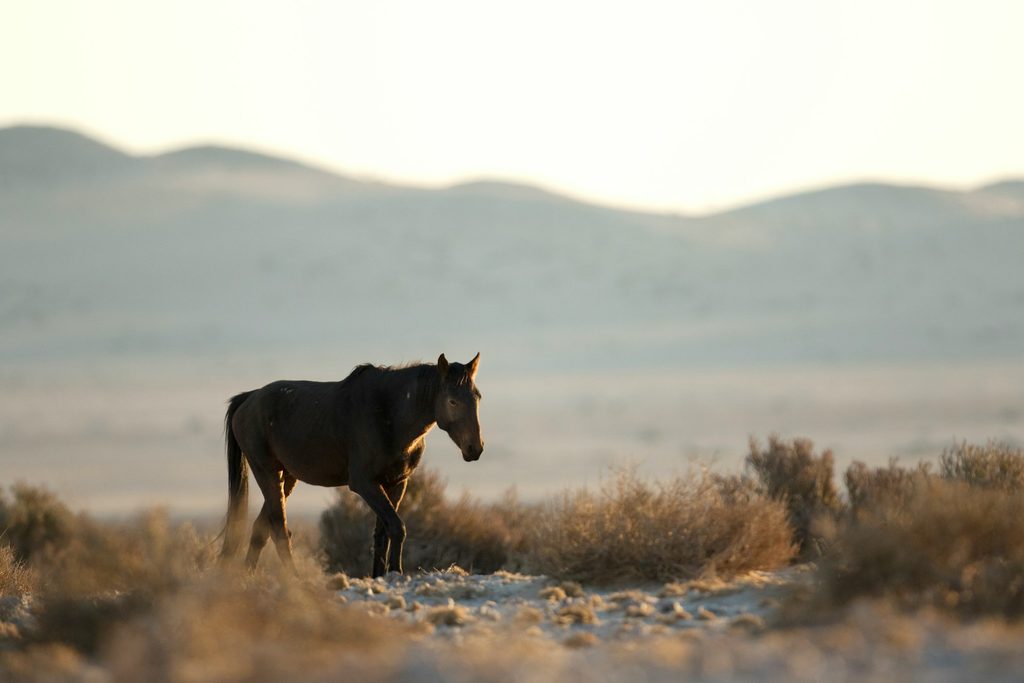
The horses pass by as if we weren’t there, almost close enough to reach out and touch. But these are not domesticated ponies expecting handouts, they’ve been here for centuries, making themselves at home in this seemingly inhospitable landscape. In popular culture, wild horses have long been a symbol of the West — the spirit of freedom, of dominion over the vast distances and dramatic topography of this part of the USA. To the Navajo, they represent something more fundamental: family, guidance, and a connection to home, to the land.
The remainder of the morning is spent rumbling along winding dirt tracks, as the fully risen sun reveals the rest of Monument Valley in all its otherworldly beauty. Carla is full of fascinating insights about the local vegetation, unusual rock formations and the resilience of the locals who live here. But my mind is on those horses, wondering where they got to — if they found water, food and a peaceful spot to warm themselves. Tails flicking languidly at the red dust, heads turned to the west, their dark eyes reflecting the horizon.