



For all its castles and café culture, Europe is still gloriously wild. So to mark World Wildlife Day – March 3 – let’s dive into the continent’s natural side. Would you believe that in Europe wolves still dominate the forests, flamingos flock to France and dolphins pop up in capital cities? We’ve found the best wildlife facts from across Europe, from feel-good conservation stories to quirky trivia.
Wolves are back in Western Europe – including Germany after more than a century of absence
For an animal once written out of Western Europe’s storybooks, the wolf has made a remarkably calm return. After being exterminated in Germany in the 19th century, the Gray wolf began naturally recolonizing from Poland in the late 1990s. Today, established packs roam eastern and northern Germany. Also in the west you’ll find the Iberian wolf, where stable populations in rural Spain and Portugal number around 2,000 to 2,700.
Flamingos breed in southern France
Each spring, thousands of Greater flamingo gather in the wetlands of the Camargue in southern France – one of the species’ most important Mediterranean breeding sites. These aren’t ornamental birds but fully wild pink flamingos that move between France, Spain, Italy and North Africa in response to water levels and food availability.
The Iberian lynx was once the world’s rarest cat – and is now one of conservation’s greatest comeback stories.
Not long ago, spotting an Iberian lynx was less likely than winning the lottery. By the early 2000s, fewer than 100 individuals survived in isolated pockets of southern Spain. Intensive habitat restoration, rabbit population recovery and captive breeding have since helped numbers climb to 2,000, with reintroductions expanding into Portugal. It’s a rare, good new news story in conservation!
READ NEXT: Help protect the world’s wildlife with these 7 incredible tours
Scotland is home to more than 75% of the world’s remaining wild red deer.
Red deer once ranged widely across Europe, but today the largest concentration of truly wild individuals lives in Scotland. It’s estimated there are well over 400,000 animals! That represents the vast majority of the UK’s population and a significant proportion of Europe’s remaining wild herds, particularly in the Highlands where you’ll have the best chance of spotting antlers on the horizon.
Europe has wild monkeys – the famous macaques of Gibraltar.
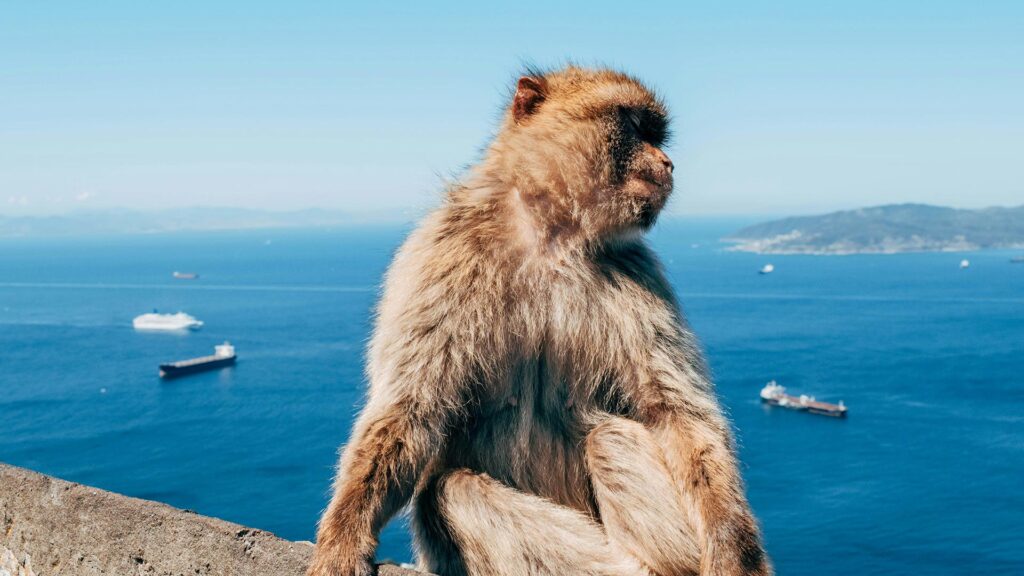
At the edge of the Mediterranean you’ll find the only free-ranging monkeys in Europe – the Barbary macaque that live on the limestone cliffs of Gibraltar. The population hovers around a few hundred individuals. While North African by origin, they’ve lived on this side of the Strait of Gibraltar for centuries and are now one of Europe’s most unexpected wild residents.
Europe’s largest population of wild beavers is in Sweden.
Once trapped to local extinction across much of western Europe, the Eurasian beaver has staged an impressive comeback. Sweden is now suspected to host the continent’s largest free-ranging population (with almost as many in Poland!). In the UK the species is gradually being reintroduced after centuries of absence. Their riverside engineering – from dam-building to canal-digging – transforms landscapes, creating excellent habitats for countless other species along the way.
The Danube Delta in Romania is one of Europe’s richest bird habitats, with over 300 recorded species.
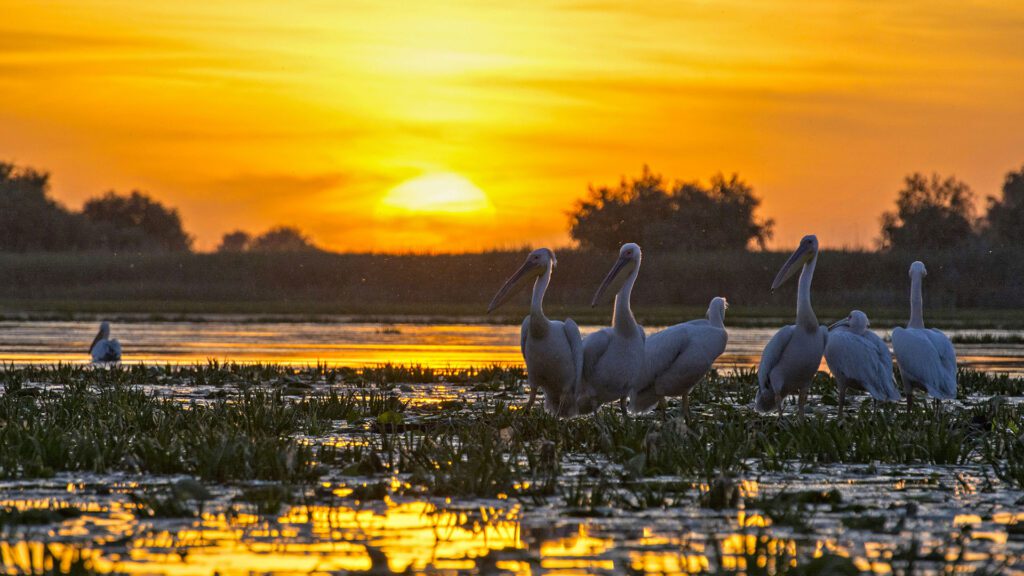
Where rivers meet the Black Sea, water and land blur into watercolor painting of reed beds, lakes and marshes. The Danube Delta is Europe’s largest wetland. It’s home to over 300 bird species, from pelicans to terns, and is shared between Romania and Ukraine. This UNESCO World Heritage site is a stopover for migratory birds and a breeding haven.
Europe’s largest land predator is the Eurasian brown bear.
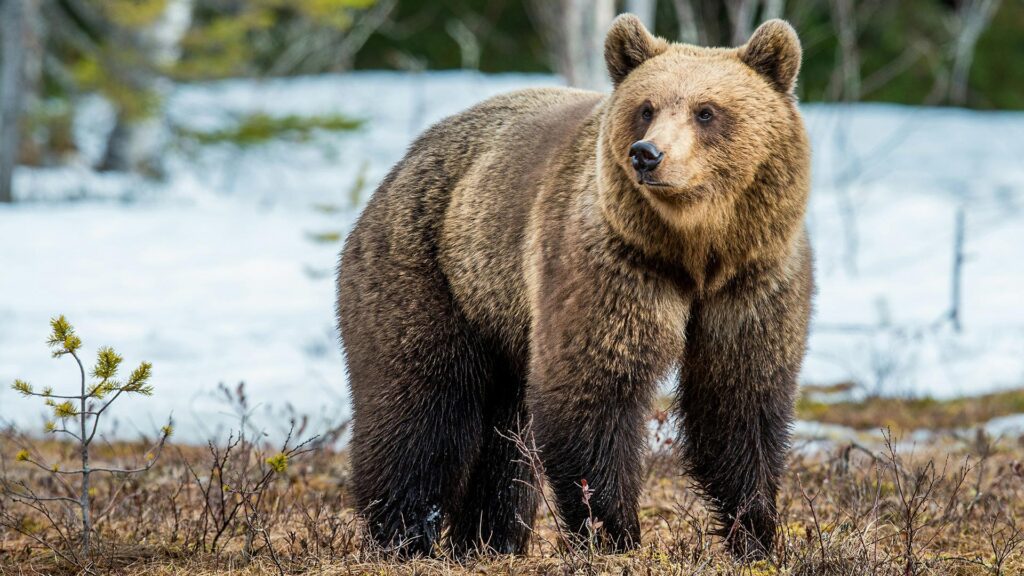
The Eurasian brown bear quietly rules the old-growth forests of Romania, home to some of Europe’s largest populations. While commonly seen in Romania, the small country of Slovenia actually has the continent’s highest densities. In central Italy, if you’re lucky you can find the critically endangered Marsican brown bear, Europe’s only wild population of this subspecies.
The Bearded vulture dyes its feathers orange on purpose.
Hate your natural hair color? You’re not alone. High in Europe’s mountain ranges, the Bearded vulture is naturally pale, yet many individuals deliberately bathe in iron-rich mud that stains their feathers a rusty orange. Researchers believe the coloring may signal dominance or health and you might spot one in parts of the Alps and Pyrenees.
The Alpine ibex can climb near-vertical dam walls to lick mineral salts.
If you thought goats were just casual hikers, think again. The Alpine ibex scales cliffs with terrifying precision. In some Alpine reservoirs, it has adapted to climb nearly vertical dam walls to reach essential mineral salts. These cliff-dwelling acrobats are perfectly adapted with specialized hooves, and their vertical exploits make them one of Europe’s most surprising mountaineers.
The Saimaa ringed seal lives only in one Finnish lake system.
Europe’s rarest seal prefers freshwater. The endangered Saimaa ringed seal is confined entirely to Finland’s Lake Saimaa, surviving in icy winter lairs. With around 500 individuals, it’s one of the world’s most endangered seals and can be found nowhere else on the planet.
Bats live inside baroque libraries in Portugal.
In Portugal, centuries-old books have nocturnal guardians. In the 18th-century Joanina Library and at the Library of the National Palace of Mafra, tiny colonies of common pipistrelle bats roost behind the shelves. They emerge after dark to feast on insects that might otherwise nibble priceless manuscripts. Each morning librarians remove covers from the tables and clean the floors before opening up. It’s an odd relationship that works!
Puffins spend most of their lives at sea – and only return to European cliffs to breed.
With their colourful beaks and comical waddles, puffins might seem purely theatrical – but most of their lives are spent far from land. The Atlantic puffin winters across the North Atlantic, diving for fish and avoiding predators, only returning to cliffside colonies in Norway, Iceland and the UK to breed. The seasonal comebacks make them a highlight of Europe’s coastal wildlife spectacles.
READ NEXT: Witness the world’s best wildlife on these 14 Trafalgar trips
Iceland has no native reptiles or amphibians.
For a country of lava fields, glaciers and steaming earth, Iceland is curiously devoid of one thing – native reptiles and amphibians. For many, it will be a sigh of relief to learn you’ll find no snakes in the grass or frogs in the reeds! Its cool climate and island isolation have kept cold-blooded species from establishing themselves on the icy destination.
You can spot wild dolphins in European cities.

You don’t always need a remote archipelago for a dolphin encounter. In the Tagus Estuary off Lisbon, pods of common bottlenose dolphins are often spotted against a backdrop of bridges and cargo ships. Further east, the Adriatic waters off Croatia are considered one of Europe’s best places to see them in the wild too, with long-term resident populations monitored by marine researchers.
Wolverine still roams the remote north of Sweden and Norway.
It sounds more myth than reality, but the Wolverine still survives in the vast boreal forests and tundra of Sweden and Norway, covering enormous territories in search of carrion and prey. Stocky, elusive and built for deep snow, this animal is one of the continent’s rarest large carnivores. True wilderness still lingers in the north!
The Olm can reportedly live for over 70 years and survive a decade without food.
In the limestone caves of the Balkans, something pale and eel-like drifts through total darkness. The Olm, a blind, cave-dwelling amphibian found in Slovenia, Croatia and neighbouring countries, can live for more than 70 years and survive up to ten years without food. Adapted to underground rivers, it moves slowly, breeds infrequently, and was once mistaken for baby dragons.
READ NEXT: 14 of the world’s cutest animals you can find on our tours
The Iberian ribbed newt can push its own ribs through its skin as a defence mechanism.
If cornered, this newt weaponises its skeleton. The Iberian ribbed newt can project the tips of its ribs through toxin-secreting glands in its skin, creating a surprisingly effective defence against predators. It’s native to Spain and Portugal.
Those are our best wildlife facts for Europe. Add more cool European wildlife facts in the comments….